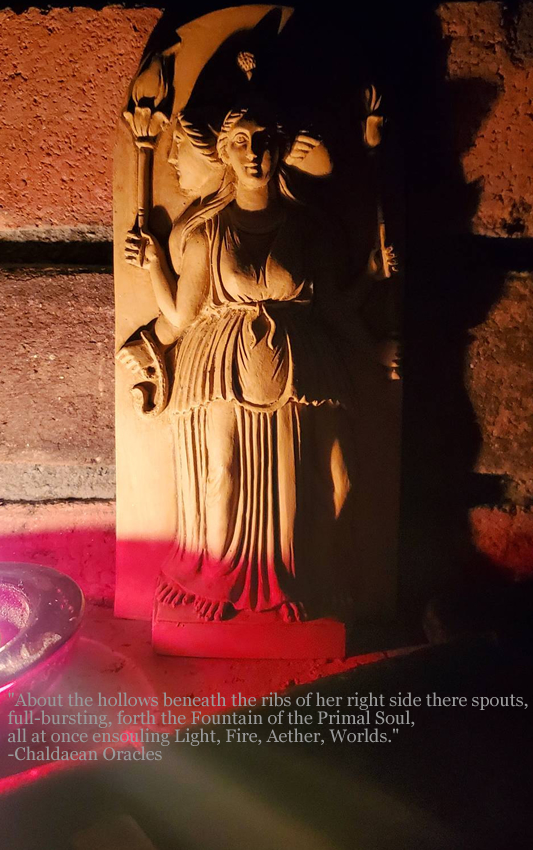
Hekate Kleidoukhos

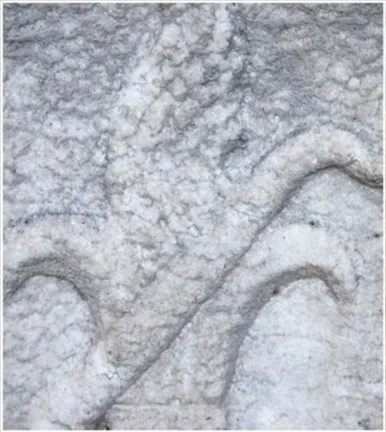
Image of a torch and key motif found on a column at the Temple of Hekate in Lagina. Photo from Anatolian Archaeology, photographer unknown

This post is part of a series regarding Hekate’s epithets, and the full list may be found here. This is a work in progress.


“Kleidoukhos” (sometimes spelled “Kleidouchos”) is one of Hekate’s more well-known epithets, and it translates to “Keeper of keys”. In ancient times, the role of “Kleidophoros” (Key-bearer) of the temple was an important one; the key that the priestess (or priest) carried signaled the authority that person had over the temple and sanctuaries, and the duties they were responsible for as guardian of this sacred space. Besides the obvious need to protect valuable artifacts (such as cult statues) and money within the sanctuary, keys have a metaphorical / symbolic meaning beyond the mundane demands of security.

The Orphic Hymn to Hekate, dated to about the 3rd century BCE to 2nd century CE, first mentions Hekate as Kleidophoros. I am sharing the more well known translation by Thomas Taylor below, as there are many translations out there:

“Hekate Einodia, Trioditis [Trivia], lovely dame, of earthly, watery, and celestial frame, sepulchral, in a saffron veil arrayed, pleased with dark ghosts that wander through the shade; Perseis (daughter of Perses), solitary goddess, hail! The world’s key-bearer, never doomed to fail; in stags rejoicing, huntress, nightly seen, and drawn by bulls, unconquerable queen; Leader, Nymphe, nurse, on mountains wandering, hear the suppliants who with holy rites thy power revere, and to the herdsman with a favouring mind draw near.”

The world’s key-bearer“. That statement is a mighty one, and conveys the enormous regard and responsibility bestowed upon Hekate in the ancient world. Hesiod’s Theogony is perhaps the oldest written record (dates to approximately 700 BCE) mentioning Hekate, and describes how Zeus honored Hekate above others by giving Her dominion over the three realms – the heavens, earth, and sea:

“Hecate whom Zeus the son of Cronos honoured above all. He gave her splendid gifts, to have a share of the earth and the unfruitful sea. She received honour also in starry heaven, and is honoured exceedingly by the deathless gods.” – Hesiod, Theogony

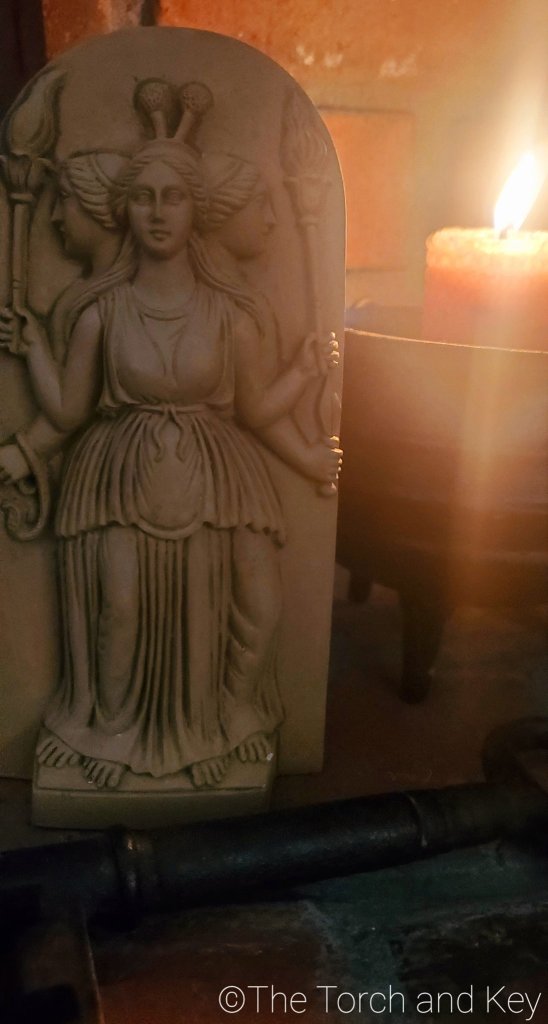
Keys are symbolic, and represent access. Access to knowledge, spaces, relationships, crossing boundaries, etc. As a liminal goddess of boundaries, Hekate – in Her role as Propylaia – holds these keys and grants access to those who are ready for Her mysteries. Hekate grants access from liminal, in-between spaces to more defined spaces with doorways and keys acting as metaphorical symbols of these liminal qualities. There are numerous ancient reliefs and sculptures that depict keys in relation to Hekate, such as the image at the top from a column found at Her temple in Lagina.

The Greek Magical Papyri (also known as simply “The PGM”) has several spells that mention Hekate and keys as magical/symbolic objects, and here is one excerpt from PGM IV. 2241-2358, “Document to the waning moon” that mentions keys (there are a few different mentions in this particular spell):

“Then, too, I’ll speak the sign to you:
Bronze sandal of her who rules Tartaros,
Her fillet, Key, wand, iron wheel, black dog,
Her thrice-locked door, her burning hearth, her shadow,
Depth, fire, the governess of Tartaros”

In addition to keys, other symbols of Hekate appear in this PGM passage: bronze sandal, iron wheel (iynx, perhaps), and black dog.

Kleidos Agoge
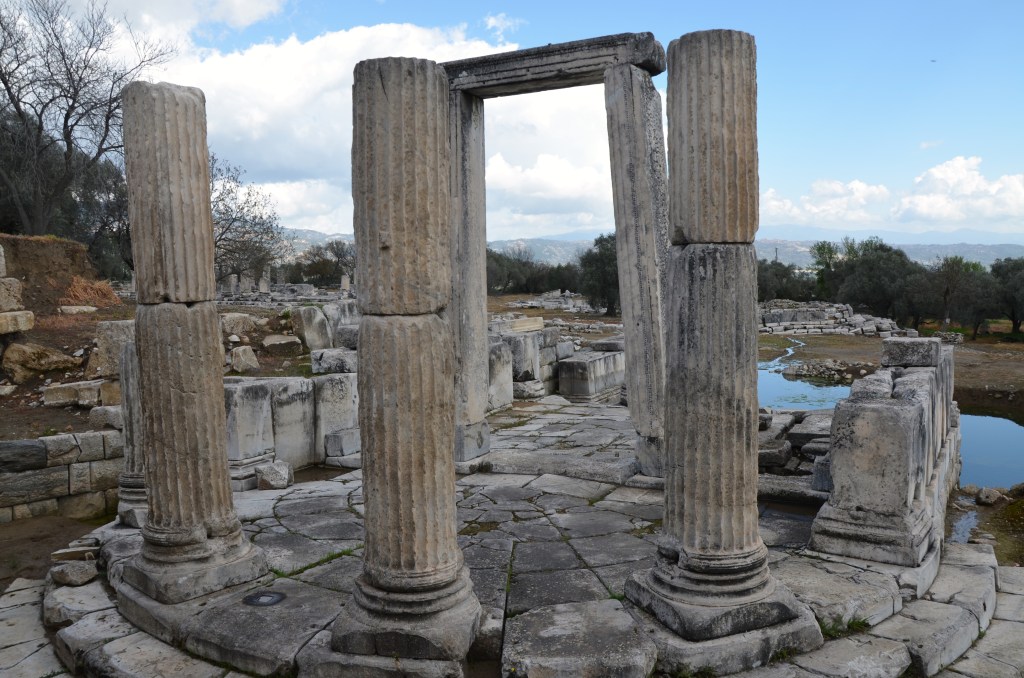
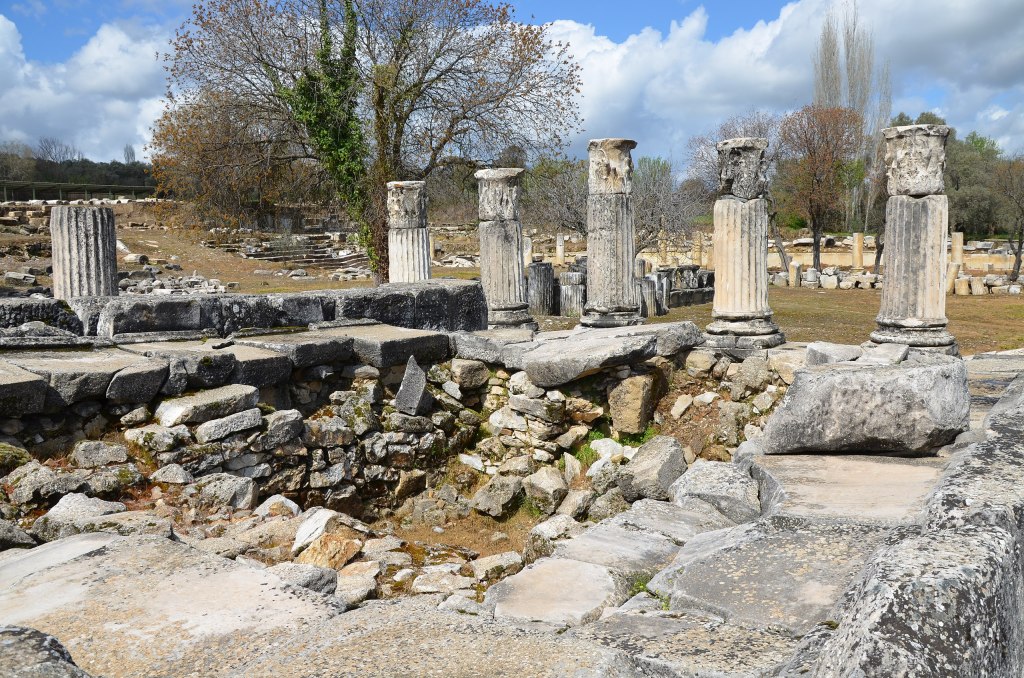
The Propylaea to Hekate’s temple at Lagina, photo from Wikimedia Commons

Stratonikeia was a very important city in what is now modern day Tรผrkiye, located in the western Anatolian region of Caria. Nearby, at Lagina, are remains of a great temple that was built to honor Hekate. This temple is currently the only known temple dedicated solely to Hekate that remains partially standing. It is also the only temple that functioned as a state-sponsored center of worship of Hekate.

One major aspect of rites honoring Hekate at Lagina was the “Kleidos Agoge” – the “Procession of the Key” (some references may call it the “Festival of the Key”). This festival took place every year and spanned a few days; games were played, music and hymns were offered to Hekate, and the Kleidos Agoge was the highlight of this multi-day annual celebration. A Kleidophoros, usually the young daughter of the temple priest, carried the temple key in a procession on the sacred road from the temple in Lagina to Stratonikeia. The key was brought to an altar dedicated to Hekate within an official council building in Stratonikeia, and visitors would then bring offerings and make sacrifices at this altar while the key was on display. The key was then returned to Lagina in another procession on the sacred road, and celebrations would then continue.


ยฉ Melissa M. / The Torch and Key


Sources:

Betz, Hans Dieter, editor.ย The Greek Magical Papyri in Translation, Including the Demotic Spells. Vol. 1, 2nd ed., University of Chicago Press, 1997.ย 

HERRING, AMANDA. โ€œReconstructing the Sacred Experience at the Sanctuary of Hekate at Lagina.โ€ Journal of the Society of Architectural Historians, vol. 79, no. 3, 2020, pp. 247โ€“63. JSTOR, https://www.jstor.org/stable/48740836. Accessed 16 May 2026.

The Covenant of Hekate, https://www.facebook.com/CovenantOfHekate/posts/epithetshekate-kleidouchos-the-bearer-of-the-keysthe-term-kleidouchos-means-the-/4581834658503710/

The Covenant of Hekate, https://www.hekatecovenant.com/post/the-cult-of-hecate
Hekate Propolos: Companion and Guide to the Mysteries of Life

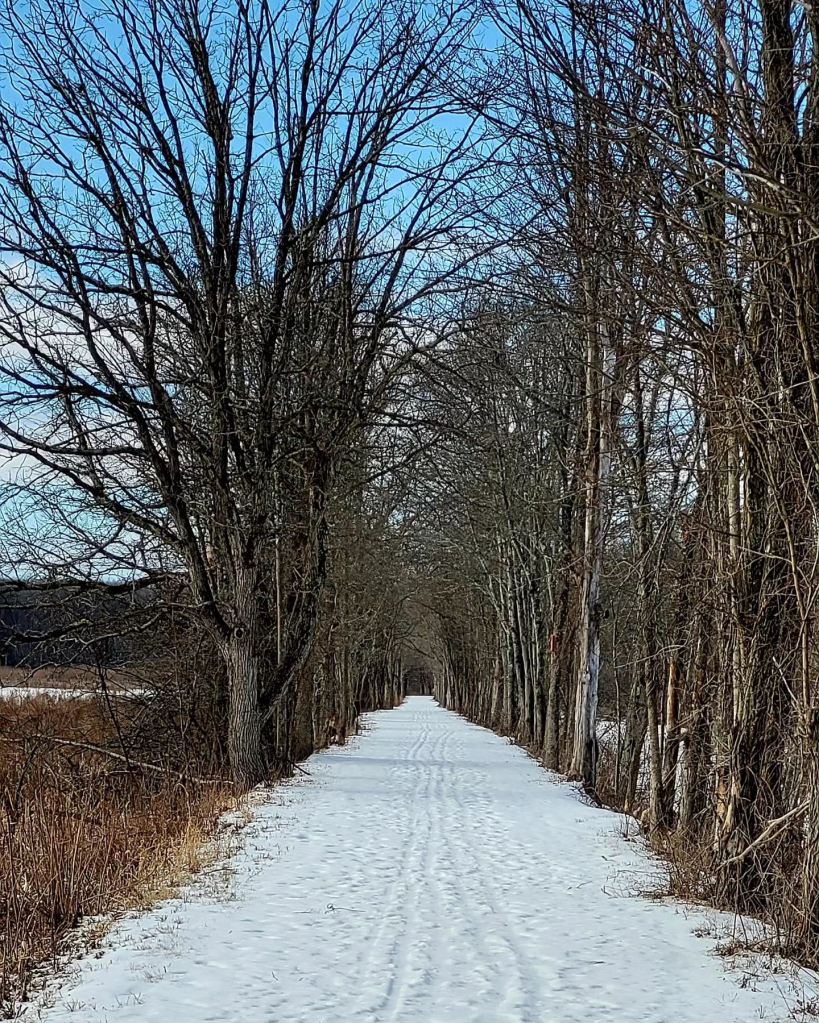
Vischer Ferry Nature Preserve, Clifton Park NY / ยฉ Melissa M.

One of Hekate’s most well-know epithets is “Propolos”, which means “companion” or “guide”. I began actively honoring Hekate about 15 years ago, though She made an entrance in my life many years before that, however I was not fully aware of it at that time. Fast forward to the Spring of 2010, when I sought out Sorita d’Este on social media after reading her book on Artemis and discovered a project she was working on that was dedicated to Hekate – “Her Sacred Fires” anthology due to be published, with a global “Rite of Her Sacred Fires” being planned for the May Full Moon to coincide with the book’s release. I took an interest in that, and I can say that my life has never been the same since.

I learned a lot about myself while I explored a relationship with Hekate, and incorporated daily devotionals to Her in my day to day life. To say it was transformative is an understatement. I read everything I could get my hands on about Hekate – modern books by modern authors, ancient texts, the PGM, scholarly papers and books written by some of those scholars, poetry, classical texts by Hesiod and others from that time, and connecting with other devotees of Hekate from all sorts of backgrounds through my (past) involvement with the Covenant of Hekate, which I applied to be a member after the first RoHSF in 2010. Learning about the “historical” Hekate, and ancient practices and researching known sites of cults/worship was an integral part of this process for me. I was like a sponge, soaking up every bit of information I could and learning as much as possible about historical and modern practices.

Aside from that, She was ever-present in my life and She always will be. There were times when She “went dark”, and was largely silent and there were gaps in devotionals. But I know Her presence and guiding force is always with me, and I carry that knowledge every day. Hekate’s torches burn bright no matter what, just waiting for that moment where Her devotee borrows it to rekindle that spark and illuminate their path. Everything I do, everything I say – has intent, and She is there.

In classical literature, Hekate was Persephone’s companion and guide as she traveled between the realms of the living and dead to be with Demeter part of the year, and with Hades in the Underworld for the other part of the year. The Homeric Hymn to Demeter tells this story, and the presence of Hekate at major sanctuaries to Demeter and Persephone is documented with archaeological evidence.

Today, as I write this, I am undertaking some transformative projects for myself. I am returning to college after many (many) years of putting that on the back-burner to care for my family. I am going to finish my degree; I am determined to see this through. What will come of that once I finish – I don’t know. But I will do it. The other project is in the very, very early stages of planning, and it involves the eventual building of community. Strangely, there are no goddess-centered devotional temples in my area despite the widespread Pagan community in New York. I want to change that. I want to create a space where the sacred, divine feminine is honored in all of Her forms and names, with Hekate as Propolos. I expect the beginnings of this will involve meeting in a dedicated public space that will have to be reserved as needed. My ultimate dream is to have a permanent space of our own for this, and hopefully this will be manifest one day. The seeds have been planted, and I will make this a reality one day in the near future, however long it takes.


ยฉ Melissa McNair / The Torch and Key

Hekate and the Solar Eclipse

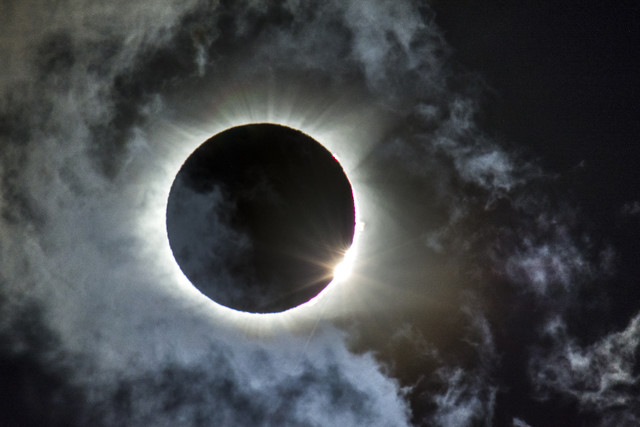
Photo by Steve Grundy, Flickr

On Monday April 8, 2024, a total solar eclipse will occur, and will pass over North America (visit this website to see if you are in the path of totality, and what times of the day to expect the eclipse to occur). I am in upstate New York, and parts of the Adirondack region will be in 100% totality, while my specific location will be about 90%. We also experienced a rare earthquake yesterday, with the 4.8 magnitude quake centered near Lebanon, New Jersey and the effects were felt far and wide across parts of the northeast. My house shook, with the floor rumbling and walls shaking. It felt like a train was next to my house, and it was an interesting way to kick off this exceptional weekend.

Eclipses, whether lunar or solar, are liminal and transitional experiences. Hekate is a liminal goddess of thresholds and boundaries, of transition and change. As Propylaia, She is guardian of these thresholds whether actual or metaphorical. With Her torches, Hekate stands at the crossroads waiting. And ready to light the way.

About Solar Eclipses

A total solar eclipse occurs when the moon passes between the earth and sun, fully obscuring the sun and creating what many call a “ring of fire” around the moon. Solar eclipses always happen on the New Moon. It is truly a sight to behold, and many people are flocking to areas of full totality to experience this sometimes once in a lifetime phenomenon. Here in upstate New York, tourism for this event kicked into full gear a couple of years ago, with hotels and other rentals being booked out months ago. State campgrounds are at full capacity for tent space, and they opened reservations for this event long before they normally open for the spring/summer camping season.

If you plan to view the eclipse, proper eyewear is a must. Wear only designated solar eclipse glasses, and do not wear them while driving a vehicle and make sure you are in a safe place, because they block out all other light. For more information about solar eclipses and this one in particular, visit NASA’s dedicated web page for this event.

At the Threshold

The New Moon is traditionally the time for new beginnings – whether it is a new life path, or a spiritual awakening or initiation (or both). During a solar eclipse, the Moon obscures the Sun, aligning feminine and masculine energies creating that “ring of fire”. The Moon becomes a portal or gate of sorts for stepping over that threshold and into the fire, so to speak.

Hekate, as gatekeeper and guardian of thresholds, is waiting. The moments during an eclipse when obscuration is beginning are so very liminal in nature, and becoming ever more so as the Moon and Sun comes closer to totality. I usually spend eclipse days in quiet spiritual contemplation and meditation, with candles lit, offerings made, and occasional incense burning. No magic or spells are performed during eclipse times – just being in the moment is preferable. Maybe some journaling is done as well to record my feelings and experience during this time.

During totality, the sky goes full dark if you are in the 100% totality path. Other areas will experience a darkened sky for some moments, but not full dark. Either way – these are powerful, transformational moments that can connect us to the liminal aspects of Hekate on the New Moon Solar Eclipse.

The New Moon is an ideal time for release; letting go of what no longer serves us and starting anew. Solar Eclipses make this even more powerful and transformational. Stepping over that threshold into the fire and purifying ourselves, being renewed like a Phoenix rising from the ashes can be a very profound, life changing experience. Hekate, as companion and guide to the mysteries of life, death, and rebirth, will be there along the way. Her torches burning bright, guiding you towards what is waiting for you. Change is not always easy, and the prospect can be frightening to some because what is coming is unknown. Sometimes we have to trust ourselves, and what is meant to be even if what awaits is obscured. Throwing our feet into the fire and finding the courage to take those steps is often the most difficult part. Crossing that threshold does not have to be done alone, and what is waiting on the other side can be incredibly rewarding as Hekate leads the way during this transitional time.

As devotees of Hekate, we always honor Her throughout the lunar cycle at appropriate sacred times. During eclipses, we can behold Her power as the Cosmic World Soul as we marvel in these ancient and sacred energies.

I will close this out with an excerpt from the Chaldaean Oracles, Fragments 146, 147, and 148, as revealed by Hekate:

Having spoken these things, you will behold a fire leaping skittishly like a child over the aery waves;

or a fire without form, from which a voice emerges;

or a rich light, whirring around the field in a spiral.

But that you will see a horse flashing more brightly than light,

or a child mounted on the swift back of a horse,

a fiery child or a child covered with gold, or yet again a naked child;

or even a child shooting arrows, standing upon a horseโ€™s back.

If you say this to me many times, you will observe all things growing dark,

For the curved bulk of the heavens disappears and the stars do not shine; the light of the Moon is hidden and the Earth does not stand steady. All things are revealed in lightning.

But when you see the sacred fire without form,

Shining skittishly throughout the depths of the Cosmos,

Listen to the voice of the fire.


ยฉ Melissa McNair / The Torch and Key

Hekate in Lagina: a goddess performing her civic duty

I really enjoy searching and reading academic papers about Hekate, and ancient Roman / Greek religious – cult practices in the ancient world. These papers aren’t usually widely circulated, and the hard work and time scholars put into researching and writing these papers often, sadly, go unnoticed.

I came across this paper I am linking here quite by happy accident, and I am so glad I found it. It is titled “Hekate in Lagina: a goddess performing her civic duty” written by Dr. Amanda Herring. The link leads to a landing page from Cambridge University, and this paper was included in their Anatolian Journal from August 2022. The PDF version of the paper must be downloaded in order to read it.

Link to paper (it will open a new browser tab): Hekate in Lagina: a goddess performing her civic duty

This paper delves into the cult of Hekate at Lagina / Stratonikeia in modern day Turkey. Here is a copied and pasted summary:

The Hellenistic Sanctuary of Hekate at Lagina represents the only site at which Hekate received state-sponsored cult at a monumental temple and a privileged place in the local pantheon. Elsewhere in Karia and the wider Greek world, Hekate was associated with magic and the underworld and received personal dedications at doorways and crossroads. This portrayal was echoed in art, where her character manifested in her triple-bodied form. Yet, at Lagina, part of the city of Stratonikeia, she was always represented with a single body. She was the focus of civic cult, in particular during the Hekatesia-Romaia festival, which celebrated the political alliance between Stratonikeia and Rome. Through an analysis of inscriptions, representations of the goddess in sculpture and coins, and the ritual use of the complex, this article concludes that Hekate of Lagina was a syncretic and singular figure who did not exist outside of Stratonikeia, and that her function at Lagina was primarily political, as a civic patron. As a goddess who oversaw lifeโ€™s transitions and acted as a saviour of her people, she was uniquely suited to the role. The goddess and her sanctuary were used by the local population to create community identities and to negotiate their relationships with the wider world, particularly their imperial rulers.

The Sanctuary of Hekate in Lagina, Caria, Turkey. Photo from Wikipedia

Hekate in Magna Graecia: Morgantina

Morgantina

Morgantina was a province in Enna, Sicily, which is roughly in the east-center of the island. Morgantina was settled sometime around 1000 BCE and life continued there until around 50 CE. In present day, the area is known as “Aidone”. Morgantina was the site of a major sanctuary to Demeter and Persephone, and many statues, votives, pottery, and curse tablets have so far been recovered at the site. Sadly, much looting was done here and artifacts are still being recovered and returned to Italy in present-day.

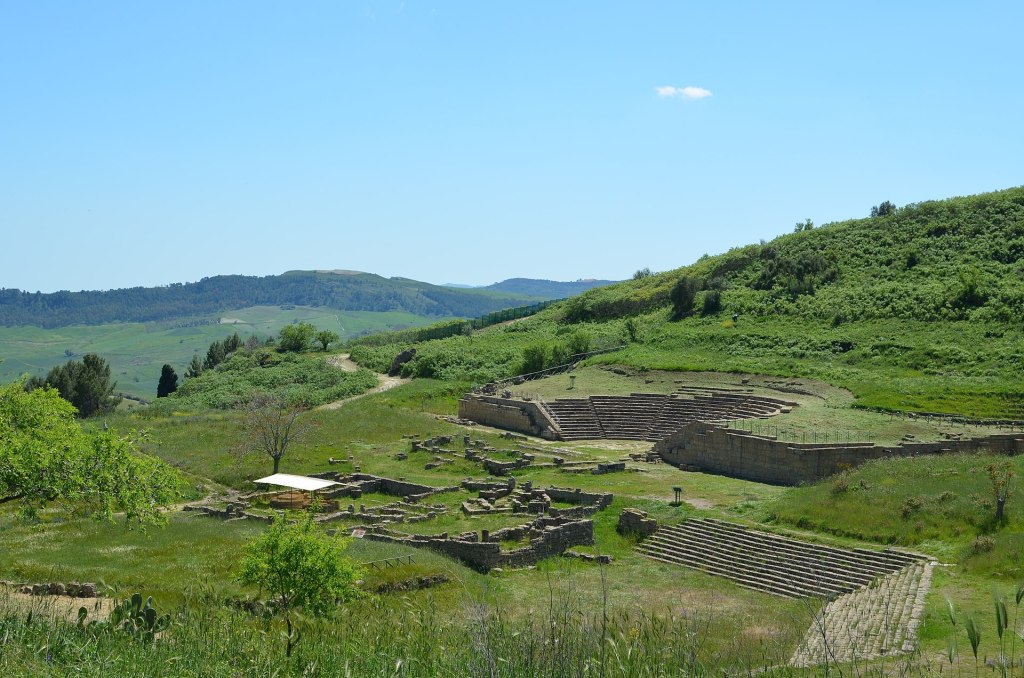
Remains of the sanctuary of Demeter & Persephone, and a Greek theater beyond the sanctuary. Image from Wikimedia Commons

Morgantina was home to a major sanctuary dedicated to Demeter and Persephone, the excavated remains of one may be seen in the above photo. Researchers discovered that there were actually five separate sanctuaries in Morgantina dedicated to Demeter and Persephone, and each one likely served different functions. They were located on each directional side (north, south, east, and west). Morgantina is near Pergusa, which is where Persephone was abducted by Hades. A main sanctuary, referred to as the “thesmophorion” to celebrate the Eleusinian mysteries, comprised of several different rooms, some of which were believed to be living quarters for the temple priestesses. Many different votive offerings were found surrounding the altars, and they mostly consisted of figurines and vases. Also found at the site were statues & busts of the goddesses, ritual clay lamps, and hair accessories. Some of the statues found show Persephone holding a piglet and torches. Other artifacts were found within the sanctuary, including items used for pressing oil and wine, and for grinding corn and other grains.

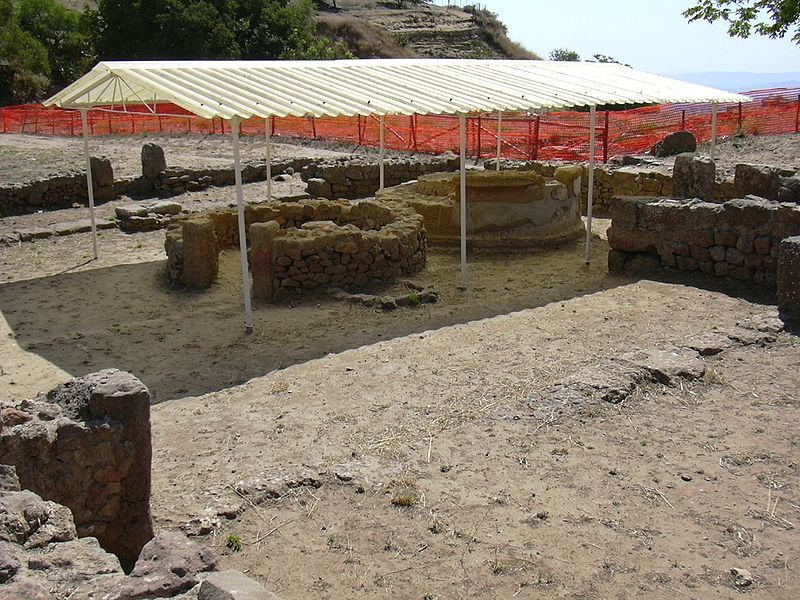
As seen in other sanctuaries to Demeter and Persephone, the main sanctuary at Morgantina has a propylon dedicated to a Chthonian goddess, possibly Hekate or Persephone. This propylon contains a pit in the ground for offerings (a “botros”), and a cylindrical stone altar. Animal bones (likely from pigs) and pottery votive offerings have been found within the botros.

Propylon dedicated to a Chthonian goddess, showing a round altar and botros (offering pit). Public domain image from Wikipedia

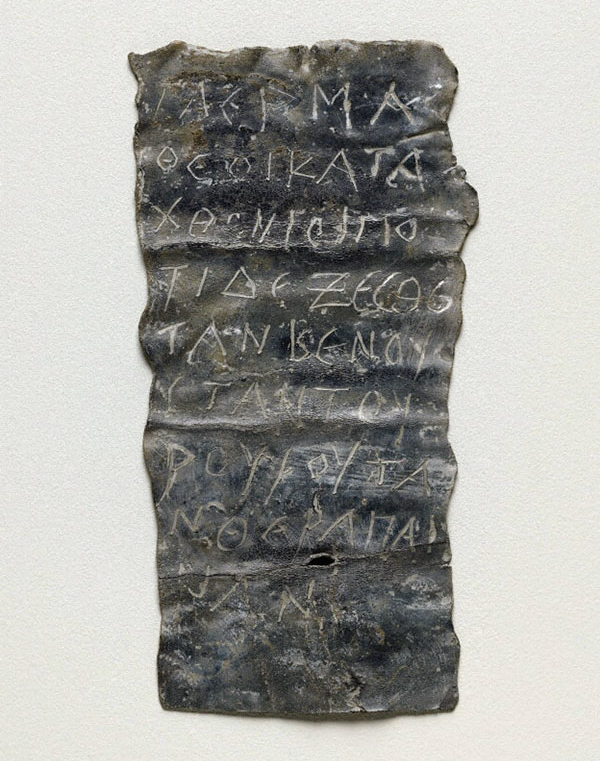
Several lead curse tablets have also been found at Morgantina, and most have been unearthed from the offering pit in the sanctuary / propylon to the still-unnamed Chthonian goddess. One tablet, pictured below, is part of a group of four tablets all cursing a slave named Venusta, and asking the gods of the Underworld to take her to their realm of the dead.

Curse Tablet, about 100 B.C., found in Morgantina, Sicily. Lead, 3 11/16 x 1 13/16 in. (9.4 x 4.6 cm). Museo Archeologico Regionale of Aidone. Photo from Getty Images.

I hope you enjoyed this short essay on Hekate in Magna Graecia: Morgantina. I will expand on this specific topic of Morgantina in the future.

ยฉ Melissa McNair / The Torch and Key


Sources:

Demeter and the Madonna Addolorata

Exploring the Misteri di Trapani and Demeter’s Search for Persephone

Trapani (sometimes referred to as โ€œDrepanaโ€) is a city on the northwest tip of Sicily, and was founded by the Elymians approximately 3rd century BCE. There are a few legends as to the founding of Trapani (near Eryx / Erice), and one of them involves Demeterโ€™s search for Persephone after her abduction by Hades. According to the legend, Demeter dropped her sickle while searching for Persephone, which would explain why the coastal land resembles the curved blade of a sickle.

Sicily was once known as Magna Graecia, and the echoes of that past are evident just about everywhere you go on that magical island. Even though Catholicism became the dominant religion in Italy, the โ€œold waysโ€ were kept by rural peasants especially in Sicily, and were disguised as Catholic to keep up appearances. One such practice is the veneration of the Black Madonna. The Catholic Church has a simplistic explanation for Black Madonnas – mostly that the statues / icons of the Virgin Mary โ€œagedโ€ over the years, darkening the coloring of the icon. But those who know, know that the Black Madonna is the divine feminine – a concept carried over from the old ways. We know Her by many names: Dark Mother, Demeter, Melaina, etc. The Catholic Virgin and Child is said by many to actually represent Demeter and Persephone, especially in Sicily where the Eleusinian Mysteries were carried out long ago in places like Selinunte and Locri. The story of Demeter and Persephone – from Persephone’s abduction to Demeter’s search for her – has been kept alive in Sicily in various ways, and one can find echoes of that in the annual Easter procession in Trapani.

Misteri

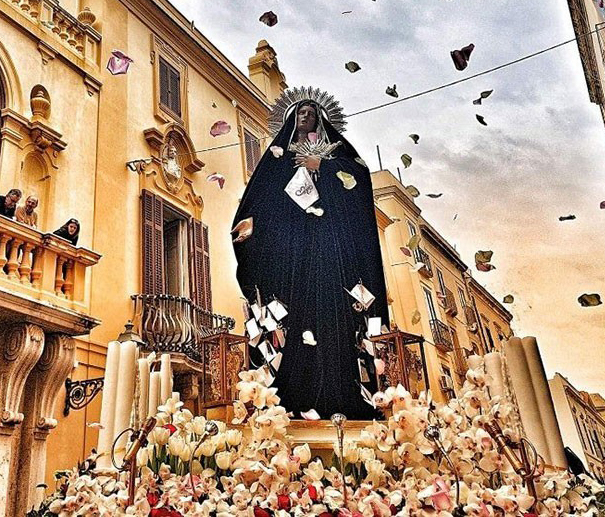
The Procession of the Mysteries in Trapani started over 400 years ago and people come from far and wide to witness this event every year. Near the end of Holy Week, on Good Friday (as of this writing in 2022 that day falls on April 15th), the procession begins with many floats depicting the passion and death of Christ. Each statue represents each station of the cross along the Via Dolorosa (โ€œsorrowful roadโ€), and the statues are usually crafted by local artisan guilds. In Trapani, there are two processions for the Holy Mother: an official church procession for the โ€œwhiteโ€ Madonna Addolorata (โ€œsorrowful motherโ€); and a second procession of the Black Madonna – the divine feminine. 

Many women of Sicily, to the dismay of the Catholic church, have always venerated the Black Madonna, sometimes in secret. To these women, the Black Madonna represents the divine feminine presence in all women and creation; the powerful Earth Mother whose blackness represents the dark, fecund earth and fertility. Simply, the Black Madonna is the protectress of the poor and marginalized people of society, and is called upon for social justice and righting wrongs. She is also the Dark Mother; the powerful force of life, death, and rebirth.

With the traditional Good Friday procession that includes the Madonna Addolorata, the statues of the son and mother separate at the beginning before the son begins the way of the cross that leads to his death. This is a solemn procession, with the mother cloaked in her dark mantle desperately searching for her beloved son. This scene transcends religions and cultures and is such a powerful display that evokes ancient, ancestral memories. During these mysteries, the statue of the Madonna is joined by a statue of John the evangelist (a saint, believed by some to be one of the Apostles), and they are carried all over town in search of the son. The Holy Week mysteries come to a conclusion on Easter Sunday, when the son is resurrected/reborn and reunited with his mother.

Madonna Addolorata, photo by Processione dei Misteri di Trapani

Eleusinia

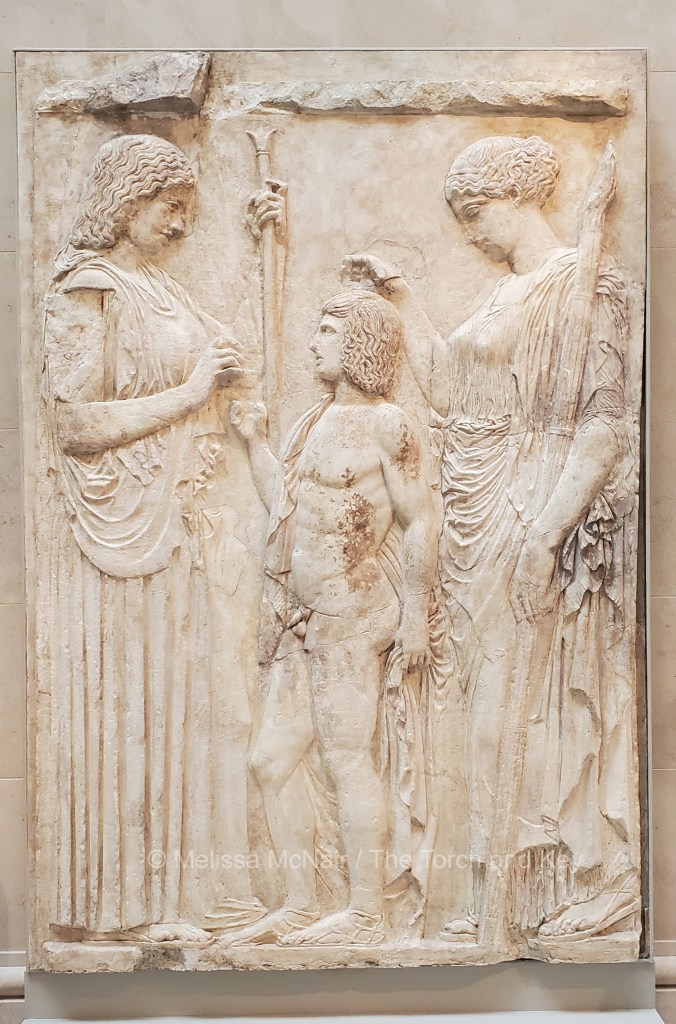
Trapani is not that far from Enna, where according to Sicilian lore Persephone was abducted by Hades on the shores of Lake Pergusa while she was picking flowers with her maidens. The story of Persephoneโ€™s abduction and Demeterโ€™s search for her is told in the Homeric Hymn to Demeter. Hekate assisted Demeter in her search for Persephone, with her torches illuminating the way. During this time, Demeter caused all crops to wither and trees and flowers went dormant while Persephone was in the underworld with Hades. Eventually, Demeter and Persephone were reunited after Zeus intervened and tasked Hermes the Messenger to mediate between Demeter and Hades to make arrangements for Persephoneโ€™s return. Hades tricked Persephone into eating pomegranate seeds, forever binding her to the underworld. Hekate then became Persephoneโ€™s torch-bearing guide on her travels between the realms in the spring and autumn. The Eleusinian Mysteries celebrated the mysteries of life, death, and rebirth.

Eleusinian relief, The Metropolitan Museum of Art, New York. Photo ยฉ Melissa McNair, personal collection
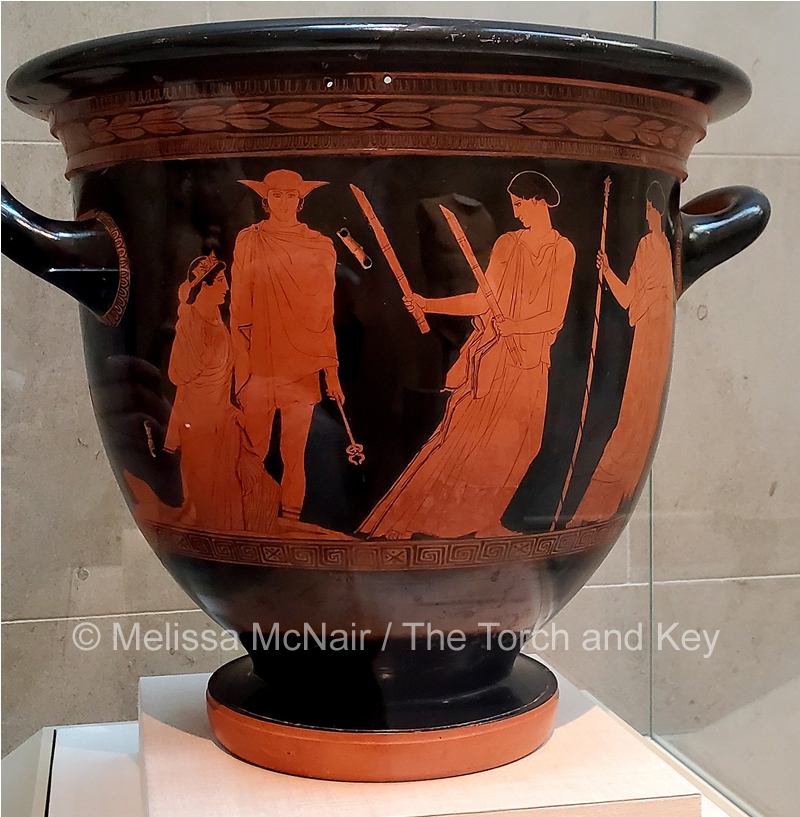
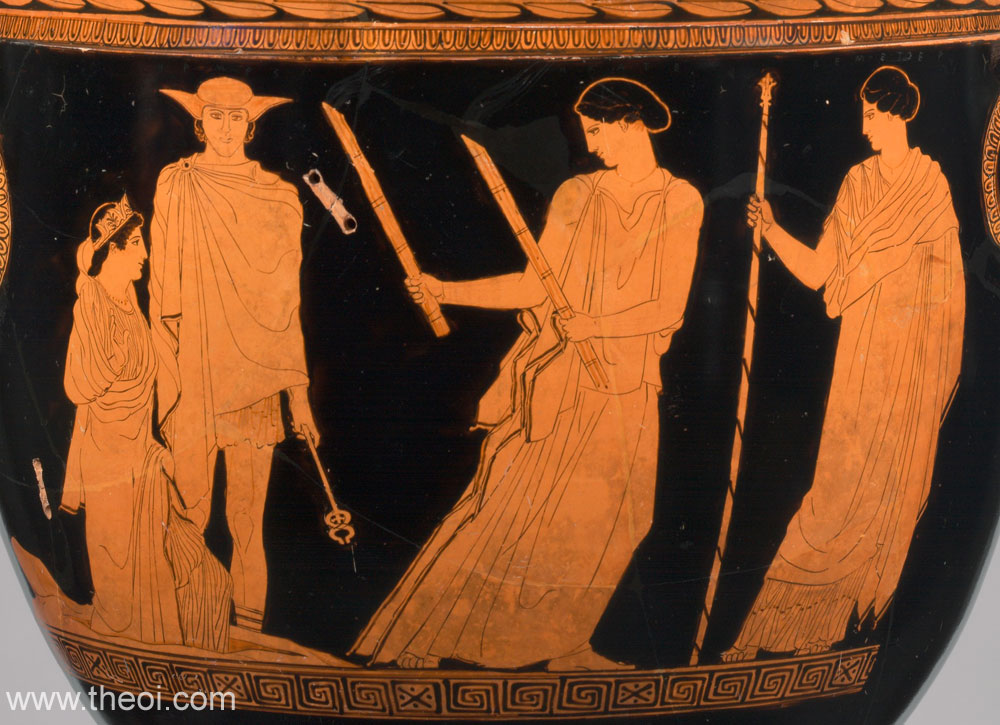
Terracotta bell-krater attributed to “Persephone Painter”, 440 BCE. Hekate and Hermes, assisting in returning Persephone from the underworld. The Metropolitan Museum of Art, New York. Photo ยฉ Melissa McNair, personal collection

ฮšฯ…ฮฑฮฝฮฟฯ€ฮตฯ€ฮปฮฟฯ‚ / Kyanopeplos

The Madonnaโ€™s search for her beloved son is similar to Demeterโ€™s search for Persephone. Both mother figures are experiencing pain and a deep, aching dread. Their searches are wrought with sorrow, frustration, and grief. One may say, when witnessing the procession of the Madonna Addolorata cloaked in her dark mantle, that she held a quiet rage within her. Rage for being separated from her child, and rage for wanting justice.

Demeterโ€™s grief over losing Persephone eventually turned to rage, when she caused all crops, plants, flowers, and trees to wither and die while she was searching for her daughter. She decreed the lands to be eternally barren while separated from her beloved Persephone. In the Homeric Hymn to Demeter, she is described as being veiled (โ€œKyanopeplosโ€), not unlike the Madonna, during her search for Persephone:

“Bitter pain seized her heart, and she rent the covering upon her divine hair with her dear hands: her dark cloak she cast down from both her shoulders and sped, like a wild-bird, over the firm land and yielding sea, seeking her child.”

“[Demeter mourning Persephone] walked behind . . . with her head veiled and wearing a dark cloak which waved about the slender feet of the goddess . . . “

Homeric Hymn 2 to Demeter

The ancient Greeks associated this myth with the changing of the seasons from summer to dormant autumn with her abduction, and Persephoneโ€™s return to the world of the living with the return of spring. To this day, many Sicilians living on country farms make offerings to Demeter for bountiful harvests and express their gratitude for their prosperity and abundance during the growing seasons.


I hope you enjoyed this short blog post about the magical Misteri, and that it has perhaps inspired you to delve into the mysteries of the Black Madonna and her connections to Demeter and Hekate. Sicily is forever in my heart, my soul, and in my bones. It is my ancestral land; the history, the lore, the ancient memories are etched within me. I have been a devotee of Hekate for many years, and Demeter and Persephone are close to my heart as well.

ยฉ Melissa McNair / The Torch and Key


Sources:

Hekate Enodia – At the Crossroads

image by Vicco Gallo

Hecate whose name is howled by night at the city crossroads

“Aeneid”, Virgil

O Lord Helios and Sacred Fire

The spear of Hekate of the Crossroads

Which she bears as as she travels Olympus

And dwells in the triple ways of the holy land

She who is crowned with oak leaves

And the coils of wild serpents

fragment from “The Root Cutters”, Sophocles

Enodia means “of the ways” or “of the crossroads”, and it is one of the most familiar epithets belonging to Hekate. Hekate is a liminal goddess, traversing the realms of the universe and guarding the boundaries that separate these realms as well as boundaries that are nature, human, and spirit made.

The crossroads are both literal and metaphorical places. Actual crossroads are liminal places where two or three roads converge, and it is where Deipnon offerings are traditionally left on the night of the Dark Moon. The “restless dead” are said to inhabit the crossroads; they are the souls of the dead who had difficulties crossing over after they passed from the world. Hekate, as pyschopomp, assists in guiding these souls and the Deipnon offerings are meant for them.

Metaphorical crossroads are where one finds themselves when experiencing a major life change, or where one is facing a very difficult decision and the way forward isn’t always clear. Hekate is called upon as a companion on this path, offering Her assistance to help guide one forward towards the unknown.

I would like to share a story from years ago when I was a teenager, on a night out with my friends on a very auspicious date. Looking back, I believe this was the night Hekate claimed me as Hers, though I didn’t realize it at that time.

The Search

It was November 13, 1992. Friday the 13th. I was 16 years old. I got together with a small group of friends from work and we set out on a quest to find “Mary’s Grave” – a legend in our neck of the woods on Long Island. The site we were seeking was in Stony Brook, and it was said to be the location where Mary was murdered for being a witch (another version had her being murdered because she killed her father). We didn’t really have much to go on location-wise; it was a time before the internet and GPS existed and we relied on word of mouth from other people and had directions that were written down on a piece of paper.

I was the last to be picked up. The friend who was driving was a couple of years older than me, and she was a seer who could speak to the dead. Everyone at work knew about it and I found it to be fascinating. When I got in the car, “Crazy Train” from Ozzy Osbourne had just begun playing on the radio and it seemed to set the mood for the evening: exciting, a little scary – a journey into the unknown, full of possibilities. Every time I hear that song, it brings me back to that night.

We made our way to the area of Stony Brook, and found the spot where we were instructed to park. We parked the car, and set out on foot into the night. It was a little spooky – we were at the end of a narrow road, surrounded by the woods. It was not long after Halloween and just a few days after the Full Moon. There was a damp chill in the air that also resulted in a bit of a mist. The trees had lost most of their leaves by now and the bright moonlight cast shadows everywhere.

We walked for what seemed like forever until we came upon an open field. We weren’t sure we were in the right place, but everything felt “electrified”. I don’t know how else to describe it, but it felt like a place of power. Someone in our group became spooked by the sudden call of an owl out of complete silence, and she screamed. We all turned around and ran back to the car and quickly drove away.

Enodia

For some reason, we were lost and didn’t know where to go. We went back the way we came, but somehow the road we were traveling on was completely unfamiliar to us. Eventually we came to a crossroads, where the road split into two. We did not know which road to take and the friend who was driving became panicked. Suddenly, a white wolf with glowing red eyes appeared at the center of the crossroads, and the wolf was facing the road that veered off to the right. I told my friend to turn right, and she did.

It turned out that the road to the right was the path we needed to take and we were soon in familiar territory. My friend asked me how I knew which way to go, and I remember saying (paraphrasing, because I don’t remember my exact words) “didn’t you see the wolf in the middle of the road”? She said no and sounded a little shaky. No one else in the car, save myself, saw this beautiful white wolf with the red eyes. This creature in-between disappeared almost as quickly as it appeared. There were a few weird moments following me sharing what I saw, but it was soon forgotten once everyone else was relieved to be on the road home.

The Liminal

Those moments on the unknown road, heading towards the crossroad – they felt outside of time and space. It was definitely a liminal area of the in-between, where the spirit and physical worlds collide and time as we know it doesn’t exist. That wolf appeared to me for a reason, and She was guiding me. It was a sign we needed for that moment, but I also believe I was claimed that evening even though it has taken me many years to awaken to that knowledge.

๐Ÿ—


ยฉ Melissa McNair / The Torch and Key

Hekate Phosphoros

One of Hekate’s roles is that of Phosphoros – “Lightbringer” or “Lightbearer”. Hekate’s torches illuminate that which is dark. She leads the way, torch in hand, for those who have heeded Her call to immerse themselves in Her mysteries. Hekate’s torches also illuminate Truth by banishing ignorance and fear that breeds in the dark. That illumination can sometimes be a difficult and life changing process. There is a saying among many Hekateans: “En Erebos Phos” – “In darkness, there is light”. Darkness cannot exist without light, and light cannot exist without darkness. For me,  Hekate Phosphoros embodies that concept.

On this Equinox and another turn of the wheel, we in the Northern Hemisphere are celebrating Spring and the ever-growing light as we progress to brighter and longer days. In the Southern Hemisphere, Autumn has descended and the days are growing shorter and darker. Wherever you are in the world, we are all experiencing that balance of light and dark in this moment. Hekate as Anima Mundi stands at the crossroads of the universe – a place of balance.

Photo ยฉ Melissa McNair / The Torch and Key

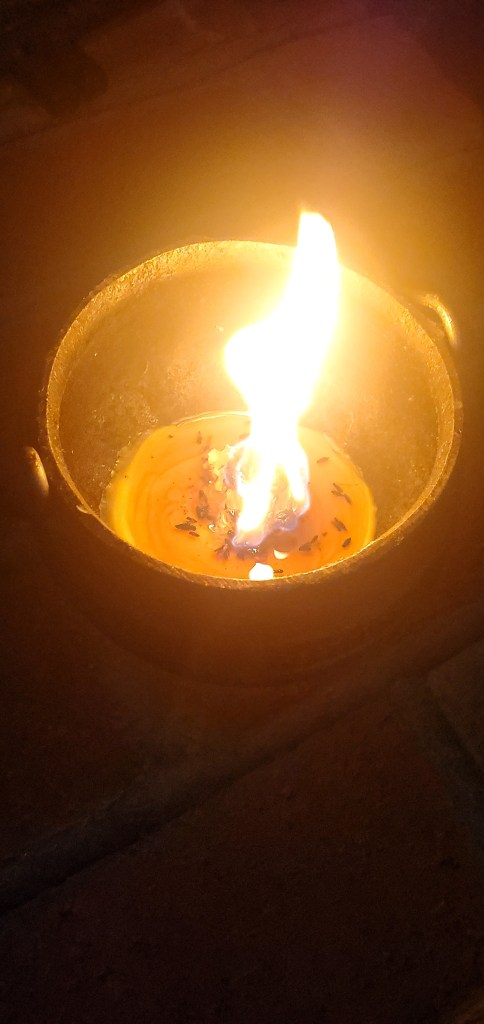
Today, I celebrated the return of Spring in a simple yet meaningful ritual. I made a beeswax candle using an ethically crafted beeswax sheet and rolled it up with dried organic lavender buds and a eco-friendly cotton wick. I decided to burn this candle completely in my mini cast iron cauldron, and I’m glad I did because once it neared the bottom, the sacred fire came alive, becoming enlarged and beautiful (see above photo). I sang praise to Hekate, honoring Her role as Phosphoros and Anima Mundi.

The Return of Spring and Persephone

“The Return of Persephone”, Attic vase dated circa 440 BCE

Spring is traditionally a time of rebirth and renewal. The Earth is awakening from her winter slumber, and life is beginning to stir in both flora and fauna. The return of Spring also brings the return of Persephone from the Eleusinian Mysteries. The Rites of Eleusis were initiatory mysteries taking place in the autumn and spring, marking the descent of Persephone into the realm of the dead with her consort Hades (autumn), and Persephone’s return to the mortal world above to be reunited with her mother Demeter (spring). (see related blog post regarding Enna in Sicily).

Hekate had an integral role in these mysteries, acting as Persephone’s companion and guide during both her descent and return. Much isn’t known about the Eleusinian Mysteries, but scholars agree that it centered on the concept of life, death, and rebirth. The Eleusinian Mysteries were tied to the agricultural season of the Mediterranean region, and the mysteries were used to help explain the seasonal changes of growth and life, death and decay, and regeneration of that which died.

Hekate is a liminal goddess that straddles the realms of these forces with ease. Demeter represents life, Persephone represents death and rebirth, and Hekate as Creatrix weaves these energies together. All three goddesses were honored during these rites.

The image above is from a vase dated back to 440 BCE. It shows Persephone, on the left, returning from the realm of Hades. Hermes is standing next to Persephone, and Demeter is on the far right holding a scepter. Hekate is in the center, bearing two torches while guiding Persephone’s return.

๐Ÿ—


ยฉ Melissa McNair / The Torch and Key


Image source: Theoi, https://www.theoi.com/Gallery/T16.6.html

By the Light of the Moon

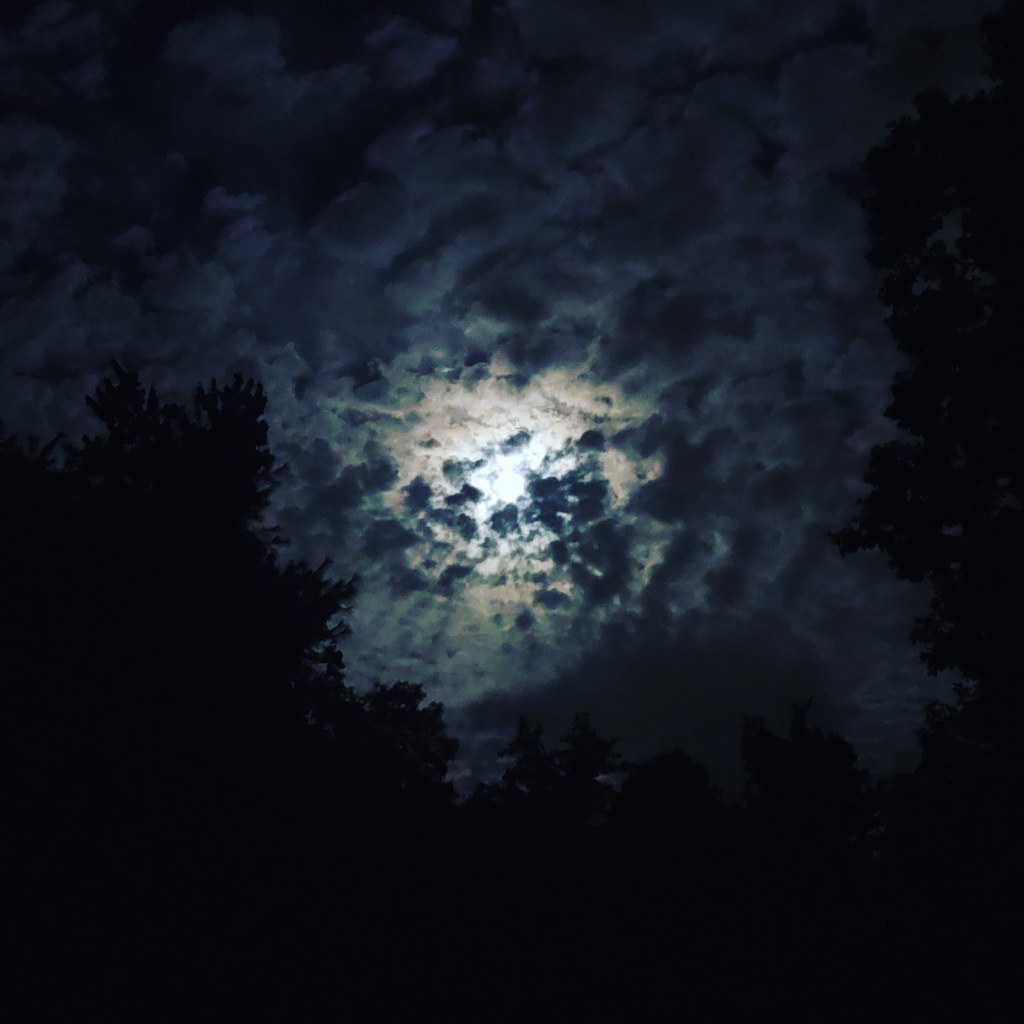
ยฉ Photo by Melissa M. / The Torch and Key

Once in a while, I revisit a favorite book and read it again for a renewed perspective. Recently, I decided to delve into “Drawing Down the Moon” by the late (and great) Margot Adler. I first read this book 14 years ago and it had a huge impact on me. Back then, I was beginning my “pagan awakening” and this book validated a lot of feelings I was having at the time and it helped me feel as if there were possibilities, and hope for my new journey into the unknown. It also was (and still is) an invaluable resource for learning about the rise of paganism in the United States. I decided to revisit this beloved book because I have been feeling a disconnect with myself and my path. I am not sure why, but I suspect “COVID fatigue” may be a factor. This has certainly been a challenging year for my family, as well as for countless others. It has impacted all of our lives in different, yet similar ways. I have this strong desire to get back to my  “pagan roots” – whatever that may be; and I figured this book is kind of where it began so it was a logical choice for a re-read.

One passage in the beginning of the book really struck me with a force of recognition and comfort, and it moved me enough to want to write about it. It was about the simple, fulfilling ritual of honoring the full moon. Here is the quote:

“Do it, perhaps, on a full moon, in a park or in the clearing of a wood. You don’t need any of the tools you will read about in books on the Craft. You need no special clothes, or lack of them. Perhaps you might make up a chant, a string of names of gods and goddesses who were loved and familiar to you from childhood myths, a simple string of names for earth and moon and stars, easily repeatable like a mantra.

And perhaps, as you say those familiar names and feel the earth and air, the moon appears a bit closer, and perhaps the wind rustling the leaves suddenly seems in rhythm with your own breathing. Or perhaps the chant seems louder and all the other sounds far away. Or perhaps the woods seem strangely noisy. Or unspeakably still. And perhaps the clear line that separates you from bird and tree and small lizards seems to melt. Whatever else, your relationship to the world of living nature changes. The Witch is the changer of definitions and relationships”

Reading this passage awakened something in me. When I first read this book all those years ago, I really didn’t know anything about magic or ritual or what tools were best used. I was a beginner and had just set foot on a path that was completely unknown to me. I was an avid reader at first (I still am!) and I devoured any book I could get my hands on that interested me. I began with the often recommended titles from Scott Cunningham, Raymond Buckland, Starhawk, etc. My practice eventually evolved into Hellenic polytheistic worship with Hekate as my goddess and guide. But one thing that always worked for me over the years and stirred my soul like no other was the simple practice mentioned in the excerpt above. Of course, I performed formal rituals when needed. But most of the time, my rituals were wild, unscripted, and under the night sky.

I love stepping outside when the sky is dark and the stars are twinkling. The moon may or may not be in the sky, depending on the phase. That first look at the night sky always takes my breath away. I love to gaze at the stars, imagining what they look like up close and if they communicate with each other. The wonder of it all is awe-inspiring to me. We on Earth are but a grain of sand in a vast, infinite universe where the possibilities are endless.

After being out there for a little while, I begin to focus. My breathing becomes steady and measured. My third eye awakens, and my body begins to tingle. Often, the words roll off my tongue and flows like a river. I lift my arms in praise of nature,  the moon and stars. I sing a song of love and wonder. I don’t often plan ahead any of the words I speak. They are raw and spontaneous and honest. Sometimes I don’t “feel” in control; the words are coming out of my mouth but I often feel like a vessel or an oracle.

As I speak, the tingle in my body that I felt earlier grows stronger until my whole body is humming with energy. I can feel the energy shift within myself and my surroundings. The sky grows darker, and the moon and stars grow brighter. The creatures of the night may increase their sounds or become still and silent, depending on the time of year. In the winter, there aren’t many animals out in the cold nights. I live in northern New York, and our winters are cold and snowy. I may hear the distant call of an owl during the winter, or a wolf howling. During the summer it’s different. There is a small pond just beyond my backyard, and it is often alive with creatures when it’s warm out. The chatter of the frogs can become very intense, as does the snapping turtles and Canadian geese. Sometimes a soft breeze will rustle the tree limbs of the massive oaks and maples that fill my backyard, whispering their secrets. Lightning bugs will be visible, sometimes dozens at once, when it’s really hot. When this happens, it feels like these wondrous creatures are joining in my chorus of praise. It is an amazing, unifying feeling, and I feel a kinship with the land and those that share it with me.

Whenever I am singing my song of praise and wonder, I acknowledge those creature sounds as the goddess making her presence known. Especially if it was silent before I began. I always get chills down my spine when I am speaking praise of Hekate in the still, silent night and a wolf begins howling in the distance. Sometimes, I will see a shooting star as I am chanting.

When these informal, raw moments occur it is just me and nature. I don’t light a candle, or use any tools or burn incense. I stand barefoot on the earth and ground myself, and I always touch the ground when I am finished and return that energy I raised to the earth. Often, my dreams that night may be very vivid and I keep a dream journal to record them.

Reading that excerpt from “Drawing Down the Moon” inspired me to share my experiences with bare-bones rituals that can be done literally anywhere and any time you are moved to do so. Connecting to nature this way is so raw and primal and empowering and at the same time intimate. I hope that you may be moved to try this as well whenever the opportunity presents itself.

โ˜†โ˜†โ˜†


Source:

Adler, Margot. “Drawing Down the Moon: Revised and Expanded Edition”. Penguin Books. 2006.