Hekate Kleidoukhos

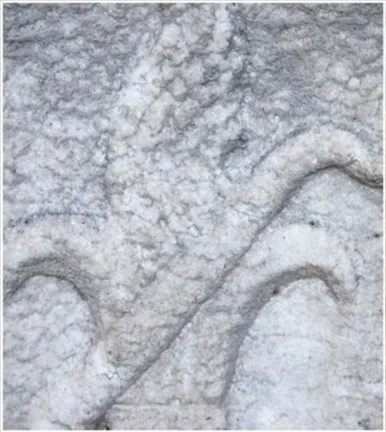
Image of a torch and key motif found on a column at the Temple of Hekate in Lagina. Photo from Anatolian Archaeology, photographer unknown

This post is part of a series regarding Hekate’s epithets, and the full list may be found here. This is a work in progress.


“Kleidoukhos” (sometimes spelled “Kleidouchos”) is one of Hekate’s more well-known epithets, and it translates to “Keeper of keys”. In ancient times, the role of “Kleidophoros” (Key-bearer) of the temple was an important one; the key that the priestess (or priest) carried signaled the authority that person had over the temple and sanctuaries, and the duties they were responsible for as guardian of this sacred space. Besides the obvious need to protect valuable artifacts (such as cult statues) and money within the sanctuary, keys have a metaphorical / symbolic meaning beyond the mundane demands of security.

The Orphic Hymn to Hekate, dated to about the 3rd century BCE to 2nd century CE, first mentions Hekate as Kleidophoros. I am sharing the more well known translation by Thomas Taylor below, as there are many translations out there:

“Hekate Einodia, Trioditis [Trivia], lovely dame, of earthly, watery, and celestial frame, sepulchral, in a saffron veil arrayed, pleased with dark ghosts that wander through the shade; Perseis (daughter of Perses), solitary goddess, hail! The world’s key-bearer, never doomed to fail; in stags rejoicing, huntress, nightly seen, and drawn by bulls, unconquerable queen; Leader, Nymphe, nurse, on mountains wandering, hear the suppliants who with holy rites thy power revere, and to the herdsman with a favouring mind draw near.”

The world’s key-bearer“. That statement is a mighty one, and conveys the enormous regard and responsibility bestowed upon Hekate in the ancient world. Hesiod’s Theogony is perhaps the oldest written record (dates to approximately 700 BCE) mentioning Hekate, and describes how Zeus honored Hekate above others by giving Her dominion over the three realms – the heavens, earth, and sea:

“Hecate whom Zeus the son of Cronos honoured above all. He gave her splendid gifts, to have a share of the earth and the unfruitful sea. She received honour also in starry heaven, and is honoured exceedingly by the deathless gods.” – Hesiod, Theogony

Keys are symbolic, and represent access. Access to knowledge, spaces, relationships, crossing boundaries, etc. As a liminal goddess of boundaries, Hekate – in Her role as Propylaia – holds these keys and grants access to those who are ready for Her mysteries. Hekate grants access from liminal, in-between spaces to more defined spaces with doorways and keys acting as metaphorical symbols of these liminal qualities. There are numerous ancient reliefs and sculptures that depict keys in relation to Hekate, such as the image at the top from a column found at Her temple in Lagina.

The Greek Magical Papyri (also known as simply “The PGM”) has several spells that mention Hekate and keys as magical/symbolic objects, and here is one excerpt from PGM IV. 2241-2358, “Document to the waning moon” that mentions keys (there are a few different mentions in this particular spell):

“Then, too, I’ll speak the sign to you:
Bronze sandal of her who rules Tartaros,
Her fillet, Key, wand, iron wheel, black dog,
Her thrice-locked door, her burning hearth, her shadow,
Depth, fire, the governess of Tartaros”

In addition to keys, other symbols of Hekate appear in this PGM passage: bronze sandal, iron wheel (iynx, perhaps), and black dog.

Kleidos Agoge
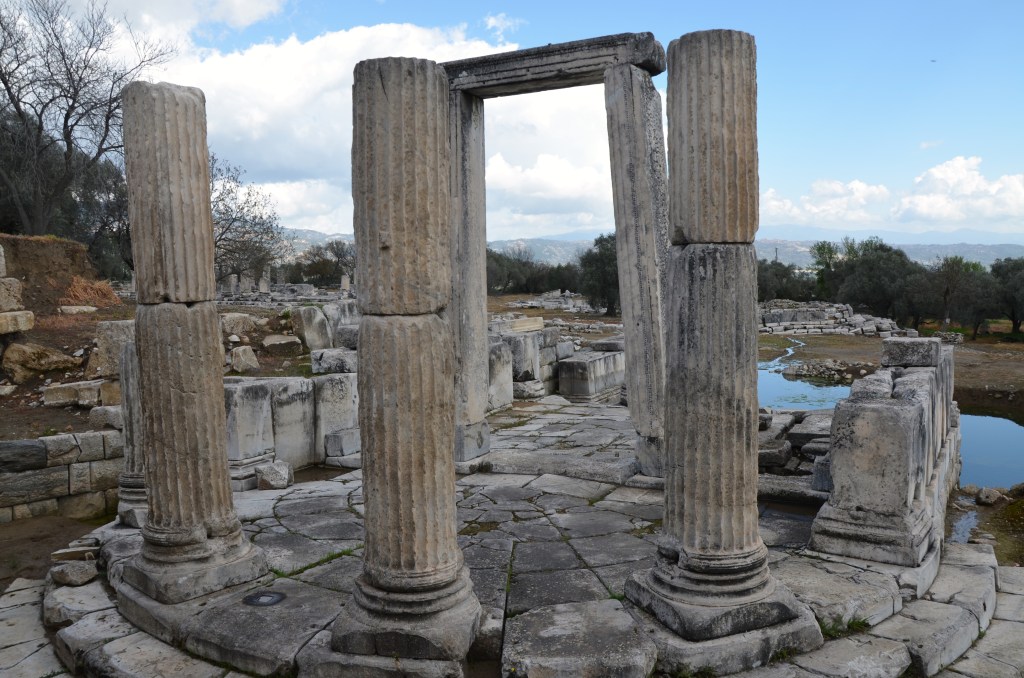
The Propylaea to Hekate’s temple at Lagina, photo from Wikimedia Commons

Stratonikeia was a very important city in what is now modern day Tรผrkiye, located in the western Anatolian region of Caria. Nearby, at Lagina, are remains of a great temple that was built to honor Hekate. This temple is currently the only known temple dedicated solely to Hekate that remains partially standing. It is also the only temple that functioned as a state-sponsored center of worship of Hekate.

One major aspect of rites honoring Hekate at Lagina was the “Kleidos Agoge” – the “Procession of the Key” (some references may call it the “Festival of the Key”). This festival took place every year and spanned a few days; games were played, music and hymns were offered to Hekate, and the Kleidos Agoge was the highlight of this multi-day annual celebration. A Kleidophoros, usually the young daughter of the temple priest, carried the temple key in a procession on the sacred road from the temple in Lagina to Stratonikeia. The key was brought to an altar dedicated to Hekate within an official council building in Stratonikeia, and visitors would then bring offerings and make sacrifices at this altar while the key was on display. The key was then returned to Lagina in another procession on the sacred road, and celebrations would then continue.


ยฉ Melissa M. / The Torch and Key

Sources:

Betz, Hans Dieter, editor.ย The Greek Magical Papyri in Translation, Including the Demotic Spells. Vol. 1, 2nd ed., University of Chicago Press, 1997.ย 

HERRING, AMANDA. โ€œReconstructing the Sacred Experience at the Sanctuary of Hekate at Lagina.โ€ Journal of the Society of Architectural Historians, vol. 79, no. 3, 2020, pp. 247โ€“63. JSTOR, https://www.jstor.org/stable/48740836. Accessed 16 May 2026.

The Covenant of Hekate, https://www.facebook.com/CovenantOfHekate/posts/epithetshekate-kleidouchos-the-bearer-of-the-keysthe-term-kleidouchos-means-the-/4581834658503710/

The Covenant of Hekate, https://www.hekatecovenant.com/post/the-cult-of-hecate

Hekate Angelos – Messenger, Liminal Mediator

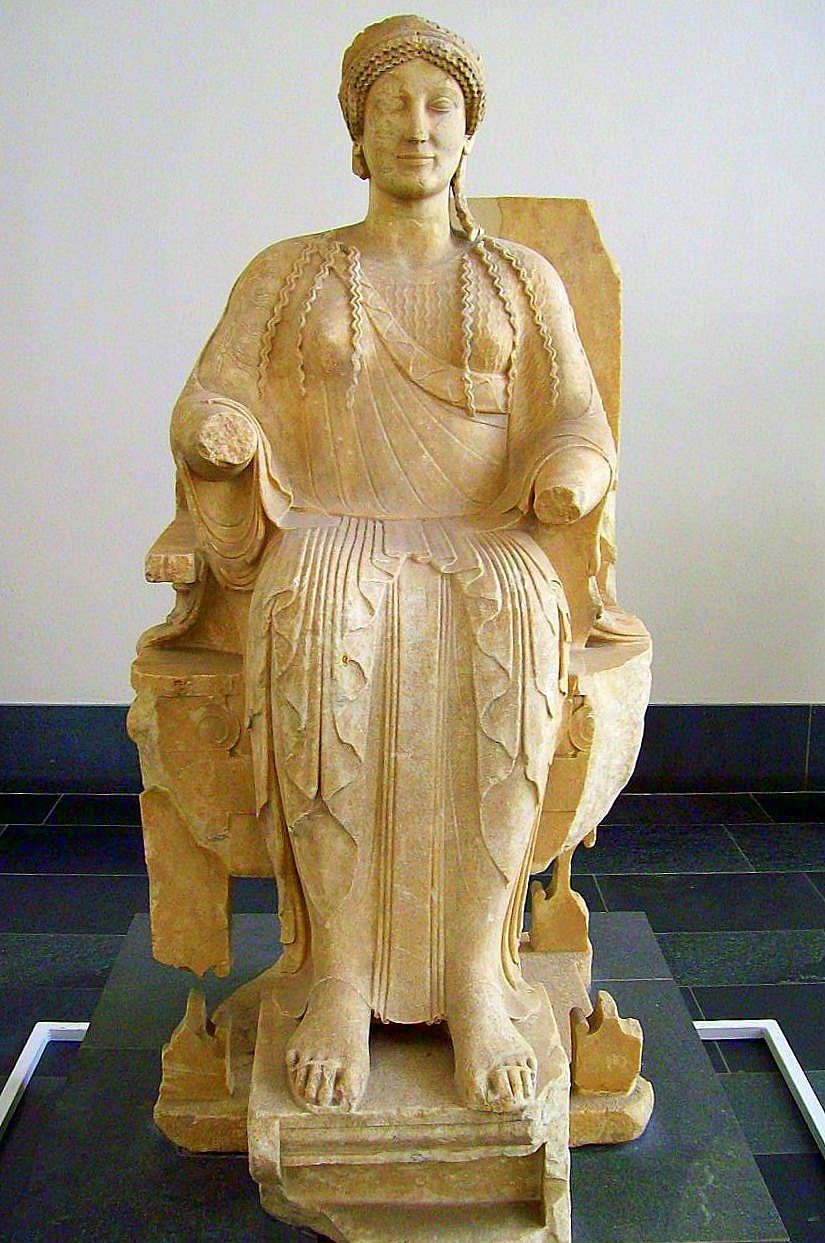
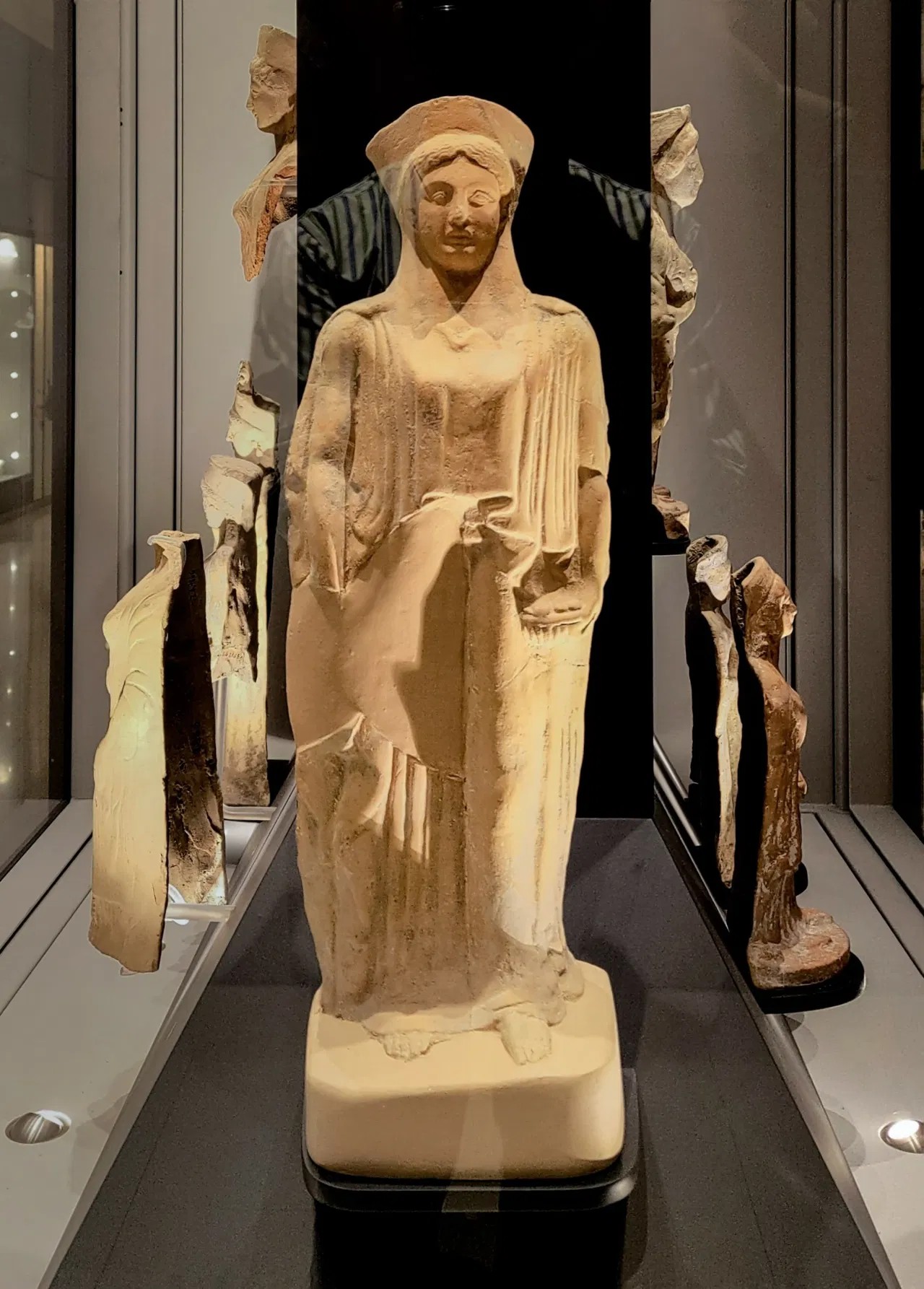
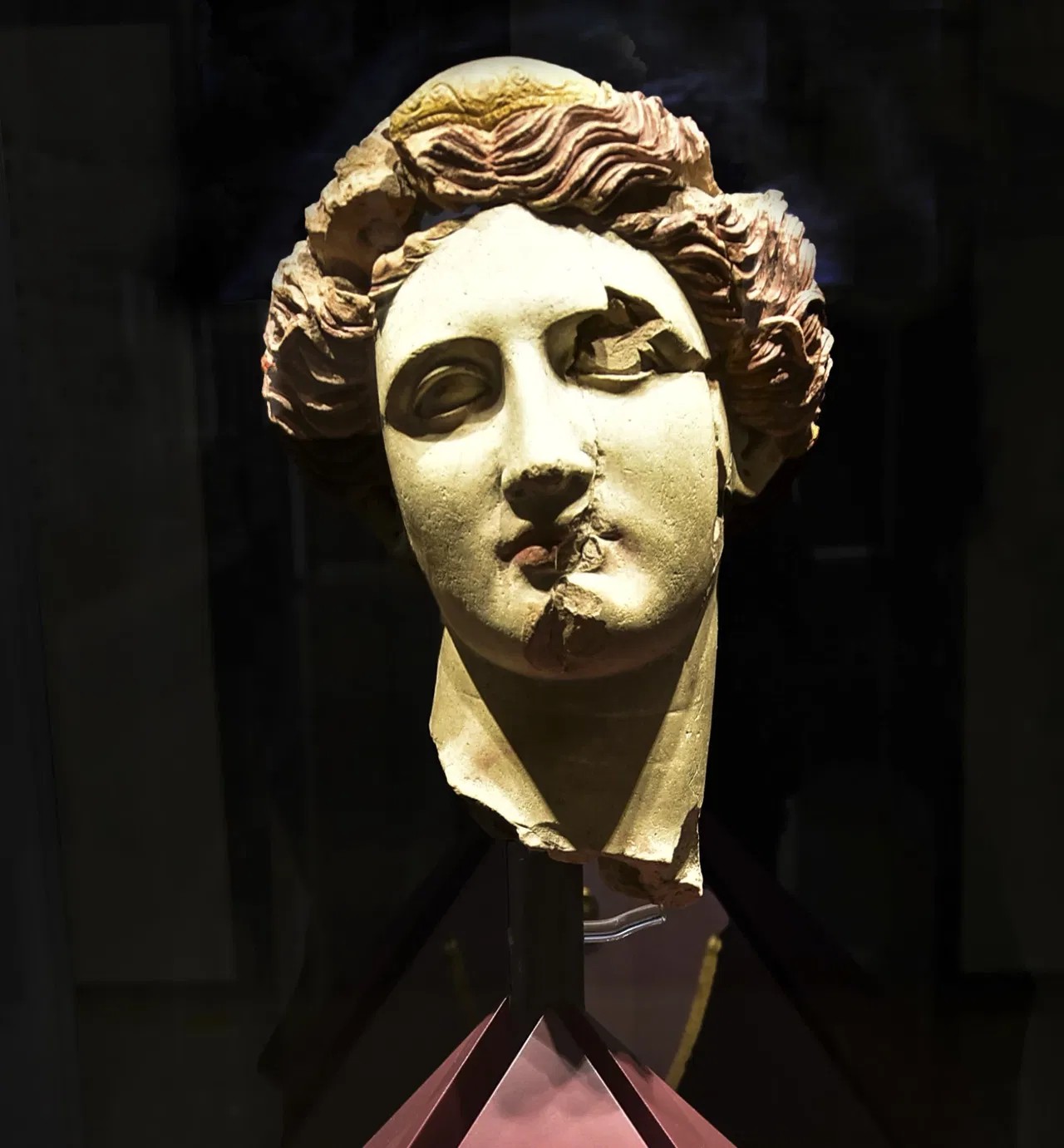
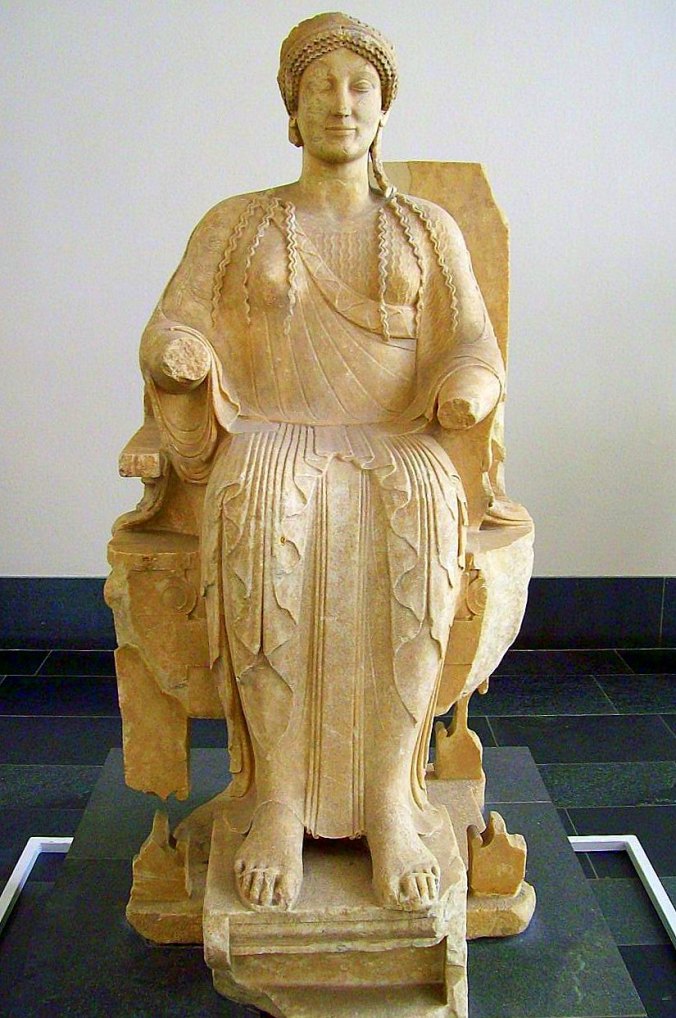
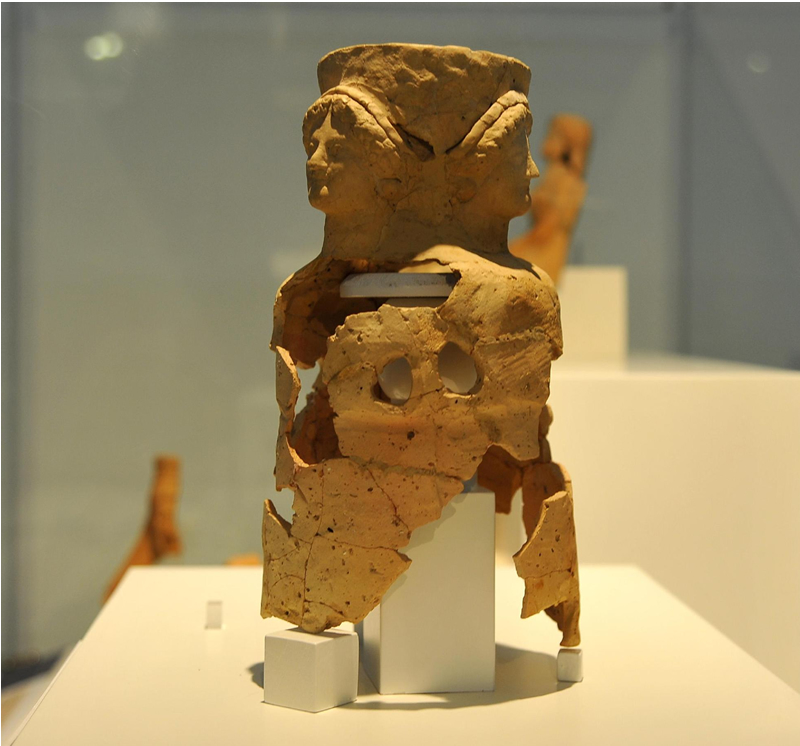
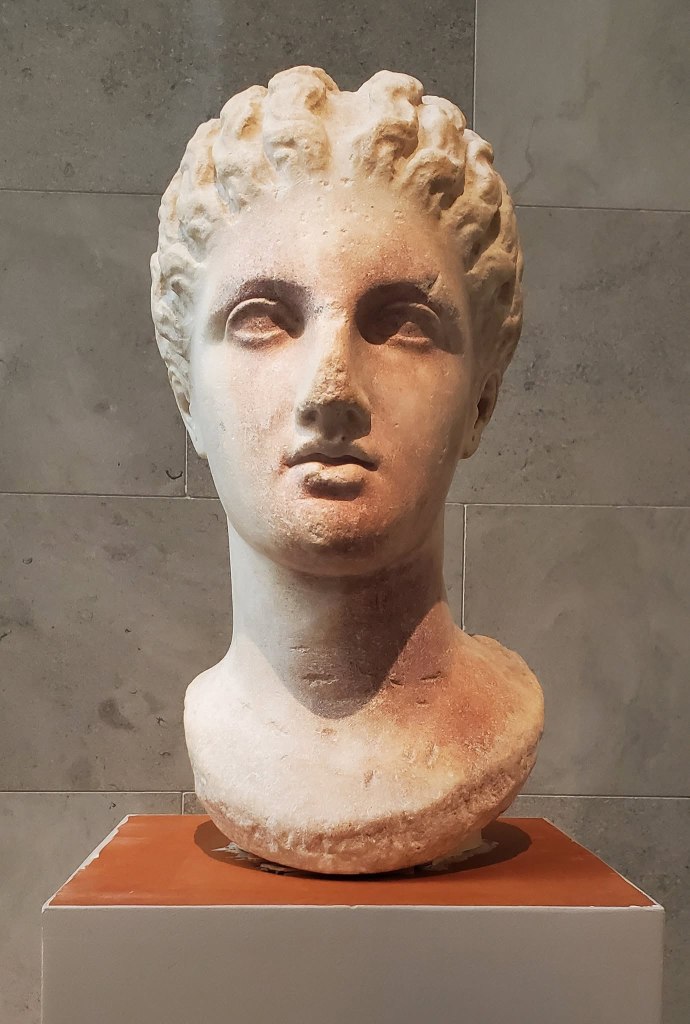
Remains of a statue of Hekate excavated from the site of the Temple of Demeter Malophoros in Selinunte, Sicily dated to approx 4th century BCE

“Angelos” is a title / epithet meaning “messenger”, or “angel”. The concepts of divine angels are mostly known due to being referenced throughout numerous Abrahamic bible passages and psalms, and within those biblical texts angels were sent from God to either deliver messages, or to act as an intermediary with assisting one or more persons.

One of Hekate’s known epithets is “Angelos”, an ancient title shared with Artemis. In Siracusa/Syracuse, a major ancient Greek colony on the southeast coast of Sicily, stood a temple dedicated to Artemis and Apollo that was center of cult worship for Artemis Angelos. In Greek mythology, Angelos was the daughter of Zeus and Hera who eventually became a chthonic goddess.ย Writer Sophron explains:

โ€œAngelos was raised byย nymphsย to whose care her father had entrusted her. One day she stole her mother Heraโ€™s anointments and gave them away toย Europe. To escape Heraโ€™s wrath, she had to hide first in the house of a woman in labor, and next among people who were carrying a dead man. Hera eventually ceased from prosecuting her, and Zeus ordered theย Cabeiroiย to cleanse Angelos. They performed the purification rite in the waters of theย Acherusiaย Lake inย theย Underworld. Consequently, she received the world of the dead as her realm of influence, and was assigned an epithetย katachthoniaย (โ€œshe of the underworldโ€)

Hekate as “Angelos”

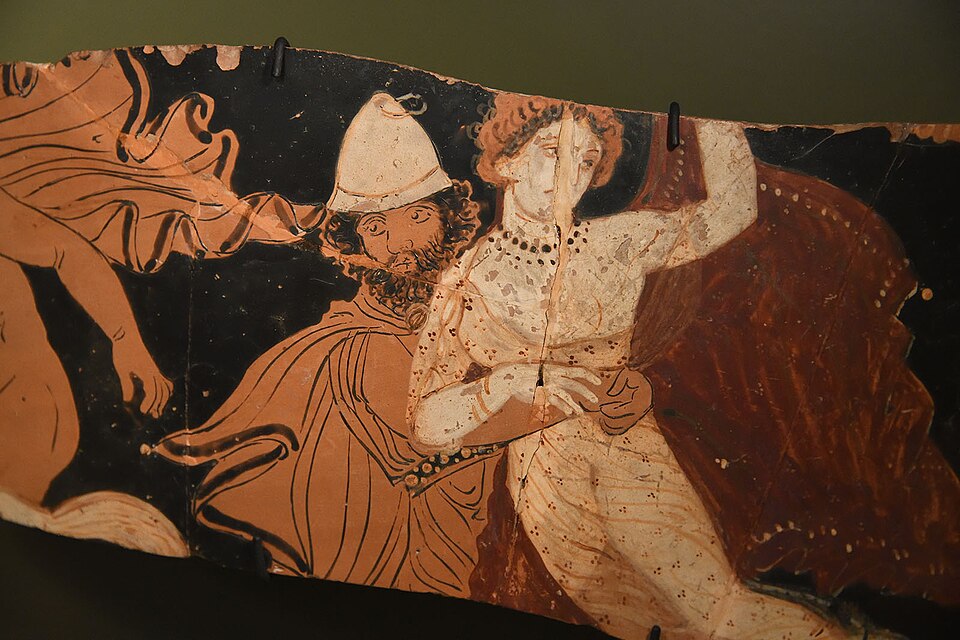
Hekate’s own role as “Angelos” can be found in the Homeric Hymn to Demeter, which details the abduction of Persephone by Hades and Persephone’s return to Earth. First, we learn about Hekate bearing a message to Demeter after Persephone was abducted, which results in Hekate and Demeter visiting Helios to negotiate a search for Persephone. Later in the hymn, we learn of Hekate being assigned the role of guiding Persephone on her trips between the realms of the Earth and Underworld. Hekate is known as a liminal goddess, traversing the boundaries between realms and the title “Angelos” as messenger / mediator fits within Hekate’s role as “Propylaia” (guardian of thresholds) and “Propolos” (companion and guide).

The Flower of Fire

In the Chaldean Oracles, Hekate is described as the “Cosmic World Soul” that acts as an intermediary or messenger / transmitter between the “paternal intellect” (ideas), and the power in Hekate’s “cosmic womb” that in turn enlivened those ideas and transmitted them, thus ensouling the material / physical world. This concept is discussed in great detail in the book (her published dissertation) “Hekate Soteira” by scholar Sarah Iles Johnston and I highly recommend reading it (if you haven’t already).

Fragment 34 of the Chaldaean Oracles states:

โ€œFrom here springs forth the genesis of varied matter;

From here the sweeping lightning obscures its flower of fire

As it leaps into the hollows of the Cosmoi; for from here all things

Begin to stretch forth towards that place beneath the wondrous rays.โ€

The Sanctuary of Demeter Malophoros

Selinunte in Sicily was a major Greek colony and is the location of the great Sanctuary of Demeter Malophoros. The title “Malophoros” means “fruit bearer”, and in this temple the Eleusinian Rites were re-enacted. Various votive remains have been excavated from this site depicting Hekate, Demeter, and Persephone, and the temple area has been turned into a protected archaeological park that also contains temples to other gods, including Hera and Athena. Many of the sanctuary remains are housed in a museum in Palermo, Sicily.

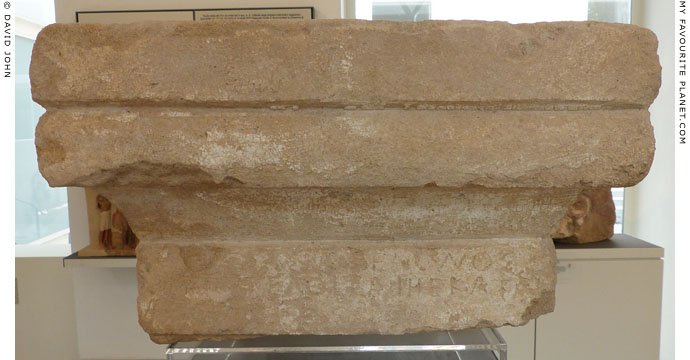
One excavated archaeological artifact is the base of a statue with a votive inscription to Hekate engraved on it:

A statue base with a votive inscription dedicated to Hekate, on display at Antonino Salinas Regional Archaeological Museum, Palermo, Sicily. Dated approx 450 BCE

The inscription on the statue base pictured above reads:

“Alexias son of Xenon made [this] dedication
to the Angelos (Messenger) and to Hekate”

This statue base is dated to about 450 BCE and is on display at Antonino Salinas Regional Archaeological Museum in Palermo, Sicily. This statue base is believed to have been a part of the Propylon of Hekate at the Sanctuary of Demeter Malophoros. Propylons are “gateways” to temples, and are linked to Hekate’s role as “Propylaia” – “Guardian of Thresholds / Entryways”.

Angelike Orchฤ“sis

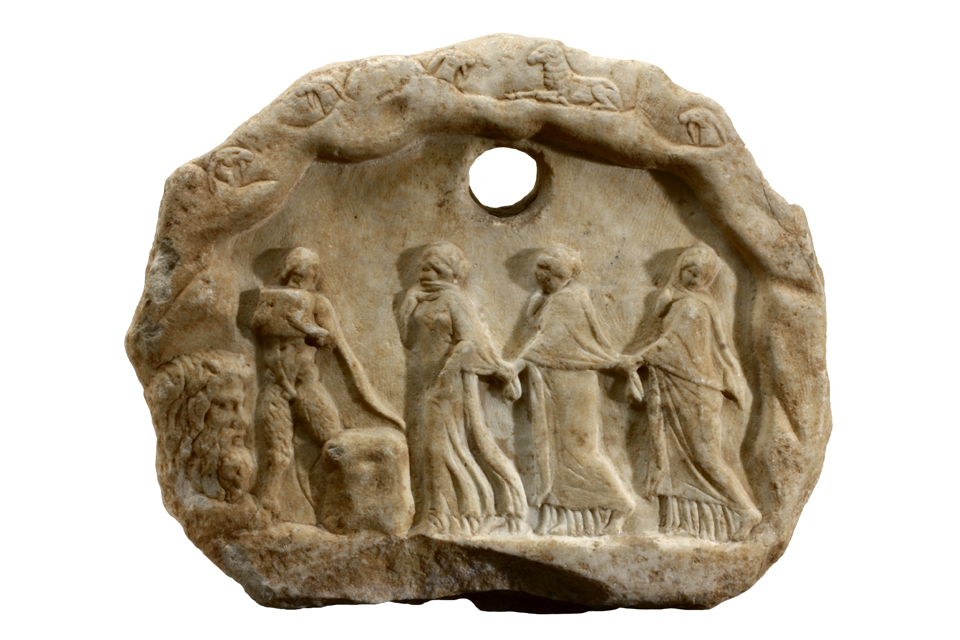
The Angelike Orchฤ“sis were celebratory dances performed by the ancient Greeks as part of important rituals, and Angelike Orchฤ“sis translates to “messenger’s dance”. Many dancing rituals took place during the Eleusinian rites and they all had a different purpose. The Angelike Orchฤ“sis, according to Greek writer Athenaeus of Naucratis (who lived sometime during the 2nd-3rd century CE), were Ionic dances that told the story of Hekate delivering a message to Demeter regarding the abduction of her daughter, Persephone.

Votive relief found at Eleusis depicting a dance scene, dated to about 4th c. BCE / National Archaeological Museum of Athens

Hesiod’s “Theogony”

The references to Hekate in Hesiod’s “Theogony” (written around 700 BCE) are believed to be the oldest literary source for Her. In addition to describing Hekate’s origins and honors given to Her by Zeus, Hesiod describes how Hekate mediates prayer and decides if the prayers should be answered favorably:

“For to this day, whenever any one of men on earth offers rich sacrifices and prays for favour according to custom, he calls upon Hecate. Great honour comes full easily to him whose prayers the goddess receives favourably, and she bestows wealth upon him; for the power surely is with her.”

Hesiod then goes on to describe how Hekate also mediates and bestows Her will over participants in games, horsemen, and fishermen:

“Good is she also when men contend at the games, for there too the goddess is with them and profits them: and he who by might and strength gets the victory wins the rich prize easily with joy, and brings glory to his parents. And she is good to stand by horsemen, whom she will: and to those whose business is in the grey discomfortable sea, and who pray to Hecate and the loud-crashing Earth-Shaker, easily the glorious goddess gives great catch, and easily she takes it away as soon as seen, if so she will.”


ยฉ Melissa M. / The Torch and Key


Sources:

Hekate Propolos: Companion and Guide to the Mysteries of Life

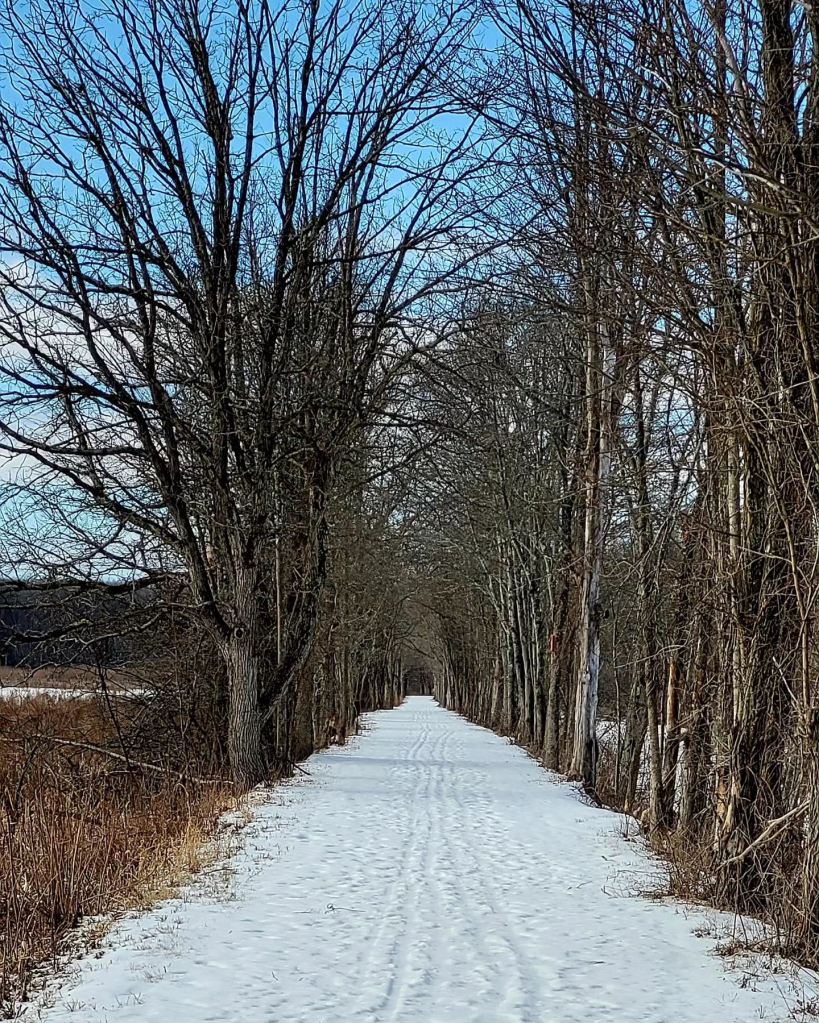
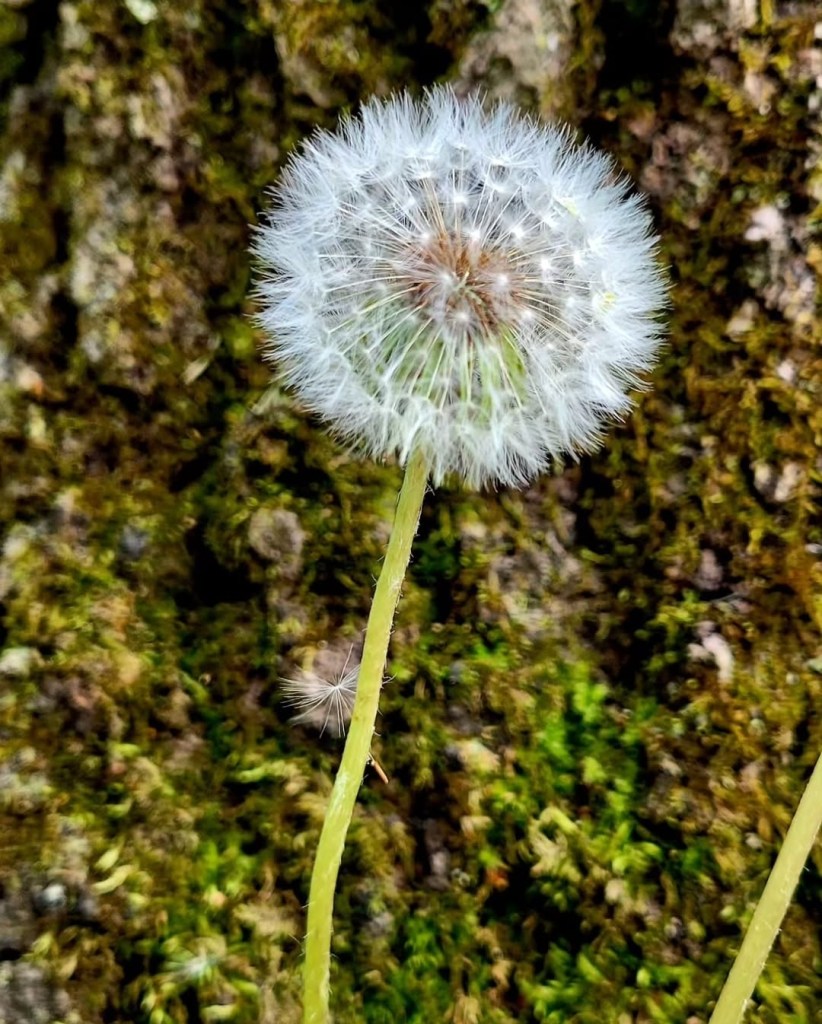
Vischer Ferry Nature Preserve, Clifton Park NY / ยฉ Melissa M.

One of Hekate’s most well-know epithets is “Propolos”, which means “companion” or “guide”. I began actively honoring Hekate about 15 years ago, though She made an entrance in my life many years before that, however I was not fully aware of it at that time. Fast forward to the Spring of 2010, when I sought out Sorita d’Este on social media after reading her book on Artemis and discovered a project she was working on that was dedicated to Hekate – “Her Sacred Fires” anthology due to be published, with a global “Rite of Her Sacred Fires” being planned for the May Full Moon to coincide with the book’s release. I took an interest in that, and I can say that my life has never been the same since.

I learned a lot about myself while I explored a relationship with Hekate, and incorporated daily devotionals to Her in my day to day life. To say it was transformative is an understatement. I read everything I could get my hands on about Hekate – modern books by modern authors, ancient texts, the PGM, scholarly papers and books written by some of those scholars, poetry, classical texts by Hesiod and others from that time, and connecting with other devotees of Hekate from all sorts of backgrounds through my (past) involvement with the Covenant of Hekate, which I applied to be a member after the first RoHSF in 2010. Learning about the “historical” Hekate, and ancient practices and researching known sites of cults/worship was an integral part of this process for me. I was like a sponge, soaking up every bit of information I could and learning as much as possible about historical and modern practices.

Aside from that, She was ever-present in my life and She always will be. There were times when She “went dark”, and was largely silent and there were gaps in devotionals. But I know Her presence and guiding force is always with me, and I carry that knowledge every day. Hekate’s torches burn bright no matter what, just waiting for that moment where Her devotee borrows it to rekindle that spark and illuminate their path. Everything I do, everything I say – has intent, and She is there.

In classical literature, Hekate was Persephone’s companion and guide as she traveled between the realms of the living and dead to be with Demeter part of the year, and with Hades in the Underworld for the other part of the year. The Homeric Hymn to Demeter tells this story, and the presence of Hekate at major sanctuaries to Demeter and Persephone is documented with archaeological evidence.

Today, as I write this, I am undertaking some transformative projects for myself. I am returning to college after many (many) years of putting that on the back-burner to care for my family. I am going to finish my degree; I am determined to see this through. What will come of that once I finish – I don’t know. But I will do it. The other project is in the very, very early stages of planning, and it involves the eventual building of community. Strangely, there are no goddess-centered devotional temples in my area despite the widespread Pagan community in New York. I want to change that. I want to create a space where the sacred, divine feminine is honored in all of Her forms and names, with Hekate as Propolos. I expect the beginnings of this will involve meeting in a dedicated public space that will have to be reserved as needed. My ultimate dream is to have a permanent space of our own for this, and hopefully this will be manifest one day. The seeds have been planted, and I will make this a reality one day in the near future, however long it takes.


ยฉ Melissa McNair / The Torch and Key

When Dreams and Wishes are Made Real

ยฉ Melissa M. / The Torch and Key
I am 48 years old, and I am going back to college! I had my first child when I was just 18 – a baby myself. My life was interrupted, I had just started college and everything changed with one decision. And then another. I continued college through my pregnancy, took the summer off since my son was born in June, and went right back to it for the fall semester. I had to go to night school due to child care options being severely limited. But I did it, and continued on full time at night for 2 more semesters. I then moved several states away with my son, since my husband (baby’s father) was in the military and stationed down south. I continued with college part time after settling in, but only took a few classes. But I continued.

Fast forward to today…. that was 1996. A lot has happened during the last 30 years. We had some more kids, my husband’s many health crises which are still ongoing, and my need to be “me”. For so many years, I gave all of myself to everyone else without much leftover for me. I was drained – emptying my bucket for others and not bothering to refill it as often as I needed to. Helping my husband through some of his darkest days depleted me, and I am left with a lot of emotional scarring of my own that I am not sure will ever heal. (when I am ready, that will be probably a series of blog posts because it’s a lot to dive in to and process and I am not sure if I am ready to put it all out there yet).

Our youngest is now 18, and I made a promise to myself that when he started high school I would finish college. I never got that opportunity because my husband’s health deteriorated to a point where he needed near-constant care. But here I am today, getting ready to go back. I just submitted my FAFSA and state financial aid applications, and have my online student portal access at the local college I will be attending to get back to my Accounting studies so I can finally earn my degree.

So much has changed since I last went to school. I am both terrified and excited. Terrified because I am taking a huge step out of my comfort zone. Excited because I am finally making sure that I am keeping that promise I made to myself.

This process is also me getting my “ducks in a row” for my future, because honestly I don’t know how the next couple of years will go. I need to finally make myself a priority, and make sure I will be able to be what I need for me, and my children that are still making their way through this world while in college themselves.

Sometimes I want to be the “old me” again – the pre-pregnant teenager, carefree, with hopes and dreams of a young person with the world at their feet. Then I realize that “old me” no longer exists because of everything I have been through over the last 30 years. I am older, wiser, tougher, heart-hardened by life’s challenges, cynical, trauma-affected, and I have children that I love with every fiber of my being. I am sure I can find bits of that “old me” somewhere. I am starting over, in a way, with new-and-same hopes and dreams. My husband and I are still married, and his health struggles have been up and down and we are facing an inevitable diagnosis that will forever change him and one day he won’t know who we are. His challenges have surely been draining mentally for me, and I have learned a lot about myself through all of this.

So here I am, planning for the future. My excitement at rediscovering myself is tempered with the knowledge that I will be doing a lot of this on my own, and it makes me sad. But I will continue to push forward for me, and hopefully build something that the “old me” would be proud of.

Never give up on yourself.

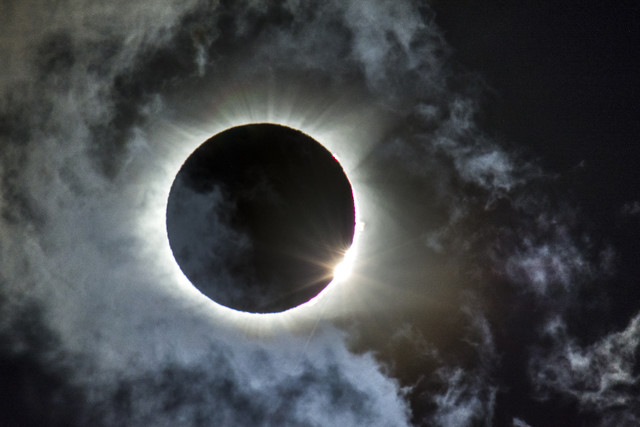
Hekate and the Solar Eclipse

Photo by Steve Grundy, Flickr

On Monday April 8, 2024, a total solar eclipse will occur, and will pass over North America (visit this website to see if you are in the path of totality, and what times of the day to expect the eclipse to occur). I am in upstate New York, and parts of the Adirondack region will be in 100% totality, while my specific location will be about 90%. We also experienced a rare earthquake yesterday, with the 4.8 magnitude quake centered near Lebanon, New Jersey and the effects were felt far and wide across parts of the northeast. My house shook, with the floor rumbling and walls shaking. It felt like a train was next to my house, and it was an interesting way to kick off this exceptional weekend.

Eclipses, whether lunar or solar, are liminal and transitional experiences. Hekate is a liminal goddess of thresholds and boundaries, of transition and change. As Propylaia, She is guardian of these thresholds whether actual or metaphorical. With Her torches, Hekate stands at the crossroads waiting. And ready to light the way.

About Solar Eclipses

A total solar eclipse occurs when the moon passes between the earth and sun, fully obscuring the sun and creating what many call a “ring of fire” around the moon. Solar eclipses always happen on the New Moon. It is truly a sight to behold, and many people are flocking to areas of full totality to experience this sometimes once in a lifetime phenomenon. Here in upstate New York, tourism for this event kicked into full gear a couple of years ago, with hotels and other rentals being booked out months ago. State campgrounds are at full capacity for tent space, and they opened reservations for this event long before they normally open for the spring/summer camping season.

If you plan to view the eclipse, proper eyewear is a must. Wear only designated solar eclipse glasses, and do not wear them while driving a vehicle and make sure you are in a safe place, because they block out all other light. For more information about solar eclipses and this one in particular, visit NASA’s dedicated web page for this event.

At the Threshold

The New Moon is traditionally the time for new beginnings – whether it is a new life path, or a spiritual awakening or initiation (or both). During a solar eclipse, the Moon obscures the Sun, aligning feminine and masculine energies creating that “ring of fire”. The Moon becomes a portal or gate of sorts for stepping over that threshold and into the fire, so to speak.

Hekate, as gatekeeper and guardian of thresholds, is waiting. The moments during an eclipse when obscuration is beginning are so very liminal in nature, and becoming ever more so as the Moon and Sun comes closer to totality. I usually spend eclipse days in quiet spiritual contemplation and meditation, with candles lit, offerings made, and occasional incense burning. No magic or spells are performed during eclipse times – just being in the moment is preferable. Maybe some journaling is done as well to record my feelings and experience during this time.

During totality, the sky goes full dark if you are in the 100% totality path. Other areas will experience a darkened sky for some moments, but not full dark. Either way – these are powerful, transformational moments that can connect us to the liminal aspects of Hekate on the New Moon Solar Eclipse.

The New Moon is an ideal time for release; letting go of what no longer serves us and starting anew. Solar Eclipses make this even more powerful and transformational. Stepping over that threshold into the fire and purifying ourselves, being renewed like a Phoenix rising from the ashes can be a very profound, life changing experience. Hekate, as companion and guide to the mysteries of life, death, and rebirth, will be there along the way. Her torches burning bright, guiding you towards what is waiting for you. Change is not always easy, and the prospect can be frightening to some because what is coming is unknown. Sometimes we have to trust ourselves, and what is meant to be even if what awaits is obscured. Throwing our feet into the fire and finding the courage to take those steps is often the most difficult part. Crossing that threshold does not have to be done alone, and what is waiting on the other side can be incredibly rewarding as Hekate leads the way during this transitional time.

As devotees of Hekate, we always honor Her throughout the lunar cycle at appropriate sacred times. During eclipses, we can behold Her power as the Cosmic World Soul as we marvel in these ancient and sacred energies.

I will close this out with an excerpt from the Chaldaean Oracles, Fragments 146, 147, and 148, as revealed by Hekate:

Having spoken these things, you will behold a fire leaping skittishly like a child over the aery waves;

or a fire without form, from which a voice emerges;

or a rich light, whirring around the field in a spiral.

But that you will see a horse flashing more brightly than light,

or a child mounted on the swift back of a horse,

a fiery child or a child covered with gold, or yet again a naked child;

or even a child shooting arrows, standing upon a horseโ€™s back.

If you say this to me many times, you will observe all things growing dark,

For the curved bulk of the heavens disappears and the stars do not shine; the light of the Moon is hidden and the Earth does not stand steady. All things are revealed in lightning.

But when you see the sacred fire without form,

Shining skittishly throughout the depths of the Cosmos,

Listen to the voice of the fire.


ยฉ Melissa McNair / The Torch and Key

Turning Towards the Dark

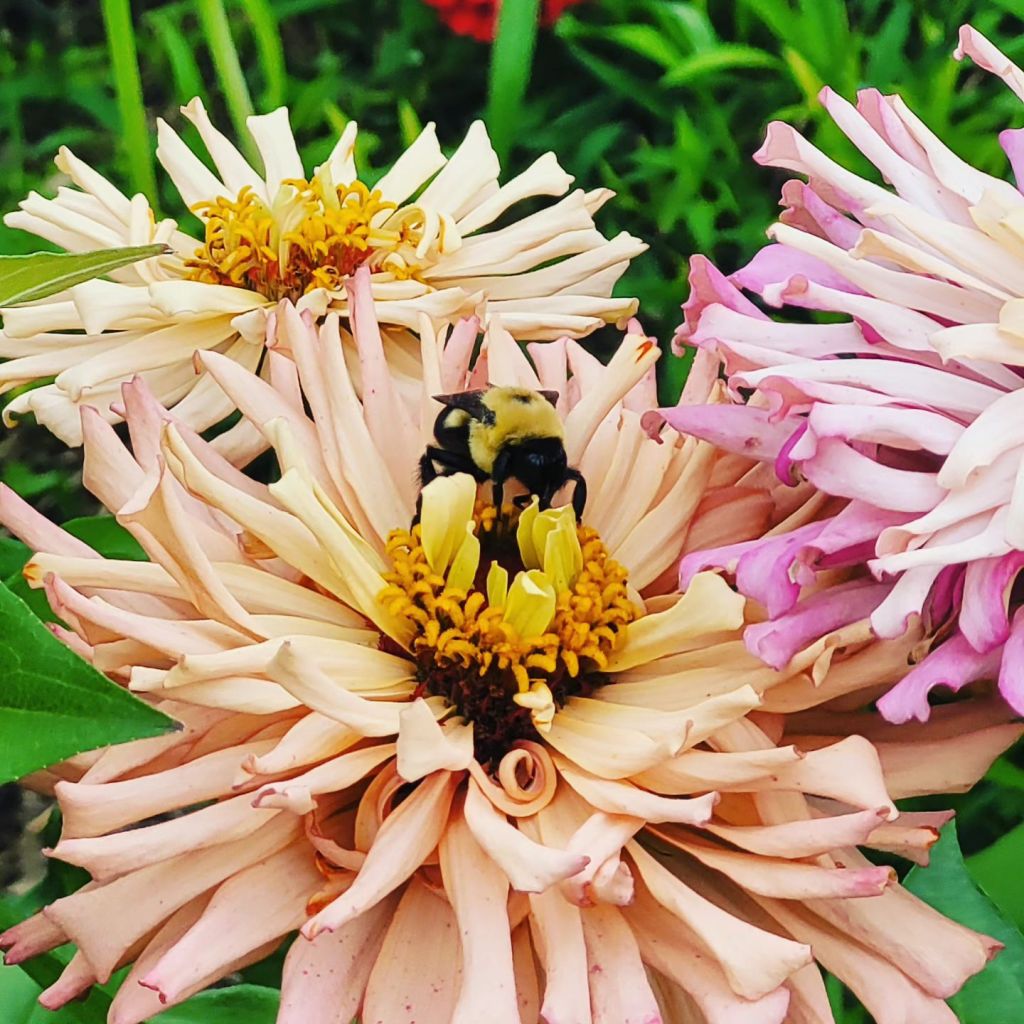
Photo ยฉ Melissa M. / The Torch and Key
The wheel is always turning, and in the Northern Hemisphere we find ourselves turning ever more towards the dark part of the year. The first harvest has passed, the days are slowly getting shorter with slightly later sunrises and slightly earlier sunsets, and I am now starting to notice leaves are already slowly changing (which is a little earlier than usual).

I recently visited a local orchard with my daughter to pick some fresh blackberries. The orchard / farm is enormous at almost 100 acres in size – with endless apple trees of every variety as far as the eye can see, and berry patches and brambles mixed in here and there. Soon pumpkins will be available for picking, and the corn maze will be set up for some autumn fun. The farm is so big, they have farm trolleys taking visitors to various parts of the farm to pick what they need. We hopped off our trolley, and I was soon lost in the task of picking blackberries. It was just my daughter and I with no other visitors, so we split up and I went down one row and she another.

The blackberry brambles were tall – at least a few feet taller than me and the rows were narrow, so I felt closed in and alone, and this solitude was a comforting feeling. I was so glad that there were no other visitors while we were there. I took this quiet time to still my mind while I picked, and this was something I sorely needed as my personal life is quite busy at the moment. Between caring for my husband and managing his medical care, preparing for a cousin’s wedding (happening in 2 days!), and helping my daughters complete last minute tasks before heading back to college, I am stretched pretty thin and “me time” is almost nonexistent.

Being able to go inward while picking berries allowed me to center and ground myself in a way that I haven’t been able to do in a while. It was just me, the blackberries, and the land. The time between Lammas and the Autumn Equinox is all about letting go, just as Demeter and Persephone are preparing for her descent at the Equinox. I took this time to think about how I wanted to move forward. These last few years have been challenging personally due to my husband’s deteriorating health and me finding myself caring for him and managing his extensive medical care. Now that we are in a sort of predictable – but busy – pattern, I am better able to manage my time and devote more to what I want to do for myself, rather than always putting everyone else first and taking bits of time here and there for myself when there was some to spare.

I made a promise to myself to make time for me, and to nurture and cultivate what will help me grow beyond who I am now. I will do just that, though how much time it will take is anyone’s guess. The phrase “know thyself” is something that I am always hearing in my brain, and that is one of my current tasks that I am making a priority.

I have been a devotee of Hekate for many years, and lately I have been feeling this primal urge to blaze a path for myself that I never would have dared to undertake before. I will always, always be there for my family. They are everything to me – that will never change. I feel I can better serve them if I am finally able to be true to myself, which I am trying to do. Transformation and change is never easy, and Hekate has been a guiding force in my life for many years – especially during times of vast change. Telling me to remember who I am.

The late summer / Autumn months are a time when we turn towards the dark. Turn inwards and nurture those seeds that have been planted, and allow them to germinate and grow in the fecundity of our soul. Persephone returns to the realm of the dead in September, tending to the departed souls who are preparing for their transition to a new life. This is a cycle that repeats itself, literally and metaphorically. With nature, and with our inner selves. We are also Persephone; preparing ourselves for what may come next as we cocoon ourselves and tend to our needs. Be still, and listen.

The photo at the top of the page was taken at the local apple orchard mentioned in the beginning of this post. As my daughter and I were walking back to the main part of the farm (we decided to skip the trolley ride back), we passed by a field of wildflowers with rows of colorful blooms. I spotted this bee buzzing from flower to flower, enjoying the nectar they provided. The sighting of this sacred bee was no coincidence, and a fitting end to our visit to the orchard. Bees are sacred, and in ancient Greece the Melissae was a title given to priestesses of Aphrodite, Demeter, and Artemis. Bees were often associated with Persephone and the Underworld. My birth name is Melissa, and my mother told me that she had a different name picked out for me before I was born, but Melissa is what I was named instead for reasons unknown to her. I now understand what forces were at play that early September morning, because I have always had a strong connection to bees and my spiritual practice and interests center around these goddesses in addition to Hekate. But that story, I think, would be suitable for another post.


ยฉ Melissa McNair / The Torch and Key

Hekate in Lagina: a goddess performing her civic duty

I really enjoy searching and reading academic papers about Hekate, and ancient Roman / Greek religious – cult practices in the ancient world. These papers aren’t usually widely circulated, and the hard work and time scholars put into researching and writing these papers often, sadly, go unnoticed.

I came across this paper I am linking here quite by happy accident, and I am so glad I found it. It is titled “Hekate in Lagina: a goddess performing her civic duty” written by Dr. Amanda Herring. The link leads to a landing page from Cambridge University, and this paper was included in their Anatolian Journal from August 2022. The PDF version of the paper must be downloaded in order to read it.

Link to paper (it will open a new browser tab): Hekate in Lagina: a goddess performing her civic duty

This paper delves into the cult of Hekate at Lagina / Stratonikeia in modern day Turkey. Here is a copied and pasted summary:

The Hellenistic Sanctuary of Hekate at Lagina represents the only site at which Hekate received state-sponsored cult at a monumental temple and a privileged place in the local pantheon. Elsewhere in Karia and the wider Greek world, Hekate was associated with magic and the underworld and received personal dedications at doorways and crossroads. This portrayal was echoed in art, where her character manifested in her triple-bodied form. Yet, at Lagina, part of the city of Stratonikeia, she was always represented with a single body. She was the focus of civic cult, in particular during the Hekatesia-Romaia festival, which celebrated the political alliance between Stratonikeia and Rome. Through an analysis of inscriptions, representations of the goddess in sculpture and coins, and the ritual use of the complex, this article concludes that Hekate of Lagina was a syncretic and singular figure who did not exist outside of Stratonikeia, and that her function at Lagina was primarily political, as a civic patron. As a goddess who oversaw lifeโ€™s transitions and acted as a saviour of her people, she was uniquely suited to the role. The goddess and her sanctuary were used by the local population to create community identities and to negotiate their relationships with the wider world, particularly their imperial rulers.

The Sanctuary of Hekate in Lagina, Caria, Turkey. Photo from Wikipedia