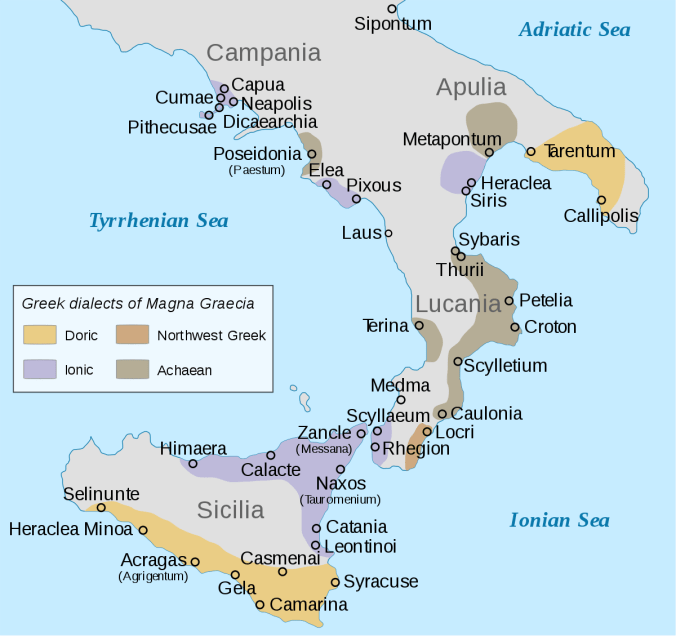
Magna Graecia is Latin for “Great Greece”, and in the 8th and 7th centuries BCE, Greeks began settling in what is now known as southern mainland Italy and Sicily. Their customs and religious rites and practices followed them to Magna Graecia.
The cult of Demeter & Persephone was widespread in Magna Graecia, and temple remains can be found there to this day. Hekate was very much a part of this cult, and the Eleusinian Mysteries were re-enacted by initiates in their new lands.
This series of blog posts will be a work in progress containing essays I wrote myself detailing archeological remains that indicate Hekate’s presence among these ruins in modern day southern Italy.
Each blog post will cover one Greek colony; they are labeled in the map above for geographic reference. Links to each blog post will appear here for easy navigation.
Blog Posts:
Hekate in Magna Graecia: An Introduction
Hekate in Magna Graecia: Selinunte
Hekate in Magna Graecia: Akragas/Agrigento
Hekate in Magna Graecia: Syracuse
Hekate in Magna Graecia: Akrai
Hekate in Magna Graecia: Pachynus/Pakhynos
Hekate in Magna Graecia: Segesta
Hekate in Magna Graecia: Locri
Hekate in Magna Graecia: Cumae
Hekate in Magna Graecia: Scyllaeum

