Hekate Propolos: Companion and Guide to the Mysteries of Life

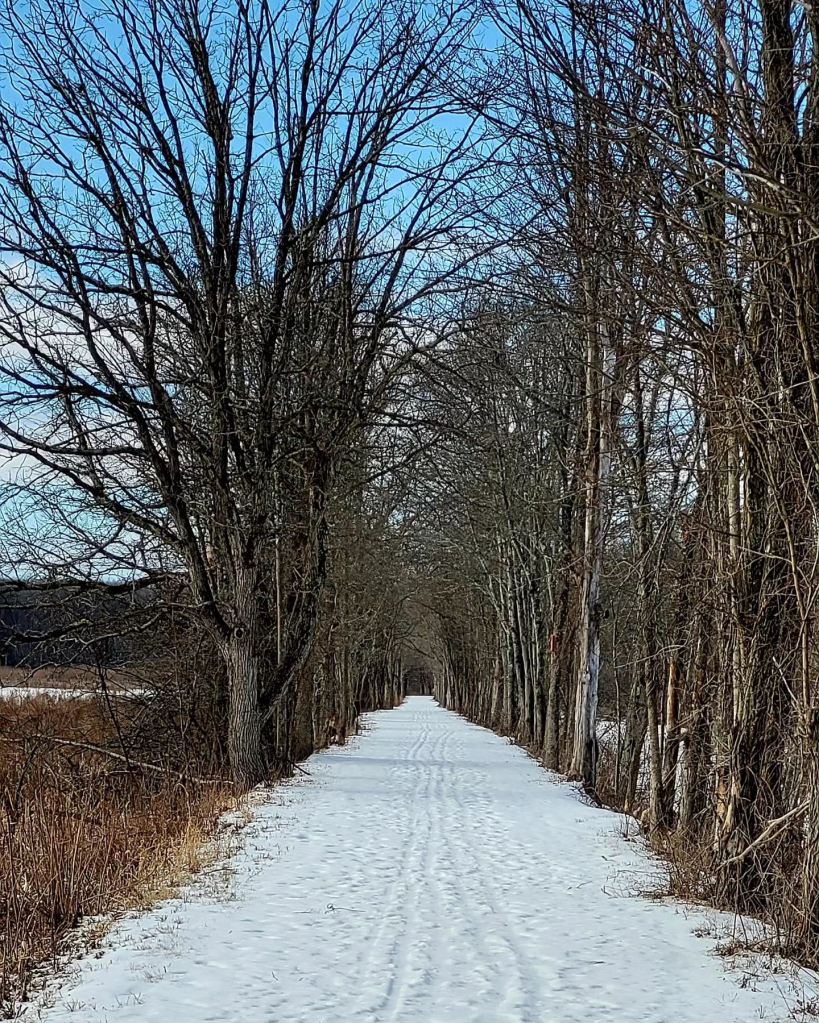
Vischer Ferry Nature Preserve, Clifton Park NY / © Melissa M.

One of Hekate’s most well-know epithets is “Propolos”, which means “companion” or “guide”. I began actively honoring Hekate about 15 years ago, though She made an entrance in my life many years before that, however I was not fully aware of it at that time. Fast forward to the Spring of 2010, when I sought out Sorita d’Este on social media after reading her book on Artemis and discovered a project she was working on that was dedicated to Hekate – “Her Sacred Fires” anthology due to be published, with a global “Rite of Her Sacred Fires” being planned for the May Full Moon to coincide with the book’s release. I took an interest in that, and I can say that my life has never been the same since.

I learned a lot about myself while I explored a relationship with Hekate, and incorporated daily devotionals to Her in my day to day life. To say it was transformative is an understatement. I read everything I could get my hands on about Hekate – modern books by modern authors, ancient texts, the PGM, scholarly papers and books written by some of those scholars, poetry, classical texts by Hesiod and others from that time, and connecting with other devotees of Hekate from all sorts of backgrounds through my (past) involvement with the Covenant of Hekate, which I applied to be a member after the first RoHSF in 2010. Learning about the “historical” Hekate, and ancient practices and researching known sites of cults/worship was an integral part of this process for me. I was like a sponge, soaking up every bit of information I could and learning as much as possible about historical and modern practices.

Aside from that, She was ever-present in my life and She always will be. There were times when She “went dark”, and was largely silent and there were gaps in devotionals. But I know Her presence and guiding force is always with me, and I carry that knowledge every day. Hekate’s torches burn bright no matter what, just waiting for that moment where Her devotee borrows it to rekindle that spark and illuminate their path. Everything I do, everything I say – has intent, and She is there.

In classical literature, Hekate was Persephone’s companion and guide as she traveled between the realms of the living and dead to be with Demeter part of the year, and with Hades in the Underworld for the other part of the year. The Homeric Hymn to Demeter tells this story, and the presence of Hekate at major sanctuaries to Demeter and Persephone is documented with archaeological evidence.

Today, as I write this, I am undertaking some transformative projects for myself. I am returning to college after many (many) years of putting that on the back-burner to care for my family. I am going to finish my degree; I am determined to see this through. What will come of that once I finish – I don’t know. But I will do it. The other project is in the very, very early stages of planning, and it involves the eventual building of community. Strangely, there are no goddess-centered devotional temples in my area despite the widespread Pagan community in New York. I want to change that. I want to create a space where the sacred, divine feminine is honored in all of Her forms and names, with Hekate as Propolos. I expect the beginnings of this will involve meeting in a dedicated public space that will have to be reserved as needed. My ultimate dream is to have a permanent space of our own for this, and hopefully this will be manifest one day. The seeds have been planted, and I will make this a reality one day in the near future, however long it takes.



© Melissa McNair / The Torch and Key
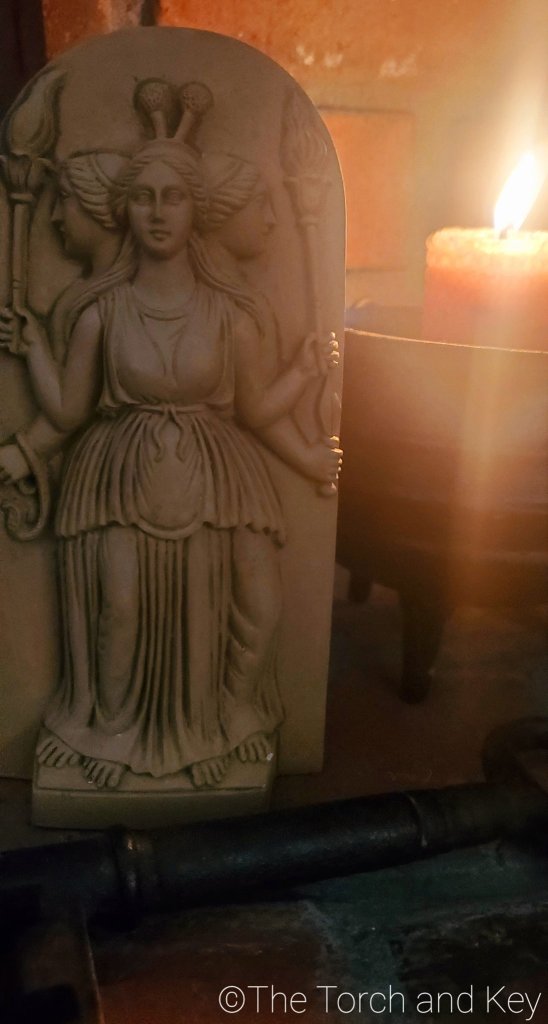
Hekate Enodia – At the Crossroads

image by Vicco Gallo

Hecate whose name is howled by night at the city crossroads

“Aeneid”, Virgil

O Lord Helios and Sacred Fire

The spear of Hekate of the Crossroads

Which she bears as as she travels Olympus

And dwells in the triple ways of the holy land

She who is crowned with oak leaves

And the coils of wild serpents

fragment from “The Root Cutters”, Sophocles

Enodia means “of the ways” or “of the crossroads”, and it is one of the most familiar epithets belonging to Hekate. Hekate is a liminal goddess, traversing the realms of the universe and guarding the boundaries that separate these realms as well as boundaries that are nature, human, and spirit made.

The crossroads are both literal and metaphorical places. Actual crossroads are liminal places where two or three roads converge, and it is where Deipnon offerings are traditionally left on the night of the Dark Moon. The “restless dead” are said to inhabit the crossroads; they are the souls of the dead who had difficulties crossing over after they passed from the world. Hekate, as pyschopomp, assists in guiding these souls and the Deipnon offerings are meant for them.

Metaphorical crossroads are where one finds themselves when experiencing a major life change, or where one is facing a very difficult decision and the way forward isn’t always clear. Hekate is called upon as a companion on this path, offering Her assistance to help guide one forward towards the unknown.

I would like to share a story from years ago when I was a teenager, on a night out with my friends on a very auspicious date. Looking back, I believe this was the night Hekate claimed me as Hers, though I didn’t realize it at that time.

The Search

It was November 13, 1992. Friday the 13th. I was 16 years old. I got together with a small group of friends from work and we set out on a quest to find “Mary’s Grave” – a legend in our neck of the woods on Long Island. The site we were seeking was in Stony Brook, and it was said to be the location where Mary was murdered for being a witch (another version had her being murdered because she killed her father). We didn’t really have much to go on location-wise; it was a time before the internet and GPS existed and we relied on word of mouth from other people and had directions that were written down on a piece of paper.

I was the last to be picked up. The friend who was driving was a couple of years older than me, and she was a seer who could speak to the dead. Everyone at work knew about it and I found it to be fascinating. When I got in the car, “Crazy Train” from Ozzy Osbourne had just begun playing on the radio and it seemed to set the mood for the evening: exciting, a little scary – a journey into the unknown, full of possibilities. Every time I hear that song, it brings me back to that night.

We made our way to the area of Stony Brook, and found the spot where we were instructed to park. We parked the car, and set out on foot into the night. It was a little spooky – we were at the end of a narrow road, surrounded by the woods. It was not long after Halloween and just a few days after the Full Moon. There was a damp chill in the air that also resulted in a bit of a mist. The trees had lost most of their leaves by now and the bright moonlight cast shadows everywhere.

We walked for what seemed like forever until we came upon an open field. We weren’t sure we were in the right place, but everything felt “electrified”. I don’t know how else to describe it, but it felt like a place of power. Someone in our group became spooked by the sudden call of an owl out of complete silence, and she screamed. We all turned around and ran back to the car and quickly drove away.

Enodia

For some reason, we were lost and didn’t know where to go. We went back the way we came, but somehow the road we were traveling on was completely unfamiliar to us. Eventually we came to a crossroads, where the road split into two. We did not know which road to take and the friend who was driving became panicked. Suddenly, a white wolf with glowing red eyes appeared at the center of the crossroads, and the wolf was facing the road that veered off to the right. I told my friend to turn right, and she did.

It turned out that the road to the right was the path we needed to take and we were soon in familiar territory. My friend asked me how I knew which way to go, and I remember saying (paraphrasing, because I don’t remember my exact words) “didn’t you see the wolf in the middle of the road”? She said no and sounded a little shaky. No one else in the car, save myself, saw this beautiful white wolf with the red eyes. This creature in-between disappeared almost as quickly as it appeared. There were a few weird moments following me sharing what I saw, but it was soon forgotten once everyone else was relieved to be on the road home.

The Liminal

Those moments on the unknown road, heading towards the crossroad – they felt outside of time and space. It was definitely a liminal area of the in-between, where the spirit and physical worlds collide and time as we know it doesn’t exist. That wolf appeared to me for a reason, and She was guiding me. It was a sign we needed for that moment, but I also believe I was claimed that evening even though it has taken me many years to awaken to that knowledge.

🗝


© Melissa McNair / The Torch and Key
My Breath, My Body

Valley of the Temples, Agrigento Sicily

One day, I will set foot on the land of my ancestors

I long to be where they once lived and breathed

I want to lay down on the Earth, with my head in the grass

And feel the energy of the land and of those who have gone before

I yearn to stand in that valley among the olive and almond groves

What do they remember? Trees remember.

I want to root myself to the Earth, and stand tall

Power building

Hear the whispers of the wind

Among the temple ruins, I stand

The echoes of the memories of those who have gone before

Voices on the wind, asking for remembrance

I feel their presence

My blood begins to sing the songs of the forgotten priestesses

The Women

Power building

Juno, Demeter, Persephone, Hekate

Their call is speaking to my soul

Running through the blood in my veins

Power building

Deepening into my bones

My breath, my voice will sing their names

My breath, my body honors them

Always

Remember

© Melissa McNair / The Torch and Key
Hekate Phosphoros

One of Hekate’s roles is that of Phosphoros – “Lightbringer” or “Lightbearer”. Hekate’s torches illuminate that which is dark. She leads the way, torch in hand, for those who have heeded Her call to immerse themselves in Her mysteries. Hekate’s torches also illuminate Truth by banishing ignorance and fear that breeds in the dark. That illumination can sometimes be a difficult and life changing process. There is a saying among many Hekateans: “En Erebos Phos” – “In darkness, there is light”. Darkness cannot exist without light, and light cannot exist without darkness. For me,  Hekate Phosphoros embodies that concept.

On this Equinox and another turn of the wheel, we in the Northern Hemisphere are celebrating Spring and the ever-growing light as we progress to brighter and longer days. In the Southern Hemisphere, Autumn has descended and the days are growing shorter and darker. Wherever you are in the world, we are all experiencing that balance of light and dark in this moment. Hekate as Anima Mundi stands at the crossroads of the universe – a place of balance.

Photo © Melissa McNair / The Torch and Key

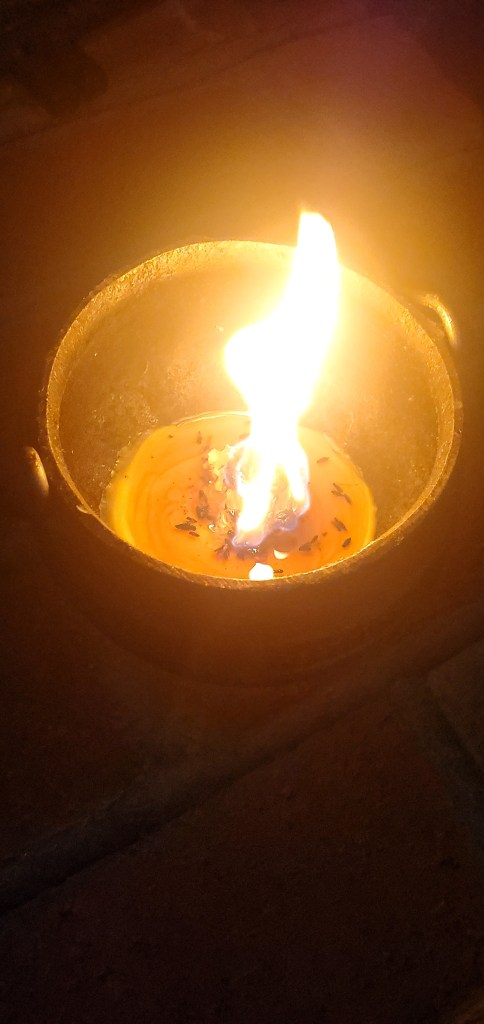
Today, I celebrated the return of Spring in a simple yet meaningful ritual. I made a beeswax candle using an ethically crafted beeswax sheet and rolled it up with dried organic lavender buds and a eco-friendly cotton wick. I decided to burn this candle completely in my mini cast iron cauldron, and I’m glad I did because once it neared the bottom, the sacred fire came alive, becoming enlarged and beautiful (see above photo). I sang praise to Hekate, honoring Her role as Phosphoros and Anima Mundi.

By the Light of the Moon

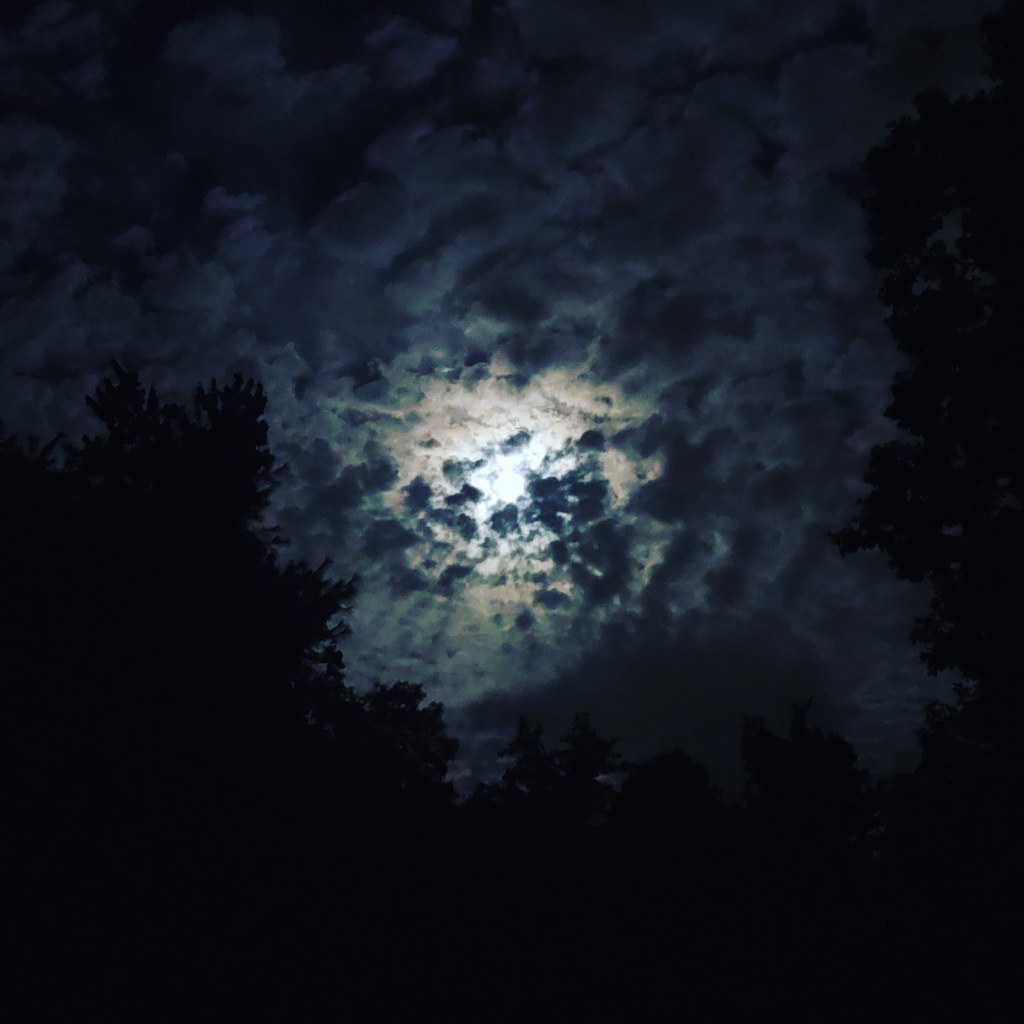
© Photo by Melissa M. / The Torch and Key

Once in a while, I revisit a favorite book and read it again for a renewed perspective. Recently, I decided to delve into “Drawing Down the Moon” by the late (and great) Margot Adler. I first read this book 14 years ago and it had a huge impact on me. Back then, I was beginning my “pagan awakening” and this book validated a lot of feelings I was having at the time and it helped me feel as if there were possibilities, and hope for my new journey into the unknown. It also was (and still is) an invaluable resource for learning about the rise of paganism in the United States. I decided to revisit this beloved book because I have been feeling a disconnect with myself and my path. I am not sure why, but I suspect “COVID fatigue” may be a factor. This has certainly been a challenging year for my family, as well as for countless others. It has impacted all of our lives in different, yet similar ways. I have this strong desire to get back to my  “pagan roots” – whatever that may be; and I figured this book is kind of where it began so it was a logical choice for a re-read.

One passage in the beginning of the book really struck me with a force of recognition and comfort, and it moved me enough to want to write about it. It was about the simple, fulfilling ritual of honoring the full moon. Here is the quote:

“Do it, perhaps, on a full moon, in a park or in the clearing of a wood. You don’t need any of the tools you will read about in books on the Craft. You need no special clothes, or lack of them. Perhaps you might make up a chant, a string of names of gods and goddesses who were loved and familiar to you from childhood myths, a simple string of names for earth and moon and stars, easily repeatable like a mantra.

And perhaps, as you say those familiar names and feel the earth and air, the moon appears a bit closer, and perhaps the wind rustling the leaves suddenly seems in rhythm with your own breathing. Or perhaps the chant seems louder and all the other sounds far away. Or perhaps the woods seem strangely noisy. Or unspeakably still. And perhaps the clear line that separates you from bird and tree and small lizards seems to melt. Whatever else, your relationship to the world of living nature changes. The Witch is the changer of definitions and relationships”

Reading this passage awakened something in me. When I first read this book all those years ago, I really didn’t know anything about magic or ritual or what tools were best used. I was a beginner and had just set foot on a path that was completely unknown to me. I was an avid reader at first (I still am!) and I devoured any book I could get my hands on that interested me. I began with the often recommended titles from Scott Cunningham, Raymond Buckland, Starhawk, etc. My practice eventually evolved into Hellenic polytheistic worship with Hekate as my goddess and guide. But one thing that always worked for me over the years and stirred my soul like no other was the simple practice mentioned in the excerpt above. Of course, I performed formal rituals when needed. But most of the time, my rituals were wild, unscripted, and under the night sky.

I love stepping outside when the sky is dark and the stars are twinkling. The moon may or may not be in the sky, depending on the phase. That first look at the night sky always takes my breath away. I love to gaze at the stars, imagining what they look like up close and if they communicate with each other. The wonder of it all is awe-inspiring to me. We on Earth are but a grain of sand in a vast, infinite universe where the possibilities are endless.

After being out there for a little while, I begin to focus. My breathing becomes steady and measured. My third eye awakens, and my body begins to tingle. Often, the words roll off my tongue and flows like a river. I lift my arms in praise of nature,  the moon and stars. I sing a song of love and wonder. I don’t often plan ahead any of the words I speak. They are raw and spontaneous and honest. Sometimes I don’t “feel” in control; the words are coming out of my mouth but I often feel like a vessel or an oracle.

As I speak, the tingle in my body that I felt earlier grows stronger until my whole body is humming with energy. I can feel the energy shift within myself and my surroundings. The sky grows darker, and the moon and stars grow brighter. The creatures of the night may increase their sounds or become still and silent, depending on the time of year. In the winter, there aren’t many animals out in the cold nights. I live in northern New York, and our winters are cold and snowy. I may hear the distant call of an owl during the winter, or a wolf howling. During the summer it’s different. There is a small pond just beyond my backyard, and it is often alive with creatures when it’s warm out. The chatter of the frogs can become very intense, as does the snapping turtles and Canadian geese. Sometimes a soft breeze will rustle the tree limbs of the massive oaks and maples that fill my backyard, whispering their secrets. Lightning bugs will be visible, sometimes dozens at once, when it’s really hot. When this happens, it feels like these wondrous creatures are joining in my chorus of praise. It is an amazing, unifying feeling, and I feel a kinship with the land and those that share it with me.

Whenever I am singing my song of praise and wonder, I acknowledge those creature sounds as the goddess making her presence known. Especially if it was silent before I began. I always get chills down my spine when I am speaking praise of Hekate in the still, silent night and a wolf begins howling in the distance. Sometimes, I will see a shooting star as I am chanting.

When these informal, raw moments occur it is just me and nature. I don’t light a candle, or use any tools or burn incense. I stand barefoot on the earth and ground myself, and I always touch the ground when I am finished and return that energy I raised to the earth. Often, my dreams that night may be very vivid and I keep a dream journal to record them.

Reading that excerpt from “Drawing Down the Moon” inspired me to share my experiences with bare-bones rituals that can be done literally anywhere and any time you are moved to do so. Connecting to nature this way is so raw and primal and empowering and at the same time intimate. I hope that you may be moved to try this as well whenever the opportunity presents itself.

☆☆☆


Source:

Adler, Margot. “Drawing Down the Moon: Revised and Expanded Edition”. Penguin Books. 2006.