Hekate Angelos – Messenger, Liminal Mediator

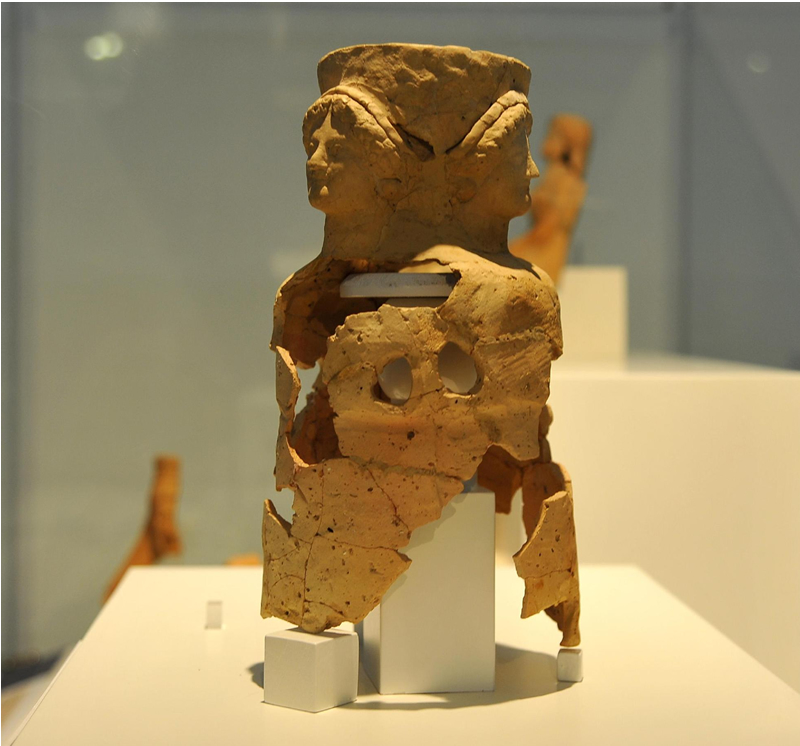
Remains of a statue of Hekate excavated from the site of the Temple of Demeter Malophoros in Selinunte, Sicily dated to approx 4th century BCE

“Angelos” is a title / epithet meaning “messenger”, or “angel”. The concepts of divine angels are mostly known due to being referenced throughout numerous Abrahamic bible passages and psalms, and within those biblical texts angels were sent from God to either deliver messages, or to act as an intermediary with assisting one or more persons.

One of Hekate’s known epithets is “Angelos”, an ancient title shared with Artemis. In Siracusa/Syracuse, a major ancient Greek colony on the southeast coast of Sicily, stood a temple dedicated to Artemis and Apollo that was center of cult worship for Artemis Angelos. In Greek mythology, Angelos was the daughter of Zeus and Hera who eventually became a chthonic goddess. Writer Sophron explains:

“Angelos was raised by nymphs to whose care her father had entrusted her. One day she stole her mother Hera’s anointments and gave them away to Europe. To escape Hera’s wrath, she had to hide first in the house of a woman in labor, and next among people who were carrying a dead man. Hera eventually ceased from prosecuting her, and Zeus ordered the Cabeiroi to cleanse Angelos. They performed the purification rite in the waters of the Acherusia Lake in the Underworld. Consequently, she received the world of the dead as her realm of influence, and was assigned an epithet katachthonia (“she of the underworld”)

Hekate as “Angelos”

Hekate’s own role as “Angelos” can be found in the Homeric Hymn to Demeter, which details the abduction of Persephone by Hades and Persephone’s return to Earth. First, we learn about Hekate bearing a message to Demeter after Persephone was abducted, which results in Hekate and Demeter visiting Helios to negotiate a search for Persephone. Later in the hymn, we learn of Hekate being assigned the role of guiding Persephone on her trips between the realms of the Earth and Underworld. Hekate is known as a liminal goddess, traversing the boundaries between realms and the title “Angelos” as messenger / mediator fits within Hekate’s role as “Propylaia” (guardian of thresholds) and “Propolos” (companion and guide).

The Flower of Fire

In the Chaldean Oracles, Hekate is described as the “Cosmic World Soul” that acts as an intermediary or messenger / transmitter between the “paternal intellect” (ideas), and the power in Hekate’s “cosmic womb” that in turn enlivened those ideas and transmitted them, thus ensouling the material / physical world. This concept is discussed in great detail in the book (her published dissertation) “Hekate Soteira” by scholar Sarah Iles Johnston and I highly recommend reading it (if you haven’t already).

Fragment 34 of the Chaldaean Oracles states:

“From here springs forth the genesis of varied matter;

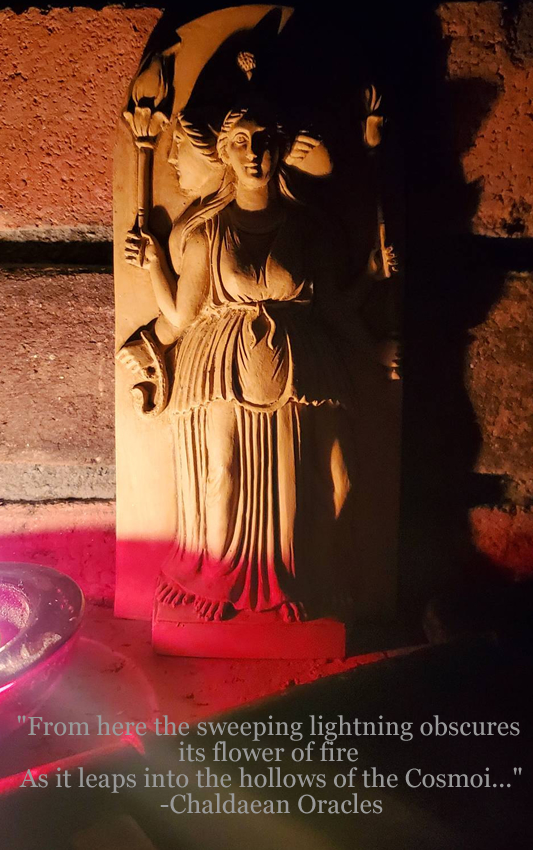
From here the sweeping lightning obscures its flower of fire

As it leaps into the hollows of the Cosmoi; for from here all things

Begin to stretch forth towards that place beneath the wondrous rays.”

The Sanctuary of Demeter Malophoros

Selinunte in Sicily was a major Greek colony and is the location of the great Sanctuary of Demeter Malophoros. The title “Malophoros” means “fruit bearer”, and in this temple the Eleusinian Rites were re-enacted. Various votive remains have been excavated from this site depicting Hekate, Demeter, and Persephone, and the temple area has been turned into a protected archaeological park that also contains temples to other gods, including Hera and Athena. Many of the sanctuary remains are housed in a museum in Palermo, Sicily.

One excavated archaeological artifact is the base of a statue with a votive inscription to Hekate engraved on it:
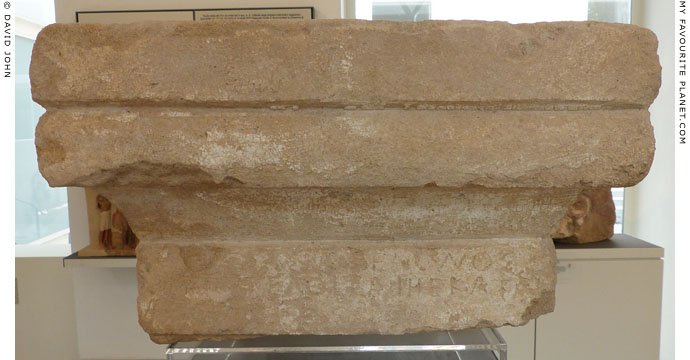
A statue base with a votive inscription dedicated to Hekate, on display at Antonino Salinas Regional Archaeological Museum, Palermo, Sicily. Dated approx 450 BCE

The inscription on the statue base pictured above reads:

“Alexias son of Xenon made [this] dedication
to the Angelos (Messenger) and to Hekate”

This statue base is dated to about 450 BCE and is on display at Antonino Salinas Regional Archaeological Museum in Palermo, Sicily. This statue base is believed to have been a part of the Propylon of Hekate at the Sanctuary of Demeter Malophoros. Propylons are “gateways” to temples, and are linked to Hekate’s role as “Propylaia” – “Guardian of Thresholds / Entryways”.

Angelike Orchēsis

The Angelike Orchēsis were celebratory dances performed by the ancient Greeks as part of important rituals, and Angelike Orchēsis translates to “messenger’s dance”. Many dancing rituals took place during the Eleusinian rites and they all had a different purpose. The Angelike Orchēsis, according to Greek writer Athenaeus of Naucratis (who lived sometime during the 2nd-3rd century CE), were Ionic dances that told the story of Hekate delivering a message to Demeter regarding the abduction of her daughter, Persephone.
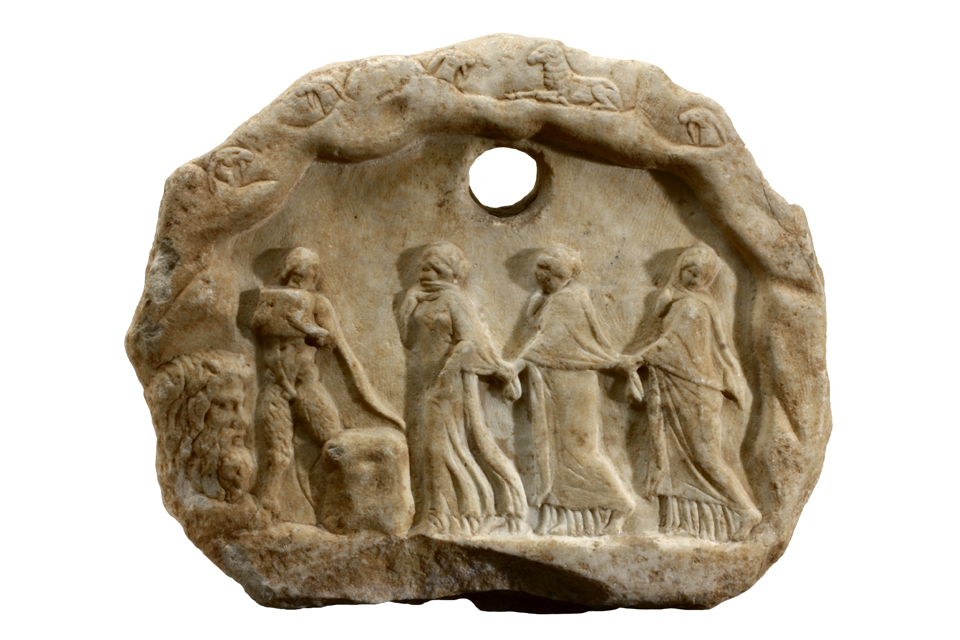
Votive relief found at Eleusis depicting a dance scene, dated to about 4th c. BCE / National Archaeological Museum of Athens

Hesiod’s “Theogony”

The references to Hekate in Hesiod’s “Theogony” (written around 700 BCE) are believed to be the oldest literary source for Her. In addition to describing Hekate’s origins and honors given to Her by Zeus, Hesiod describes how Hekate mediates prayer and decides if the prayers should be answered favorably:

“For to this day, whenever any one of men on earth offers rich sacrifices and prays for favour according to custom, he calls upon Hecate. Great honour comes full easily to him whose prayers the goddess receives favourably, and she bestows wealth upon him; for the power surely is with her.”

Hesiod then goes on to describe how Hekate also mediates and bestows Her will over participants in games, horsemen, and fishermen:

“Good is she also when men contend at the games, for there too the goddess is with them and profits them: and he who by might and strength gets the victory wins the rich prize easily with joy, and brings glory to his parents. And she is good to stand by horsemen, whom she will: and to those whose business is in the grey discomfortable sea, and who pray to Hecate and the loud-crashing Earth-Shaker, easily the glorious goddess gives great catch, and easily she takes it away as soon as seen, if so she will.”


© Melissa M. / The Torch and Key


Sources:

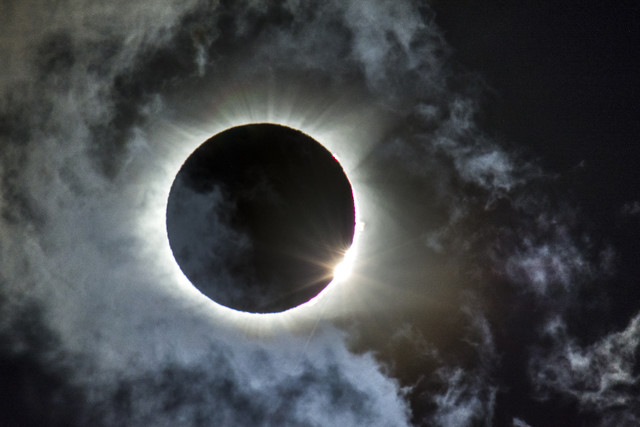
Hekate and the Solar Eclipse

Photo by Steve Grundy, Flickr

On Monday April 8, 2024, a total solar eclipse will occur, and will pass over North America (visit this website to see if you are in the path of totality, and what times of the day to expect the eclipse to occur). I am in upstate New York, and parts of the Adirondack region will be in 100% totality, while my specific location will be about 90%. We also experienced a rare earthquake yesterday, with the 4.8 magnitude quake centered near Lebanon, New Jersey and the effects were felt far and wide across parts of the northeast. My house shook, with the floor rumbling and walls shaking. It felt like a train was next to my house, and it was an interesting way to kick off this exceptional weekend.

Eclipses, whether lunar or solar, are liminal and transitional experiences. Hekate is a liminal goddess of thresholds and boundaries, of transition and change. As Propylaia, She is guardian of these thresholds whether actual or metaphorical. With Her torches, Hekate stands at the crossroads waiting. And ready to light the way.

About Solar Eclipses

A total solar eclipse occurs when the moon passes between the earth and sun, fully obscuring the sun and creating what many call a “ring of fire” around the moon. Solar eclipses always happen on the New Moon. It is truly a sight to behold, and many people are flocking to areas of full totality to experience this sometimes once in a lifetime phenomenon. Here in upstate New York, tourism for this event kicked into full gear a couple of years ago, with hotels and other rentals being booked out months ago. State campgrounds are at full capacity for tent space, and they opened reservations for this event long before they normally open for the spring/summer camping season.

If you plan to view the eclipse, proper eyewear is a must. Wear only designated solar eclipse glasses, and do not wear them while driving a vehicle and make sure you are in a safe place, because they block out all other light. For more information about solar eclipses and this one in particular, visit NASA’s dedicated web page for this event.

At the Threshold

The New Moon is traditionally the time for new beginnings – whether it is a new life path, or a spiritual awakening or initiation (or both). During a solar eclipse, the Moon obscures the Sun, aligning feminine and masculine energies creating that “ring of fire”. The Moon becomes a portal or gate of sorts for stepping over that threshold and into the fire, so to speak.

Hekate, as gatekeeper and guardian of thresholds, is waiting. The moments during an eclipse when obscuration is beginning are so very liminal in nature, and becoming ever more so as the Moon and Sun comes closer to totality. I usually spend eclipse days in quiet spiritual contemplation and meditation, with candles lit, offerings made, and occasional incense burning. No magic or spells are performed during eclipse times – just being in the moment is preferable. Maybe some journaling is done as well to record my feelings and experience during this time.

During totality, the sky goes full dark if you are in the 100% totality path. Other areas will experience a darkened sky for some moments, but not full dark. Either way – these are powerful, transformational moments that can connect us to the liminal aspects of Hekate on the New Moon Solar Eclipse.

The New Moon is an ideal time for release; letting go of what no longer serves us and starting anew. Solar Eclipses make this even more powerful and transformational. Stepping over that threshold into the fire and purifying ourselves, being renewed like a Phoenix rising from the ashes can be a very profound, life changing experience. Hekate, as companion and guide to the mysteries of life, death, and rebirth, will be there along the way. Her torches burning bright, guiding you towards what is waiting for you. Change is not always easy, and the prospect can be frightening to some because what is coming is unknown. Sometimes we have to trust ourselves, and what is meant to be even if what awaits is obscured. Throwing our feet into the fire and finding the courage to take those steps is often the most difficult part. Crossing that threshold does not have to be done alone, and what is waiting on the other side can be incredibly rewarding as Hekate leads the way during this transitional time.

As devotees of Hekate, we always honor Her throughout the lunar cycle at appropriate sacred times. During eclipses, we can behold Her power as the Cosmic World Soul as we marvel in these ancient and sacred energies.

I will close this out with an excerpt from the Chaldaean Oracles, Fragments 146, 147, and 148, as revealed by Hekate:

Having spoken these things, you will behold a fire leaping skittishly like a child over the aery waves;

or a fire without form, from which a voice emerges;

or a rich light, whirring around the field in a spiral.

But that you will see a horse flashing more brightly than light,

or a child mounted on the swift back of a horse,

a fiery child or a child covered with gold, or yet again a naked child;

or even a child shooting arrows, standing upon a horse’s back.

If you say this to me many times, you will observe all things growing dark,

For the curved bulk of the heavens disappears and the stars do not shine; the light of the Moon is hidden and the Earth does not stand steady. All things are revealed in lightning.

But when you see the sacred fire without form,

Shining skittishly throughout the depths of the Cosmos,

Listen to the voice of the fire.


© Melissa McNair / The Torch and Key

Hekate Soteira

The epithet “Soteira” is an important title of Hekate. Soteira means “Savior” and for me personally it is used in conjunction with Hekate’s role as “Cosmic World Soul”. An excellent book to read from scholar Sarah Iles Johnston titled “Hekate Soteira” delves into Hekate’s role as Savior and Cosmic World Soul within the Platonic / Chaldean philosophy.

What does “Cosmic World Soul” mean?

In the Chaldean Oracles, Hekate is irrevocably defined as the Cosmic World Soul – the Great Mother, the Anima Mundi, Creatrix of All. The source of primordial fire.

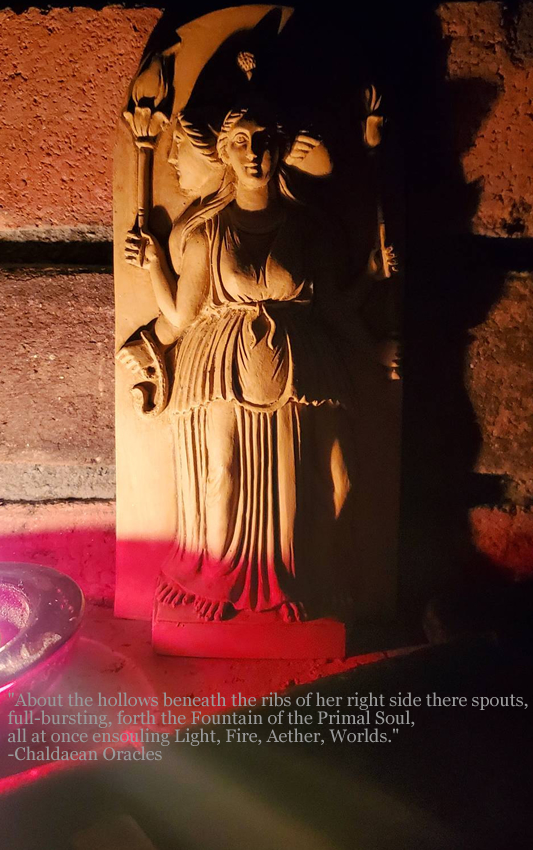
I have experienced many different sides to Hekate over the years, but the one that I “feel” the most is Hekate as this Great Mother; as one who facilitates life, death, rebirth, and everything in between. This excerpt from the Chaldean Oracles sums it up well, and the accompanying text (version from G.R.S. Mead), describes Hekate as “Great Mother/Magna Mater”, “Life of the Universe”, “Mother of Souls”, “Inbreather of Life”.

45

“About the hollows beneath the ribs of her right side there spouts, full-bursting, forth the Fountain of the Primal Soul, all at once ensouling Light, Fire, Aether, Worlds.”

47

“After the Father’s Thinkings, you must know, I, the Soul, dwell, making all things to live by Heat.”

In the Chaldean Oracles, the “Father” is described as existing as intellect or pure thought, while Hekate, as the Anima Mundi, puts forth his thoughts through creation.

During my personal devotionals, I often feel Hekate’s presence as this warm, glowing light. It’s hard to describe – but I when I feel Her presence in this way, I feel an abundance of Love. It is so pure; it’s hard to put into words. There were a few times where I actually witnessed a warm, golden glow appear around me. It is a very emotional and powerful experience; and very real. It doesn’t always happen. But when it does, I will most definitely bask in this sacred glow and honor Her radiance.

Photo © Melissa McNair / The Torch and Key

Hekate, Sekhmet, & Lions

Before COVID took over our corner of the Earth, my daughters and I visited the Albany Institute of History and Art near our home. On the third floor, they have an amazing exhibit dedicated to Ancient Egypt, with many artifacts and two preserved mummies of Egyptian Priests from the Ptolemaic Period (c. 305 BCE).

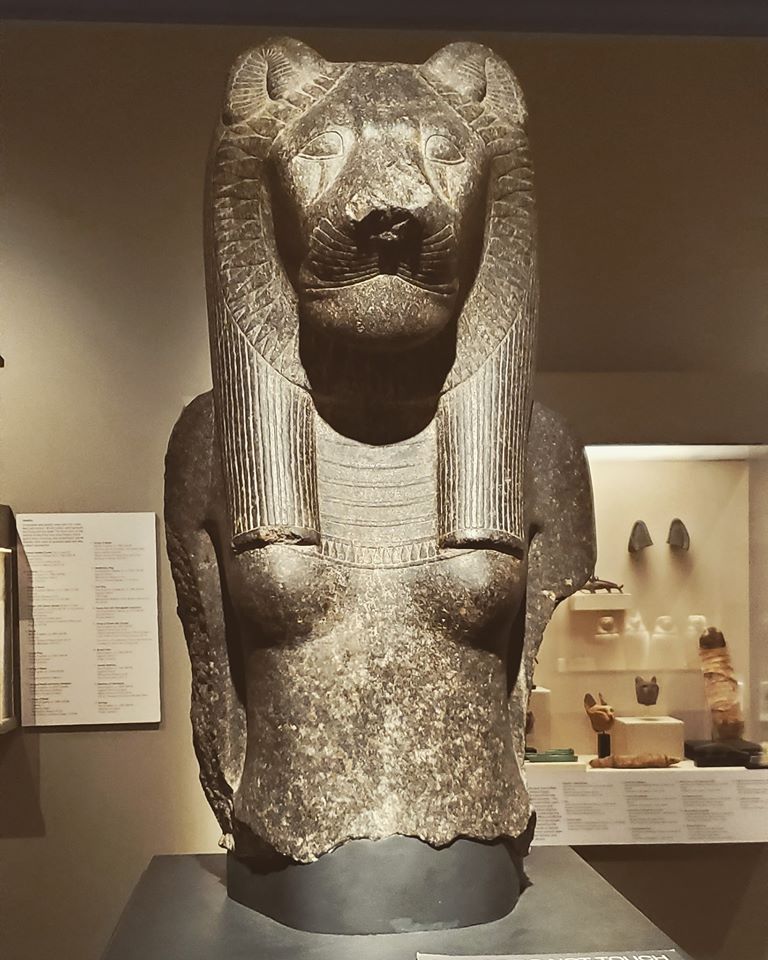
Almost everything on display was safely stored behind protective glass, except for the bust of the Goddess Sekhmet (see photo below). Seeing this bust of the great Lioness was breathtaking. It was displayed on a heavy stand, with a simple sign asking visitors not to touch it.

81602614_10220424119774269_5219959451758362624_o

Bust of the Goddess Sekhmet from the Temple of Mut at Karnak, dated between 1388-1350 BCE / Albany Institute of History and Art  © 2020 Melissa McNair / The Torch and Key

This particular bust of Sekhmet was commissioned by Amenhotep III for the Temple of Mut at Karnak, and is believed to be dated from about 1388-1350 BCE. The temple of Mut was located in the present city of Luxor, Egypt on the banks of the Nile River.  The Goddess Mut was the consort of the God Amun-Ra, and was known as a Mother Goddess, a Sky Goddess, and was the mother of Khonsu, a Moon God.

Amenhotep III commissioned more than 500 statues of Sekhmet for the Temple of Mut, and it is believed that his intention was to have a “forest” of Sekhmet statues.

Sekhmet is a complex Goddess who embodies many different qualities. She is a terribly fierce defender of Ma’at (justice or balance), who is known to show her wrath when Ma’at is threatened. Sekhmet also has a nurturing side due to her role as healer and patroness of physicians –  but that gift of healing can also be used to harm by sending disease to those who offend her. She holds life and death in her hands.

Sekhmet and the Goddess Hekate do share similar qualities such as being mistresses of life and death, and as protectresses of justice and balance.

Hekate & Lions

Hekate is linked to lions through the Chaldean Oracles, temple remains found at Lagina, temple remains found near Syracuse (Sicily), various ancient coins showing Hekate with lions, and spells from the Greek Magical Papyri (PGM).

Chaldean Oracles

In the Chaldean Oracles, Hekate is seen as the Cosmic World Soul. She is the Anima Mundi; the mediator / messenger between the intellectual and material realms and within Her Cosmic Womb is where creation begins, with the paternal intellect planting the ideas within that womb. The Epiphany of Hekate in the Chaldean Oracles mentions lions in some translations:

“If you say this to me many times, you will observe all things to be a lion”

Meaning, if you called upon Hekate correctly, She will appear in lion form as a result.

Lagina

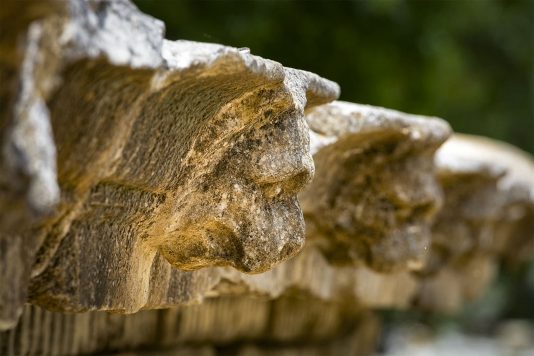
The Temple of Hekate in Lagina, Turkey is an ancient temple that was built around the 2nd century BCE. It was a sacred site dedicated to Hekate and was an important center of worship. There are preserved temple remains still there today, and one of them is a frieze containing lion heads (see below photo).

stunning-lion-heads-at-lagina-ancient-site-534x356

Lion heads at the Temple of Hekate at Lagina / photo © Slow Travel Guide


Sicily

In the ancient Greek colony of Akrai in modern day Sicily, there once stood a great temple to the Magna Mater (“Great Mother”). This temple is believed to have been built to worship the goddess Cybele. Many of the carvings / statues depict Cybele with lions.  Hekate and Cybele are closely related and some statues and carvings from the temple in Akrai depict Hekate either alone or alongside Cybele.

Ancient Coins

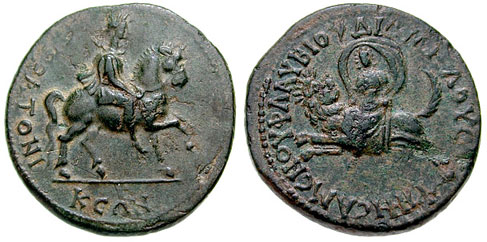
There are many ancient coins that depict Hekate either alone or with another deity. One particular coin from the region of Stratonikeia, near Lagina, shows Zeus on one side on horseback, with Hekate on the other side sitting atop a lion (see photo below).

coin

Coin depicting Zeus (left) and Hekate (right), CARIA, Stratonikeia. 1st-2nd Century AD. Image © WildWinds

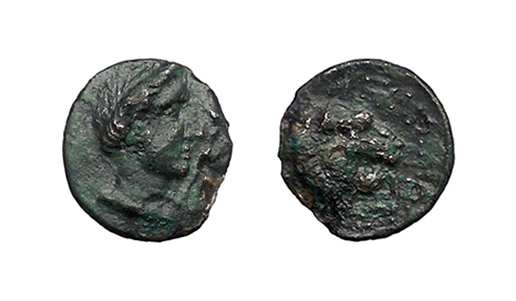
Another coin from Thessaly, dated to about 400 BCE, depicts Hekate’s head with a torch on one side and a lion on the other side (see below photo).

thessaly

Hekate / Lion coin from Thessaly, 400 BCE Image © WorthPoint


Sources:

  1. “Hekate Soteira” by Sarah Iles Johnston
  2. https://www.worthpoint.com/worthopedia/pherai-thessaly-404bc-hekate-1826761086
  3. https://www.wildwinds.com/coins/greece/caria/stratonikeia/i.html
  4. https://en.wikipedia.org/wiki/Precinct_of_Mut

Hekate and the Spring Equinox – #hekatelight

Hekate

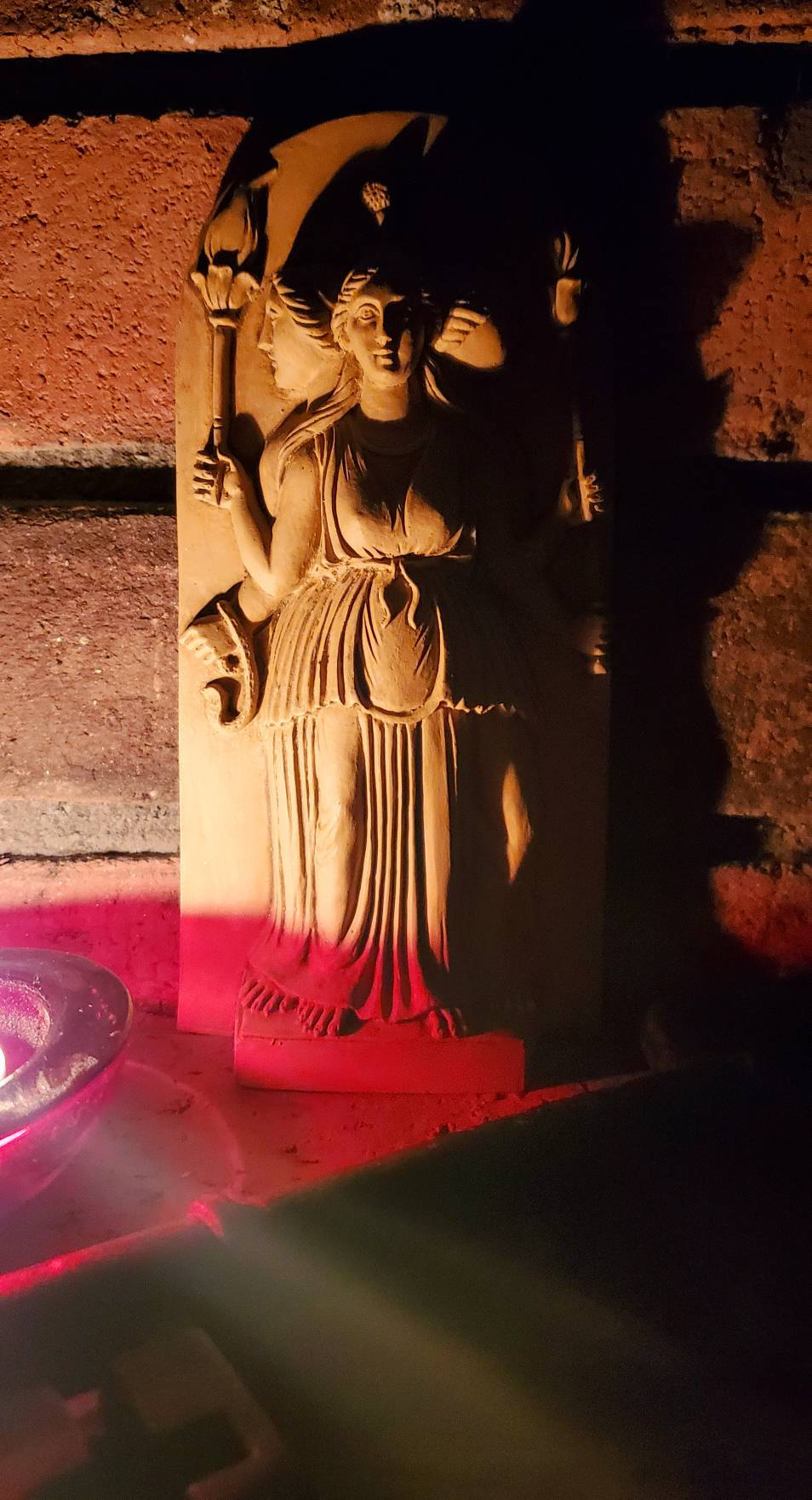
Photo © Melissa McNair / The Torch and Key

The Equinox is a time of balance and mediation; the day is marked by equal light and equal dark. Whether you are in the Northern or Southern Hemisphere, you are experiencing the turning of the season from Summer to Autumn or from Winter to Spring.

Here in the Northern Hemisphere, the Spring Equinox is almost upon us. Trees and shrubs are just now beginning to show the tiniest of buds beginning to form, slowly bringing what was once dormant back to life with renewed growth.

In my neck of the woods (northern New York), we still have a decent amount of snow on the ground; remnants of the few recent snow storms, with more on the horizon (the above photo is from last year; it will be more than a month, maybe not until May, before my daffodils once again are blooming!).

The month of March, for us anyway, has certainly been roaring like a lion. We’ve experienced three Nor’easters in less than 2 weeks, bringing with it significant snow and wind. Winter is not quite done with us yet, but, signs of spring are emerging. Birds have returned with their melodious morning bird song, and I can make out tiny buds forming on the tips of the branches on the massive oak trees on our property.

I find Hekate’s presence throughout the turning of the seasons, and the Spring Equinox is a time of renewal and rebirth. Persephone is returning to the world, after spending her allotted time in the Underworld with Hades. Hekate, with Her illuminating torches, assumed the role of Propolos and became Persephone’s guide on her return trip, bringing Spring, and life, with her.

Ever since the Winter Solstice, light has been slowly returning to the world. Little by little, we are being brought out of the darkness and into the light. Hekate as Phosphorus is calling and showing us out of the dark. We finally reach the point of the Spring Equinox where we have a balance of light and dark. Hekate, being a liminal goddess, is standing on that threshold and keeping things in balance.

This is another facet of Chaldean Hekate – Soul of the World, Anima Mundi (please see February’s #hekateworldsoul posts for more information on Chaldean Hekate). Hekate is the Creatrix of Light – the primordial flame that illuminates all. That sacred flame dwells deep within our souls and all creation, and is brought to life with Her call.


Community celebration of the Goddess Hekate and Light. #hekatelight www.hekatecovenant.com

© 2018 Melissa McNair / The Torch and Key

The Epiphany of Hekate – #hekateworldsoul


voiceofthefire

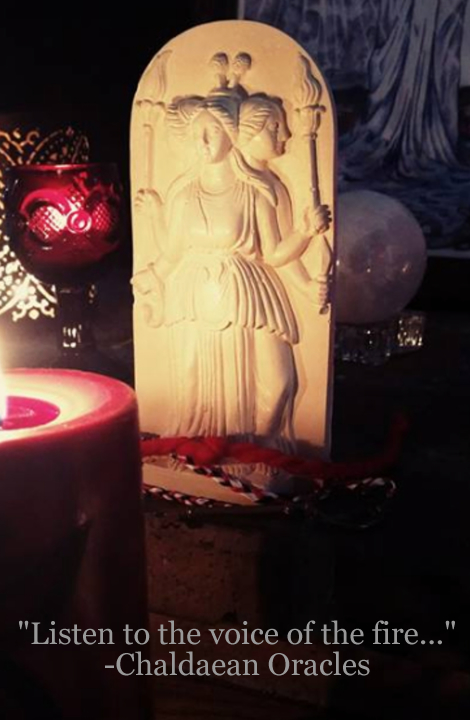
Photo © Melissa McNair / The Torch and Key

Fragments 146, 147, and 148 of the Chaldaean Oracles, as revealed by Hekate:

Having spoken these things, you will behold a fire leaping skittishly like a child over the aery waves;

or a fire without form, from which a voice emerges;

or a rich light, whirring around the field in a spiral.

But that you will see a horse flashing more brightly than light,

or a child mounted on the swift back of a horse,

a fiery child or a child covered with gold, or yet again a naked child;

or even a child shooting arrows, standing upon a horse’s back.

If you say this to me many times, you will observe all things growing dark,

For the curved bulk of the heavens disappears and the stars do not shine; the light of the Moon is hidden and the Earth does not stand steady. All things are revealed in lightning.

But when you see the sacred fire without form,

Shining skittishly throughout the depths of the Cosmos,

Listen to the voice of the fire.


Source:

“Hekate Soteira” by Sarah Iles Johnston

Hekate’s Cosmic Womb

floweroffire

Photo © Melissa McNair / The Torch and Key

In keeping with the Covenant of Hekate’s February theme of celebrating Hekate as Cosmic World Soul, here is another short post about Hekate’s Cosmic Womb in the Chaldaean Oracles.

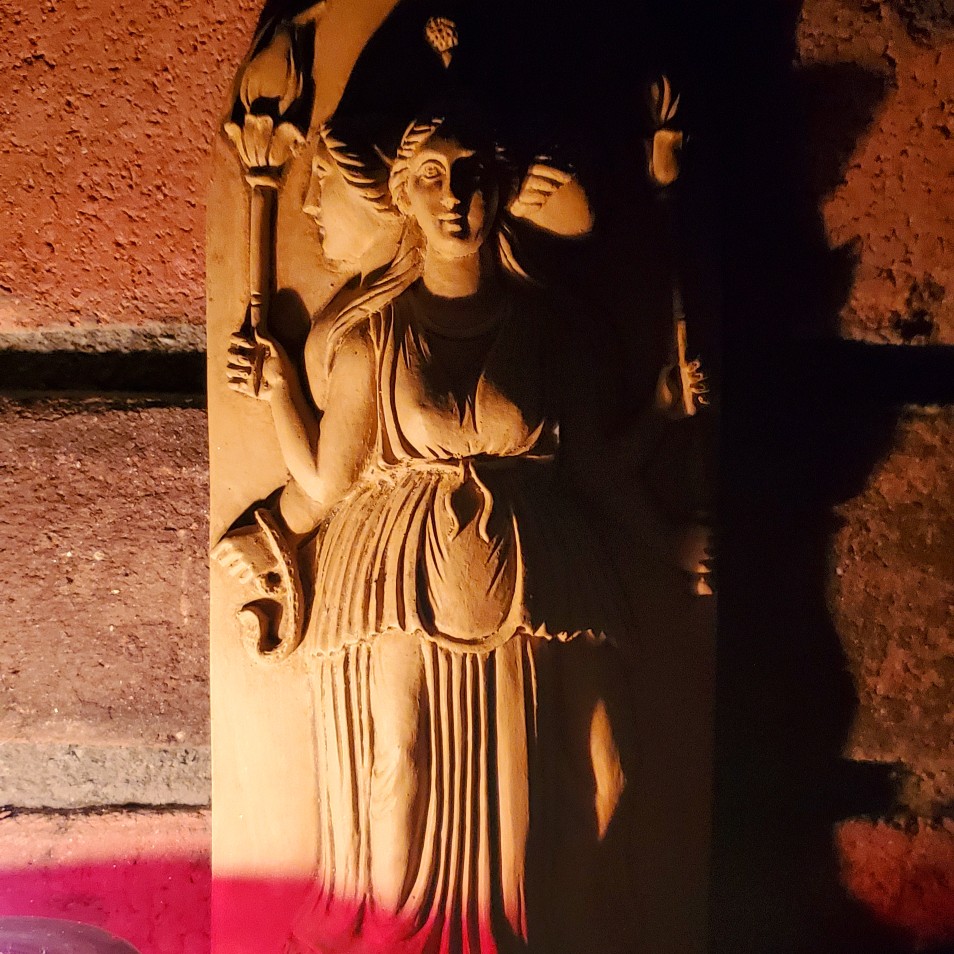
In a nutshell, Hekate’s role in the Chaldaean Oracles is that of mediatrix between the Paternal Intellect – the Father – and the sensible / physical world. The passage in fragment 35, quoted in the above photo, suggests that the Father (intellect, thought) “impregnates” the Cosmic Womb of Hekate with ideas (thunderbolts), and creation bursts forth from Her fiery womb to the universe.

This sort of reminds me of the biblical passage from John 1: “In the beginning was the Word, and the Word was with God, and the Word was God.”

The “Word” as described in the Bible is philosophically similar to the Paternal Intellect of the Chaldaean Oracles. “Word” is translated from “Logos” (λόγος), which is Greek for reason, or thought. The Paternal Intellect of the Oracles is thought, reason, the word. The foundation for creation.

Hekate, as the Cosmic Womb, receives the ideas from the Paternal Intellect, and births these ideas through Her womb, which then helps form the physical world.

Fragment 34 of the Chaldaean Oracles states:

“From here springs forth the genesis of varied matter;

From here the sweeping lightning obscures its flower of fire

As it leaps into the hollows of the Cosmoi; for from here all things

Begin to stretch forth towards that place beneath the wondrous rays.”

Fragment 38 explains further:

“These are the thoughts of the Father, after which is my enwrapping fire”

Hekate is known as a liminal goddess; one who oversees the boundaries in life, whether they are physical or beyond. It makes sense that She mediates the ideas of the Paternal Intellect, forming boundaries and helping to separate these ideas into the physical world.


Further reading:

“Hekate Soteira” by Sarah Iles Johnston

“Chaldaean Oracles” – http://gnosis.org/library/grs-mead/grsm_chaldean.htm


Honoring Hekate in February

As mentioned earlier, the Covenant of Hekate is celebrating and honoring Hekate as Cosmic World Soul for the entire month of February. A hashtag of #hekateworldsoul is being added to all public projects, so if you are on Twitter, Instagram, Facebook, or any other medium that utilizes hashtags, you may find these other works by searching #hekateworldsoul . Also, if you feel inspired to share your own experiences, be sure to include the hashtag so others can find you.


For Hekate as the Cosmic World Soul, February 2018 – a CoH devotional project – www.hekatecovenant.com

© 2018 The Torch and Key / Melissa McNair

Hekate Phosphoros — #hekateworldsoul

wp-1586552286254.jpg

Photo © Melissa McNair / The Torch and Key

Hail, Hekate Phosphoros!

Hail, Bright Goddess of the Mysteries!

Hail, Radiant One!

Your golden radiance encompasses all, bathing us in your warm and loving glow;

Light-bearing Mother, bright-shining creatrix,

Illuminate our souls and purify us with your primordial flames;

Hekate Phosphoros, resplendent in your luminous crown,

May your brilliant light encircle the whole of the universe

and kindle within ourselves the sacred flame of love, knowledge and devotion;

En Erebos Phos, In Darkness There Is Light

___________

Honoring Hekate in February

As mentioned earlier, the Covenant of Hekate is celebrating and honoring Hekate as Cosmic World Soul for the entire month of February. A hashtag of #hekateworldsoul is being added to all public projects, so if you are on Twitter, Instagram, Facebook, or any other medium that utilizes hashtags, you may find these other works by searching #hekateworldsoul . Also, if you feel inspired to share your own experiences, be sure to include the hashtag so others can find you.


For Hekate as the Cosmic World Soul, February 2018 – a CoH devotional project – www.hekatecovenant.com

© 2018 The Torch and Key / Melissa McNair

Hekate as Cosmic World Soul: Purification and Cleansing

In keeping with the Covenant of Hekate’s February theme of celebrating Hekate as Cosmic World Soul, here is another short post about ritual purification & cleansing. This is more of a personal post which includes my own purification incense blend recipe for all to use.

As most reading this will know, ritual purification of yourself and your sacred space is key when performing devotional or formal rituals. Theurgists believed in ritual purification, as evidenced in these excerpts from the Chaldean Oracles:

“The oracles of the gods declare, that, through purifying ceremonies, not the soul only, but bodies themselves become worthy of receiving much assistance and health: “for (say they) the mortal vestment of bitter matter will, by this means, be preserved.” And this, the gods, in an exhortatory manner, announce to the most holy of Theurgists.”

“The Theurgist who presides over the mystic rites of Apollo, begins his operations from purifications and sprinklings. “The priest, in the first place, governing the works of fire, must sprinkle with the cold water of the loud-sounding sea,” as the oracle says.”

I think it is incredibly important to ensure that yourself and your sacred space is purified before presenting to the gods you are honoring. I created an incense blend for purification purposes. The ingredients are basic and easily found, but the result is powerful and achieves my goal of purifying my sacred space. Plus I love the way it smells, that’s always a bonus! This incense may be burned before formal rituals, or it may be used on a regular basis for routine cleansing of your sacred space. Or both; this incense may be used however you prefer to cleanse your sacred space.

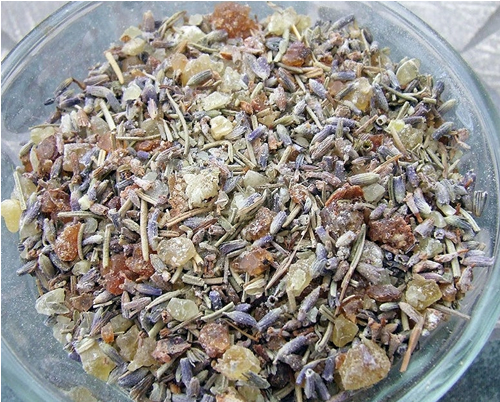
Basically, this blend consists of frankincense resins, myrrh resins, dried lavender flower buds, and dried rosemary (I included a photo below). That’s all. 4 basic ingredients. Nothing fancy, or top secret. It’s very simple to obtain and blend.

Using top-quality ingredients is very important to me personally. Frankincense and myrrh resins are readily available just about anywhere; do an internet search and the results are endless. The quality of these resins, though, can be suspect depending on the source. I personally prefer to purchase my resins from Mountain Rose Herbs. The price per pound may be a little higher than most places, but I know 100% without a doubt that they will be premium quality resins. They know where their stuff is harvested from, and that’s important, too. I am not affiliated with them in any way – I just like their offerings, and have been shopping with them for years. But use a supplier you know and trust. When buying myrrh, be sure to purchase pure myrrh resins – not the opopanax variety. It’s a slightly different variation of myrrh that is less expensive and (in my opinion) a lesser quality. For the rosemary, you can find that easily in your local market where the fresh herbs are or you can buy them already dried. Same for the dried lavender, though there are plenty of online resources for those too (such as bulk spice importers, or Mountain Rose as well).


incense

Photo © Melissa McNair / The Torch and Key

To create this blend, crush the frankincense and myrrh resins with your mortar and pestle until they are in small pieces and try to have them uniform in size as best as you are able to manage. Use equal amounts of both. Once the resins are crushed to your liking, add the lavender and blend well. Then add the rosemary and blend well. I don’t measure anything when making incense… it sounds odd, I know, but I just eyeball everything and if it feels right, then I will leave it. Or, I will add a little more if I feel it needs a bit more. I never start out with too much, because you can always start with a little and add as needed, but you can’t take away if you add too much at first. You will just end up adding more of everything else to compensate and then end up with an enormous amount of incense that you won’t know what to do with. (been there!) Also, lavender has a pretty powerful aroma – try not to use too much of it.

Once you are satisfied with your blend, store any extra in a glass jar or an airtight container, out of sunlight.

I hope you enjoyed this little essay and if you decide to try this incense – I hope you enjoy that, too!


Honoring Hekate in February

As mentioned earlier, the Covenant of Hekate is celebrating and honoring Hekate as Cosmic World Soul for the entire month of February. A hashtag of #hekateworldsoul is being added to all public projects, so if you are on Twitter, Instagram, Facebook, or any other medium that utilizes hashtags, you may find these other works by searching #hekateworldsoul . Also, if you feel inspired to share your own experiences, be sure to include the hashtag so others can find you.


For Hekate as the Cosmic World Soul, February 2018 – a CoH devotional project – www.hekatecovenant.com

© 2018 The Torch and Key / Melissa McNair

Hekate as Cosmic World Soul

Within the Covenant of Hekate, we celebrate and honor Hekate’s many different forms. Her identity as Cosmic World Soul and Soteira is, however, the root of our work within the CoH.

The Covenant of Hekate is dedicating February 2018 to Hekate as Cosmic World Soul, and members are collaborating on a devotional project that includes poetry, artwork, personal stories, and rituals inspired by Hekate as Soteira. This is my contribution; please feel free to share this blog post with a link back here.

What does “Cosmic World Soul” mean?

In the Chaldean Oracles, Hekate is irrevocably defined as the Cosmic World Soul – the Great Mother, the Anima Mundi, Creatrix of All. The source of primordial fire.

I have experienced many different sides to Hekate over the years, but the one that I “feel” the most is Hekate as this Great Mother; as one who facilitates life, death, rebirth, and everything in between. This excerpt from the Chaldean Oracles sums it up well, and the accompanying text (version from G.R.S. Mead), describes Hekate as “Great Mother/Magna Mater”, “Life of the Universe”, “Mother of Souls”, “Inbreather of Life”.

45

“About the hollows beneath the ribs of her right side there spouts, full-bursting, forth the Fountain of the Primal Soul, all at once ensouling Light, Fire, Aether, Worlds.”

47

“After the Father’s Thinkings, you must know, I, the Soul, dwell, making all things to live by Heat.”

In the Chaldean Oracles, the “Father” is described as existing as intellect or pure thought, while Hekate, as the Anima Mundi, puts forth his thoughts through creation.

During my personal devotionals, I often feel Hekate’s presence as this warm, glowing light. It’s hard to describe – but I when I feel Her presence in this way, I feel an abundance of Love. It is so pure; it’s hard to put into words. There were a few times where I actually witnessed a warm, golden glow appear around me. It is a very emotional and powerful experience; and very real. It doesn’t always happen. But when it does, I will most definitely bask in this sacred glow and honor Her radiance.

I also feel Her presence in this way every May Full Moon when I perform the annual Rite of Her Sacred Fires. This global rite honoring Hekate is always a wonderful experience; knowing that thousands of others from across the globe are celebrating the same rite at (more or less) the same time for the same purpose is it’s own special kind of magic.

worldsoul

Photo © Melissa McNair / The Torch and Key

Honoring Hekate in February

As mentioned earlier, the Covenant of Hekate is celebrating and honoring Hekate as Cosmic World Soul for the entire month of February. A hashtag of #hekateworldsoul is being added to all public projects, so if you are on Twitter, Instagram, Facebook, or any other medium that utilizes hashtags, you may find these other works by searching #hekateworldsoul . Also, if you feel inspired to share your own experiences, be sure to include the hashtag so others can find you.


For Hekate as the Cosmic World Soul, February 2018 – a CoH devotional project – www.hekatecovenant.com

© 2018 The Torch and Key / Melissa McNair