Hekate Angelos – Messenger, Liminal Mediator

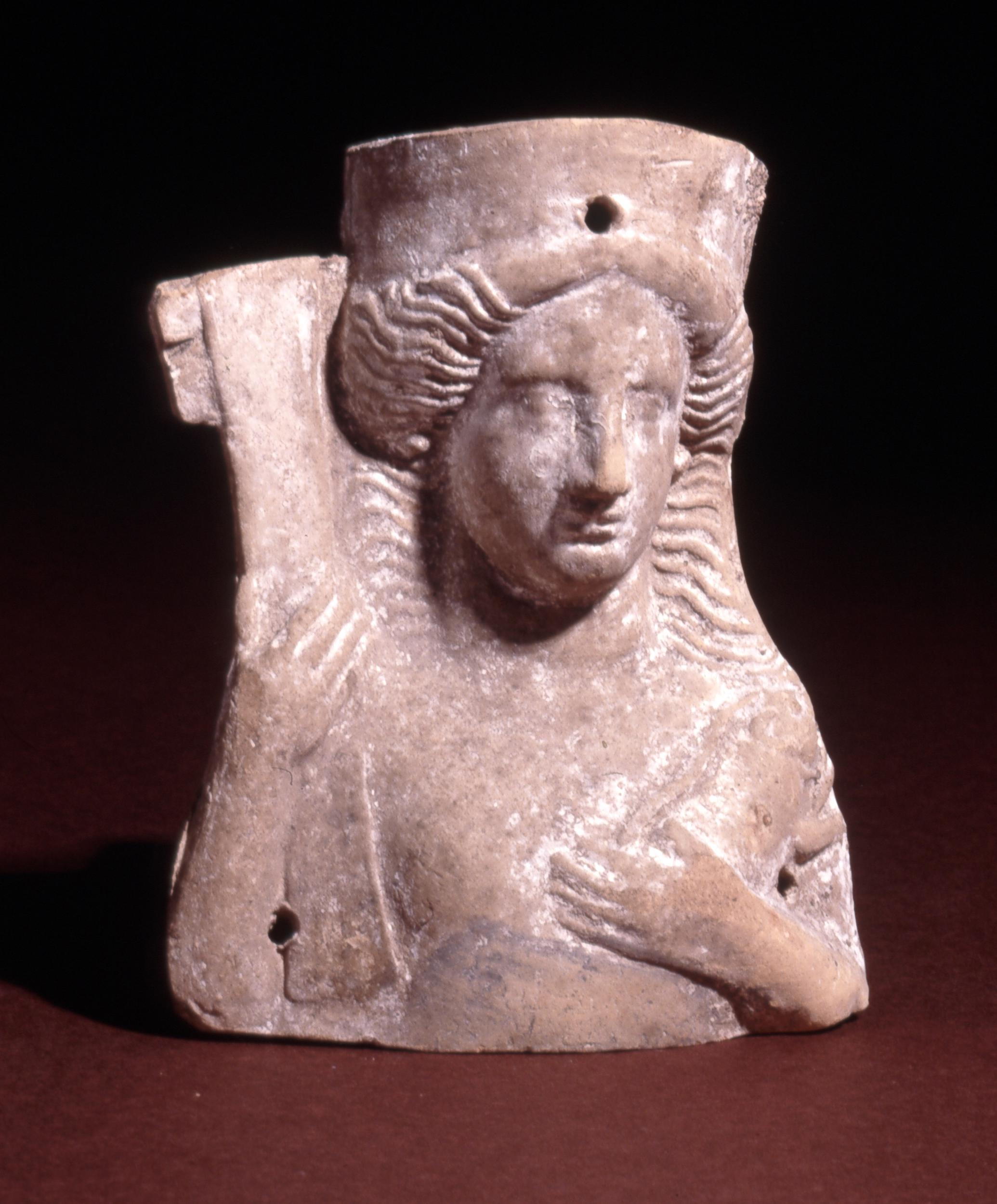
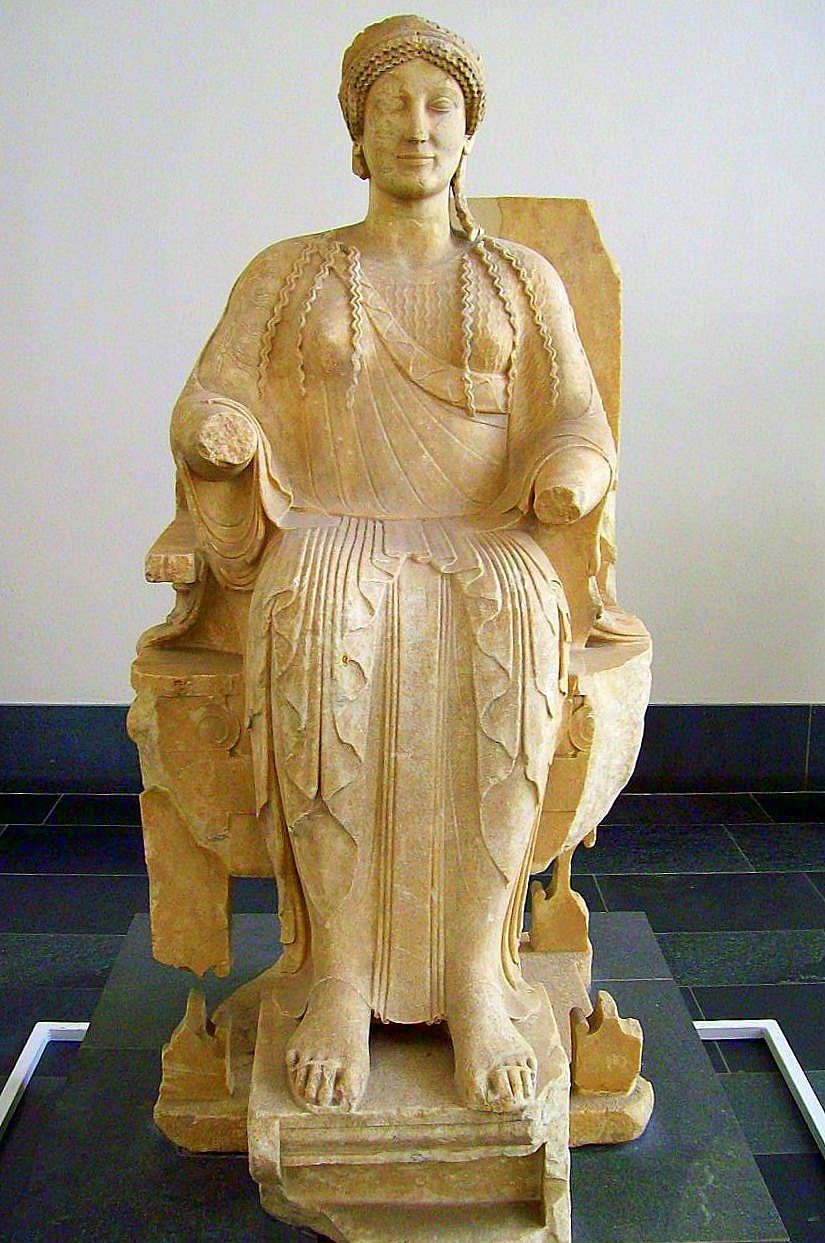
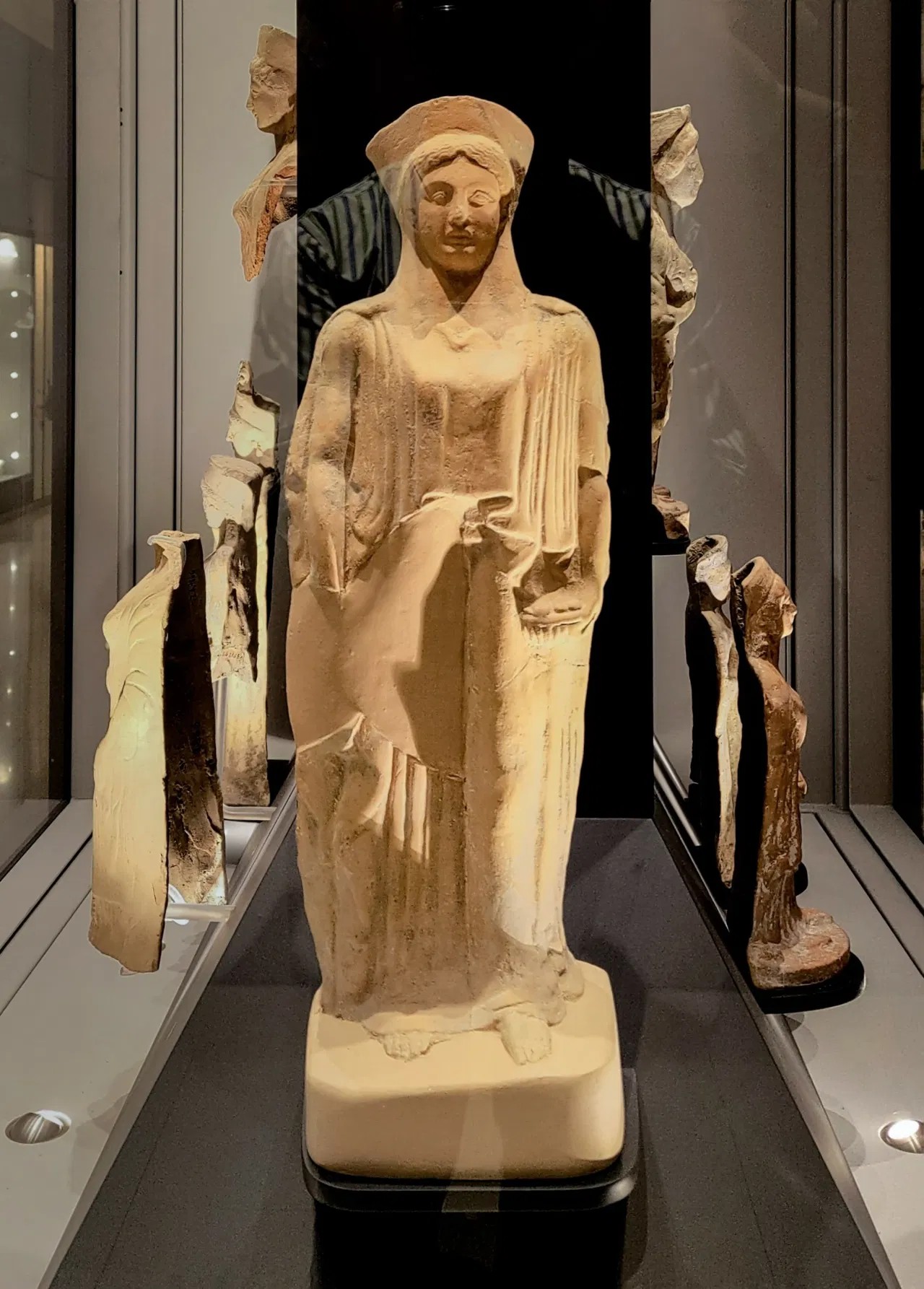
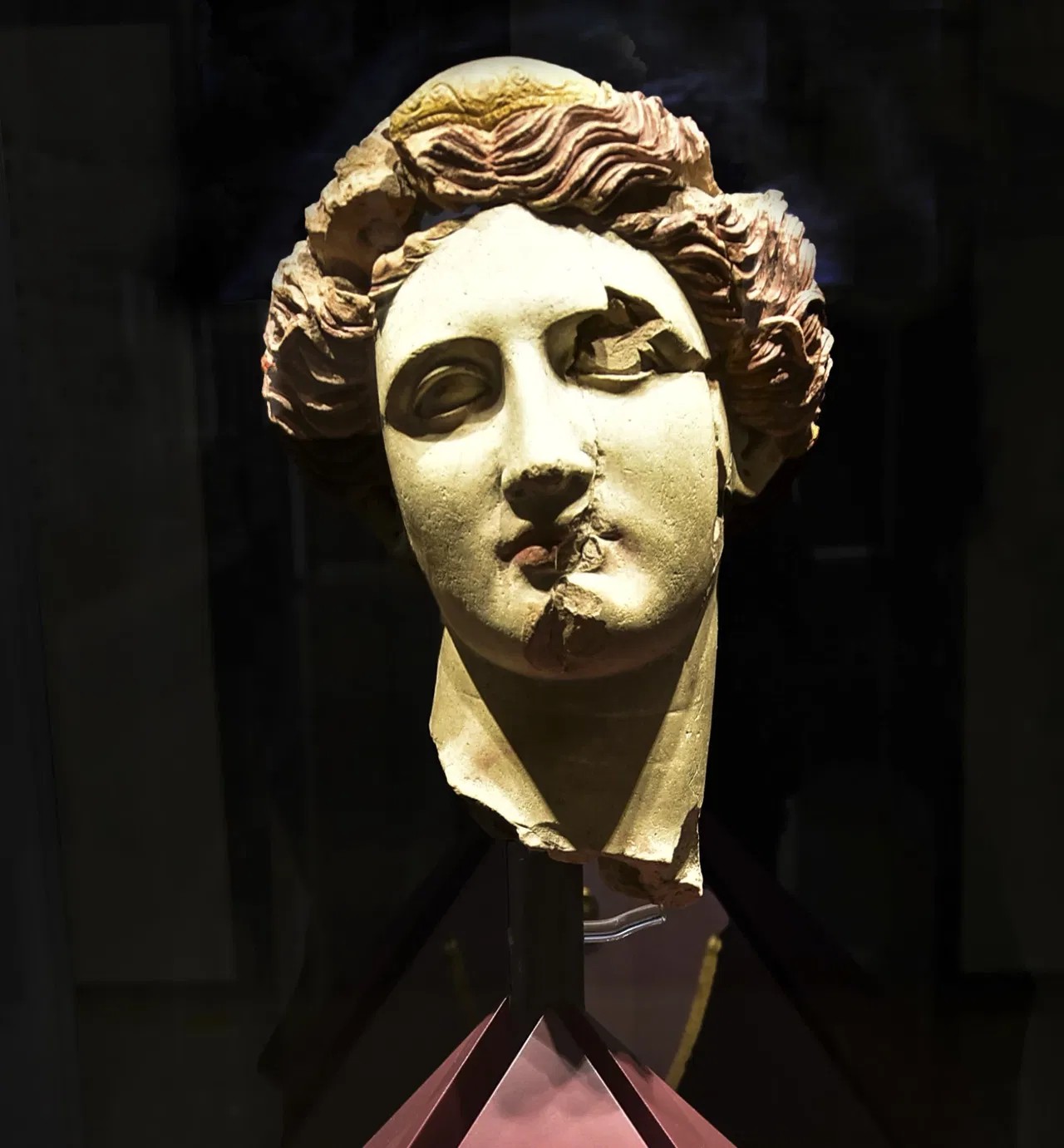
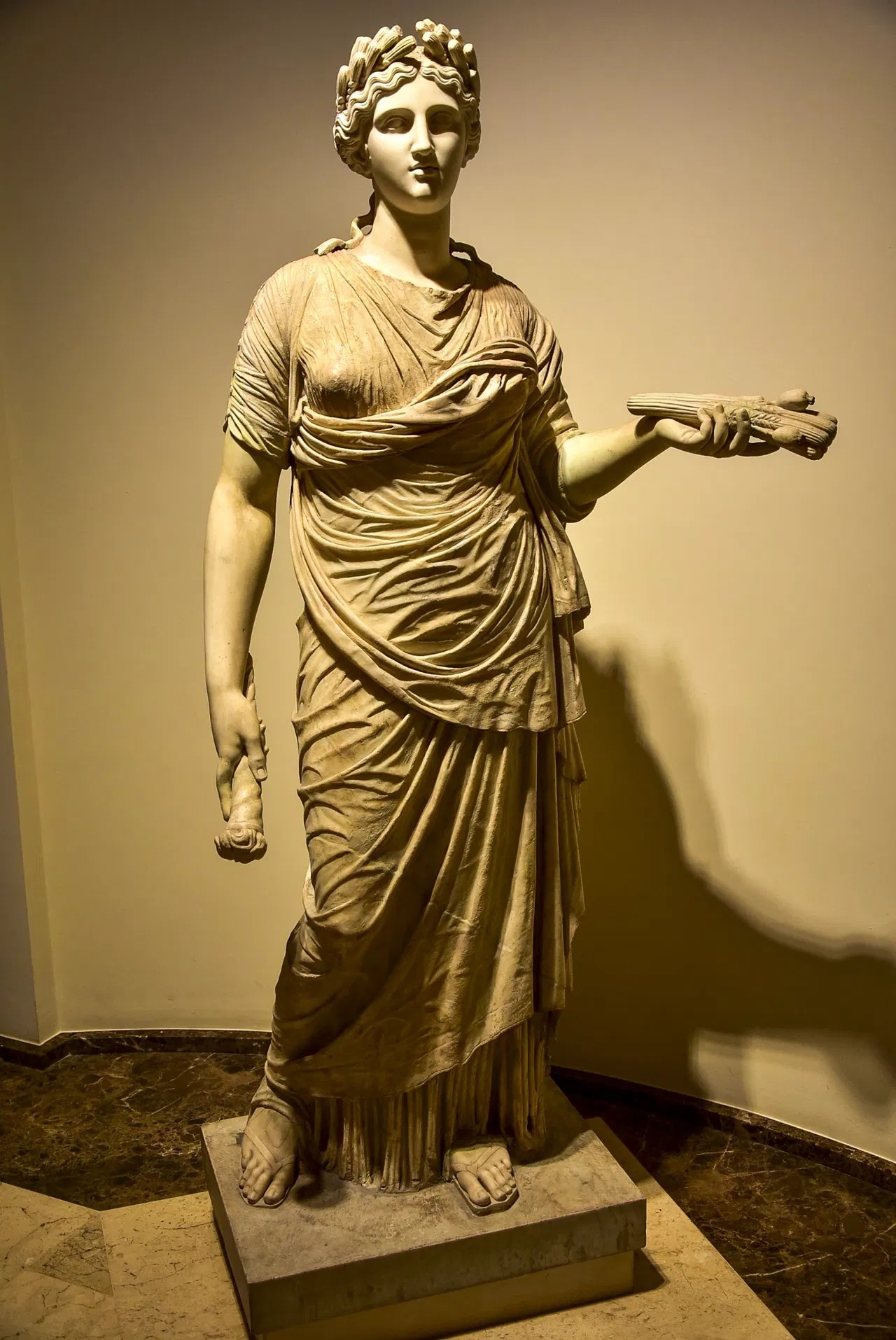
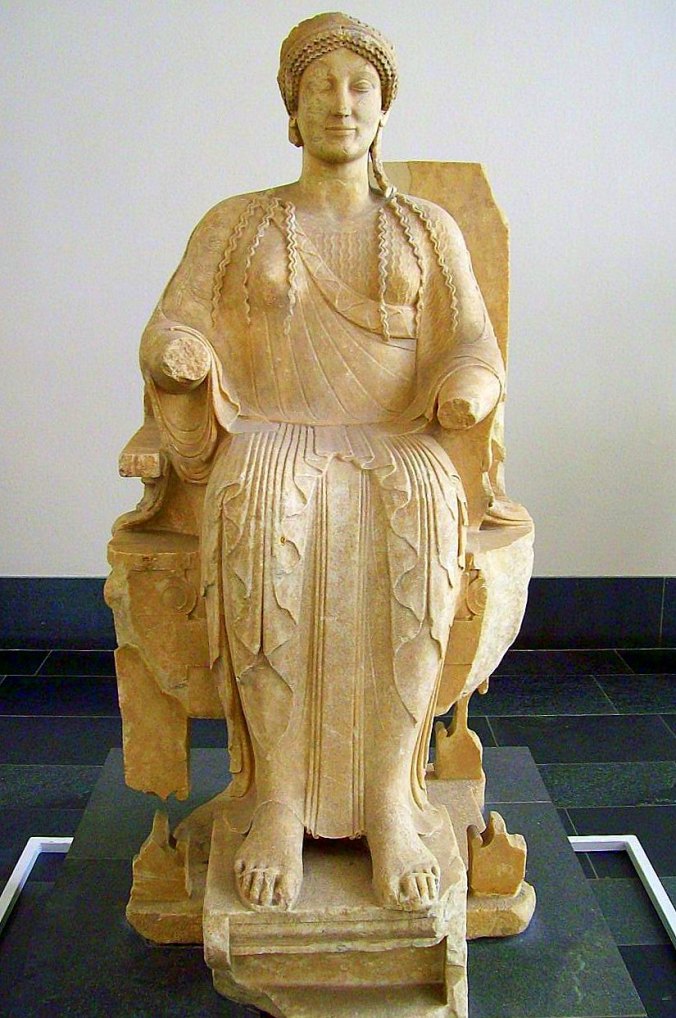
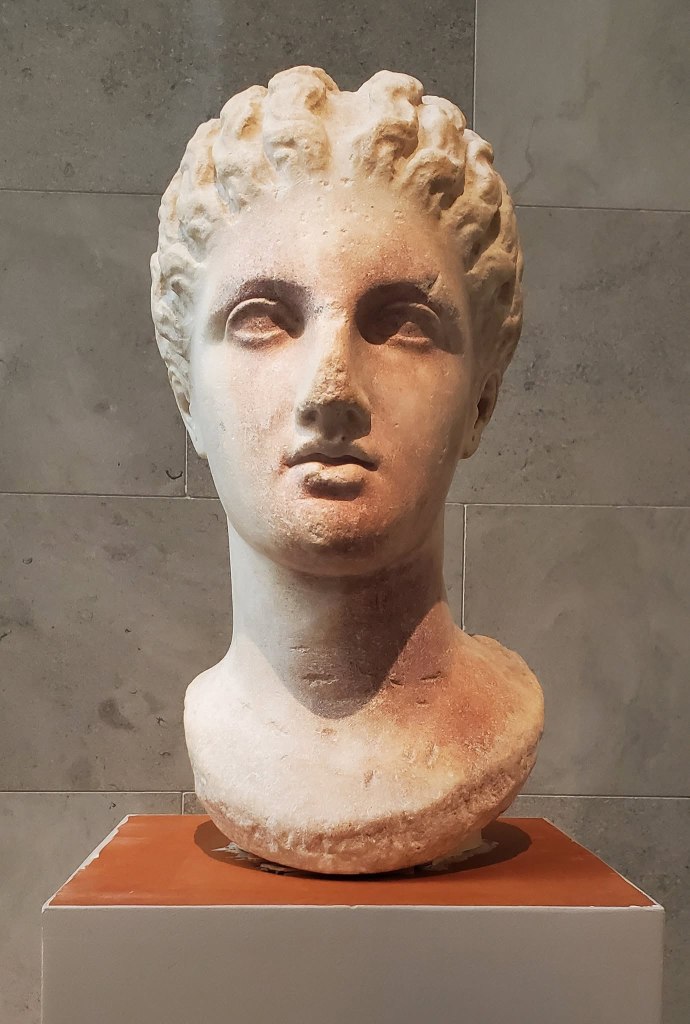
Remains of a statue of Hekate excavated from the site of the Temple of Demeter Malophoros in Selinunte, Sicily dated to approx 4th century BCE

“Angelos” is a title / epithet meaning “messenger”, or “angel”. The concepts of divine angels are mostly known due to being referenced throughout numerous Abrahamic bible passages and psalms, and within those biblical texts angels were sent from God to either deliver messages, or to act as an intermediary with assisting one or more persons.

One of Hekate’s known epithets is “Angelos”, an ancient title shared with Artemis. In Siracusa/Syracuse, a major ancient Greek colony on the southeast coast of Sicily, stood a temple dedicated to Artemis and Apollo that was center of cult worship for Artemis Angelos. In Greek mythology, Angelos was the daughter of Zeus and Hera who eventually became a chthonic goddess. Writer Sophron explains:

“Angelos was raised by nymphs to whose care her father had entrusted her. One day she stole her mother Hera’s anointments and gave them away to Europe. To escape Hera’s wrath, she had to hide first in the house of a woman in labor, and next among people who were carrying a dead man. Hera eventually ceased from prosecuting her, and Zeus ordered the Cabeiroi to cleanse Angelos. They performed the purification rite in the waters of the Acherusia Lake in the Underworld. Consequently, she received the world of the dead as her realm of influence, and was assigned an epithet katachthonia (“she of the underworld”)

Hekate as “Angelos”

Hekate’s own role as “Angelos” can be found in the Homeric Hymn to Demeter, which details the abduction of Persephone by Hades and Persephone’s return to Earth. First, we learn about Hekate bearing a message to Demeter after Persephone was abducted, which results in Hekate and Demeter visiting Helios to negotiate a search for Persephone. Later in the hymn, we learn of Hekate being assigned the role of guiding Persephone on her trips between the realms of the Earth and Underworld. Hekate is known as a liminal goddess, traversing the boundaries between realms and the title “Angelos” as messenger / mediator fits within Hekate’s role as “Propylaia” (guardian of thresholds) and “Propolos” (companion and guide).

The Flower of Fire

In the Chaldean Oracles, Hekate is described as the “Cosmic World Soul” that acts as an intermediary or messenger / transmitter between the “paternal intellect” (ideas), and the power in Hekate’s “cosmic womb” that in turn enlivened those ideas and transmitted them, thus ensouling the material / physical world. This concept is discussed in great detail in the book (her published dissertation) “Hekate Soteira” by scholar Sarah Iles Johnston and I highly recommend reading it (if you haven’t already).

Fragment 34 of the Chaldaean Oracles states:

“From here springs forth the genesis of varied matter;

From here the sweeping lightning obscures its flower of fire

As it leaps into the hollows of the Cosmoi; for from here all things

Begin to stretch forth towards that place beneath the wondrous rays.”

The Sanctuary of Demeter Malophoros

Selinunte in Sicily was a major Greek colony and is the location of the great Sanctuary of Demeter Malophoros. The title “Malophoros” means “fruit bearer”, and in this temple the Eleusinian Rites were re-enacted. Various votive remains have been excavated from this site depicting Hekate, Demeter, and Persephone, and the temple area has been turned into a protected archaeological park that also contains temples to other gods, including Hera and Athena. Many of the sanctuary remains are housed in a museum in Palermo, Sicily.

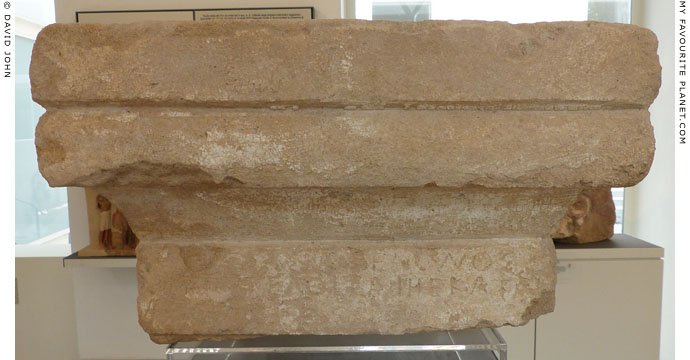
One excavated archaeological artifact is the base of a statue with a votive inscription to Hekate engraved on it:

A statue base with a votive inscription dedicated to Hekate, on display at Antonino Salinas Regional Archaeological Museum, Palermo, Sicily. Dated approx 450 BCE

The inscription on the statue base pictured above reads:

“Alexias son of Xenon made [this] dedication
to the Angelos (Messenger) and to Hekate”

This statue base is dated to about 450 BCE and is on display at Antonino Salinas Regional Archaeological Museum in Palermo, Sicily. This statue base is believed to have been a part of the Propylon of Hekate at the Sanctuary of Demeter Malophoros. Propylons are “gateways” to temples, and are linked to Hekate’s role as “Propylaia” – “Guardian of Thresholds / Entryways”.

Angelike Orchēsis

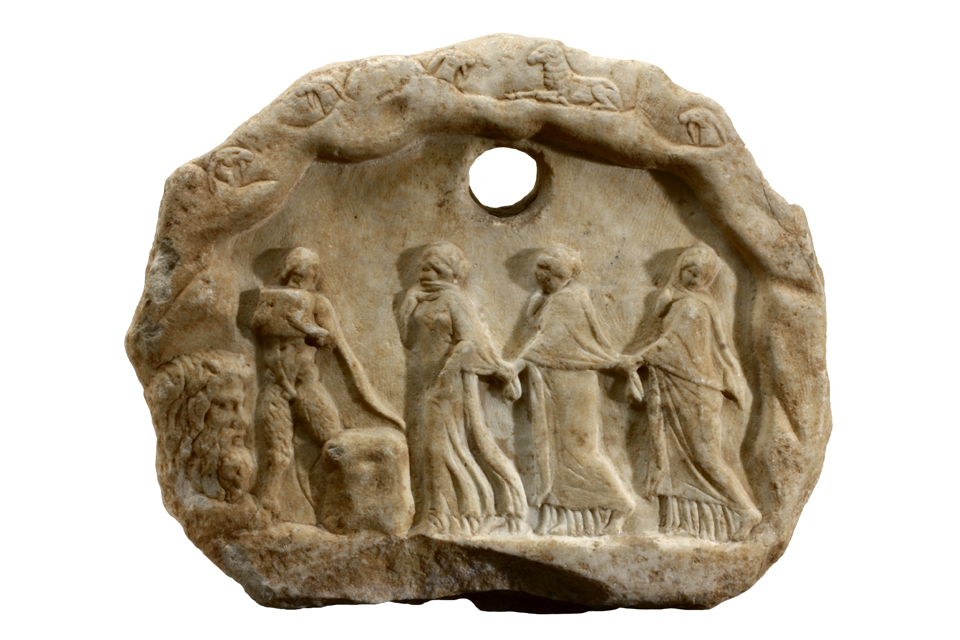
The Angelike Orchēsis were celebratory dances performed by the ancient Greeks as part of important rituals, and Angelike Orchēsis translates to “messenger’s dance”. Many dancing rituals took place during the Eleusinian rites and they all had a different purpose. The Angelike Orchēsis, according to Greek writer Athenaeus of Naucratis (who lived sometime during the 2nd-3rd century CE), were Ionic dances that told the story of Hekate delivering a message to Demeter regarding the abduction of her daughter, Persephone.

Votive relief found at Eleusis depicting a dance scene, dated to about 4th c. BCE / National Archaeological Museum of Athens

Hesiod’s “Theogony”

The references to Hekate in Hesiod’s “Theogony” (written around 700 BCE) are believed to be the oldest literary source for Her. In addition to describing Hekate’s origins and honors given to Her by Zeus, Hesiod describes how Hekate mediates prayer and decides if the prayers should be answered favorably:

“For to this day, whenever any one of men on earth offers rich sacrifices and prays for favour according to custom, he calls upon Hecate. Great honour comes full easily to him whose prayers the goddess receives favourably, and she bestows wealth upon him; for the power surely is with her.”

Hesiod then goes on to describe how Hekate also mediates and bestows Her will over participants in games, horsemen, and fishermen:

“Good is she also when men contend at the games, for there too the goddess is with them and profits them: and he who by might and strength gets the victory wins the rich prize easily with joy, and brings glory to his parents. And she is good to stand by horsemen, whom she will: and to those whose business is in the grey discomfortable sea, and who pray to Hecate and the loud-crashing Earth-Shaker, easily the glorious goddess gives great catch, and easily she takes it away as soon as seen, if so she will.”


© Melissa M. / The Torch and Key

Sources:

Hekate Propolos: Companion and Guide to the Mysteries of Life

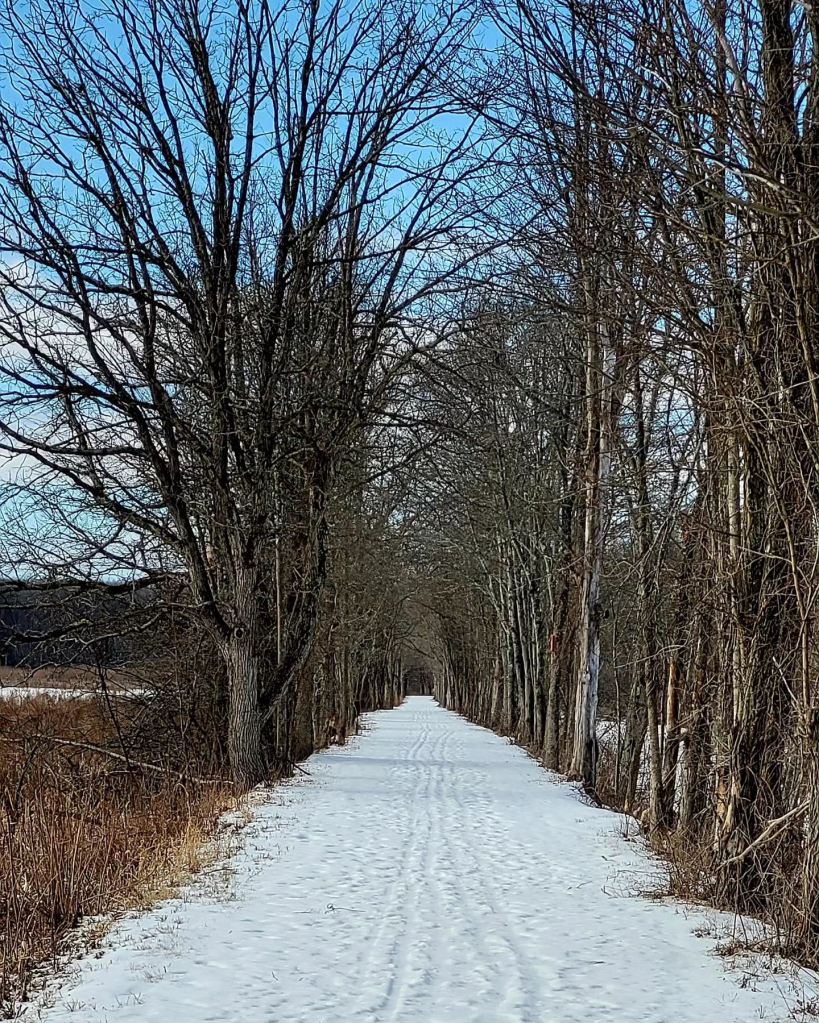
Vischer Ferry Nature Preserve, Clifton Park NY / © Melissa M.

One of Hekate’s most well-know epithets is “Propolos”, which means “companion” or “guide”. I began actively honoring Hekate about 15 years ago, though She made an entrance in my life many years before that, however I was not fully aware of it at that time. Fast forward to the Spring of 2010, when I sought out Sorita d’Este on social media after reading her book on Artemis and discovered a project she was working on that was dedicated to Hekate – “Her Sacred Fires” anthology due to be published, with a global “Rite of Her Sacred Fires” being planned for the May Full Moon to coincide with the book’s release. I took an interest in that, and I can say that my life has never been the same since.

I learned a lot about myself while I explored a relationship with Hekate, and incorporated daily devotionals to Her in my day to day life. To say it was transformative is an understatement. I read everything I could get my hands on about Hekate – modern books by modern authors, ancient texts, the PGM, scholarly papers and books written by some of those scholars, poetry, classical texts by Hesiod and others from that time, and connecting with other devotees of Hekate from all sorts of backgrounds through my (past) involvement with the Covenant of Hekate, which I applied to be a member after the first RoHSF in 2010. Learning about the “historical” Hekate, and ancient practices and researching known sites of cults/worship was an integral part of this process for me. I was like a sponge, soaking up every bit of information I could and learning as much as possible about historical and modern practices.

Aside from that, She was ever-present in my life and She always will be. There were times when She “went dark”, and was largely silent and there were gaps in devotionals. But I know Her presence and guiding force is always with me, and I carry that knowledge every day. Hekate’s torches burn bright no matter what, just waiting for that moment where Her devotee borrows it to rekindle that spark and illuminate their path. Everything I do, everything I say – has intent, and She is there.

In classical literature, Hekate was Persephone’s companion and guide as she traveled between the realms of the living and dead to be with Demeter part of the year, and with Hades in the Underworld for the other part of the year. The Homeric Hymn to Demeter tells this story, and the presence of Hekate at major sanctuaries to Demeter and Persephone is documented with archaeological evidence.

Today, as I write this, I am undertaking some transformative projects for myself. I am returning to college after many (many) years of putting that on the back-burner to care for my family. I am going to finish my degree; I am determined to see this through. What will come of that once I finish – I don’t know. But I will do it. The other project is in the very, very early stages of planning, and it involves the eventual building of community. Strangely, there are no goddess-centered devotional temples in my area despite the widespread Pagan community in New York. I want to change that. I want to create a space where the sacred, divine feminine is honored in all of Her forms and names, with Hekate as Propolos. I expect the beginnings of this will involve meeting in a dedicated public space that will have to be reserved as needed. My ultimate dream is to have a permanent space of our own for this, and hopefully this will be manifest one day. The seeds have been planted, and I will make this a reality one day in the near future, however long it takes.


© Melissa McNair / The Torch and Key

Turning Towards the Dark

Photo © Melissa M. / The Torch and Key
The wheel is always turning, and in the Northern Hemisphere we find ourselves turning ever more towards the dark part of the year. The first harvest has passed, the days are slowly getting shorter with slightly later sunrises and slightly earlier sunsets, and I am now starting to notice leaves are already slowly changing (which is a little earlier than usual).

I recently visited a local orchard with my daughter to pick some fresh blackberries. The orchard / farm is enormous at almost 100 acres in size – with endless apple trees of every variety as far as the eye can see, and berry patches and brambles mixed in here and there. Soon pumpkins will be available for picking, and the corn maze will be set up for some autumn fun. The farm is so big, they have farm trolleys taking visitors to various parts of the farm to pick what they need. We hopped off our trolley, and I was soon lost in the task of picking blackberries. It was just my daughter and I with no other visitors, so we split up and I went down one row and she another.

The blackberry brambles were tall – at least a few feet taller than me and the rows were narrow, so I felt closed in and alone, and this solitude was a comforting feeling. I was so glad that there were no other visitors while we were there. I took this quiet time to still my mind while I picked, and this was something I sorely needed as my personal life is quite busy at the moment. Between caring for my husband and managing his medical care, preparing for a cousin’s wedding (happening in 2 days!), and helping my daughters complete last minute tasks before heading back to college, I am stretched pretty thin and “me time” is almost nonexistent.

Being able to go inward while picking berries allowed me to center and ground myself in a way that I haven’t been able to do in a while. It was just me, the blackberries, and the land. The time between Lammas and the Autumn Equinox is all about letting go, just as Demeter and Persephone are preparing for her descent at the Equinox. I took this time to think about how I wanted to move forward. These last few years have been challenging personally due to my husband’s deteriorating health and me finding myself caring for him and managing his extensive medical care. Now that we are in a sort of predictable – but busy – pattern, I am better able to manage my time and devote more to what I want to do for myself, rather than always putting everyone else first and taking bits of time here and there for myself when there was some to spare.

I made a promise to myself to make time for me, and to nurture and cultivate what will help me grow beyond who I am now. I will do just that, though how much time it will take is anyone’s guess. The phrase “know thyself” is something that I am always hearing in my brain, and that is one of my current tasks that I am making a priority.

I have been a devotee of Hekate for many years, and lately I have been feeling this primal urge to blaze a path for myself that I never would have dared to undertake before. I will always, always be there for my family. They are everything to me – that will never change. I feel I can better serve them if I am finally able to be true to myself, which I am trying to do. Transformation and change is never easy, and Hekate has been a guiding force in my life for many years – especially during times of vast change. Telling me to remember who I am.

The late summer / Autumn months are a time when we turn towards the dark. Turn inwards and nurture those seeds that have been planted, and allow them to germinate and grow in the fecundity of our soul. Persephone returns to the realm of the dead in September, tending to the departed souls who are preparing for their transition to a new life. This is a cycle that repeats itself, literally and metaphorically. With nature, and with our inner selves. We are also Persephone; preparing ourselves for what may come next as we cocoon ourselves and tend to our needs. Be still, and listen.

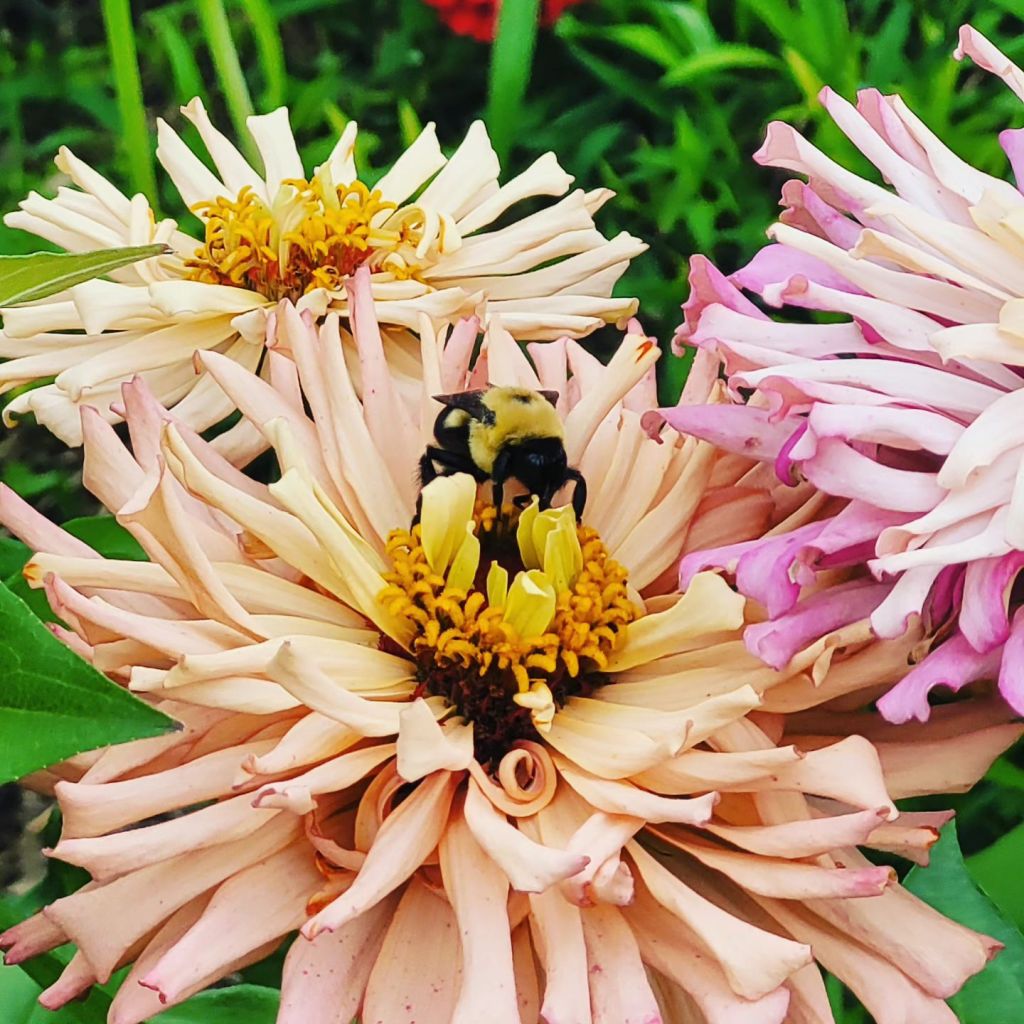
The photo at the top of the page was taken at the local apple orchard mentioned in the beginning of this post. As my daughter and I were walking back to the main part of the farm (we decided to skip the trolley ride back), we passed by a field of wildflowers with rows of colorful blooms. I spotted this bee buzzing from flower to flower, enjoying the nectar they provided. The sighting of this sacred bee was no coincidence, and a fitting end to our visit to the orchard. Bees are sacred, and in ancient Greece the Melissae was a title given to priestesses of Aphrodite, Demeter, and Artemis. Bees were often associated with Persephone and the Underworld. My birth name is Melissa, and my mother told me that she had a different name picked out for me before I was born, but Melissa is what I was named instead for reasons unknown to her. I now understand what forces were at play that early September morning, because I have always had a strong connection to bees and my spiritual practice and interests center around these goddesses in addition to Hekate. But that story, I think, would be suitable for another post.


© Melissa McNair / The Torch and Key

Hekate in Magna Graecia: Morgantina

Morgantina

Morgantina was a province in Enna, Sicily, which is roughly in the east-center of the island. Morgantina was settled sometime around 1000 BCE and life continued there until around 50 CE. In present day, the area is known as “Aidone”. Morgantina was the site of a major sanctuary to Demeter and Persephone, and many statues, votives, pottery, and curse tablets have so far been recovered at the site. Sadly, much looting was done here and artifacts are still being recovered and returned to Italy in present-day.

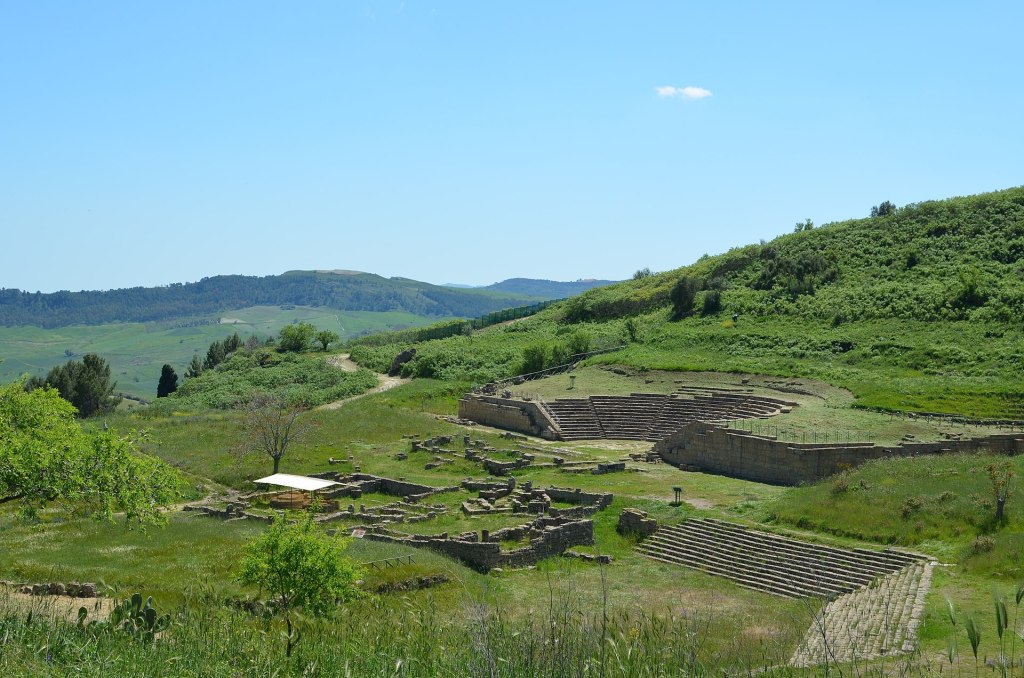
Remains of the sanctuary of Demeter & Persephone, and a Greek theater beyond the sanctuary. Image from Wikimedia Commons

Morgantina was home to a major sanctuary dedicated to Demeter and Persephone, the excavated remains of one may be seen in the above photo. Researchers discovered that there were actually five separate sanctuaries in Morgantina dedicated to Demeter and Persephone, and each one likely served different functions. They were located on each directional side (north, south, east, and west). Morgantina is near Pergusa, which is where Persephone was abducted by Hades. A main sanctuary, referred to as the “thesmophorion” to celebrate the Eleusinian mysteries, comprised of several different rooms, some of which were believed to be living quarters for the temple priestesses. Many different votive offerings were found surrounding the altars, and they mostly consisted of figurines and vases. Also found at the site were statues & busts of the goddesses, ritual clay lamps, and hair accessories. Some of the statues found show Persephone holding a piglet and torches. Other artifacts were found within the sanctuary, including items used for pressing oil and wine, and for grinding corn and other grains.

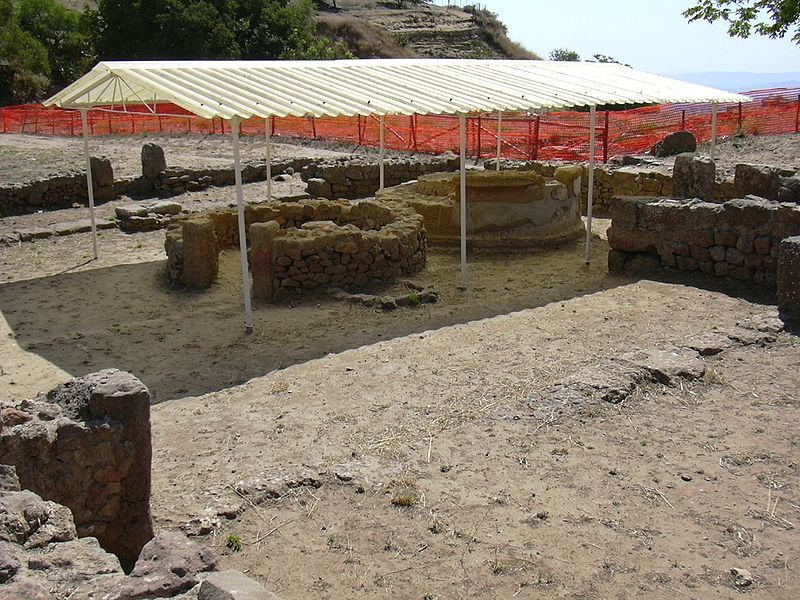
As seen in other sanctuaries to Demeter and Persephone, the main sanctuary at Morgantina has a propylon dedicated to a Chthonian goddess, possibly Hekate or Persephone. This propylon contains a pit in the ground for offerings (a “botros”), and a cylindrical stone altar. Animal bones (likely from pigs) and pottery votive offerings have been found within the botros.

Propylon dedicated to a Chthonian goddess, showing a round altar and botros (offering pit). Public domain image from Wikipedia

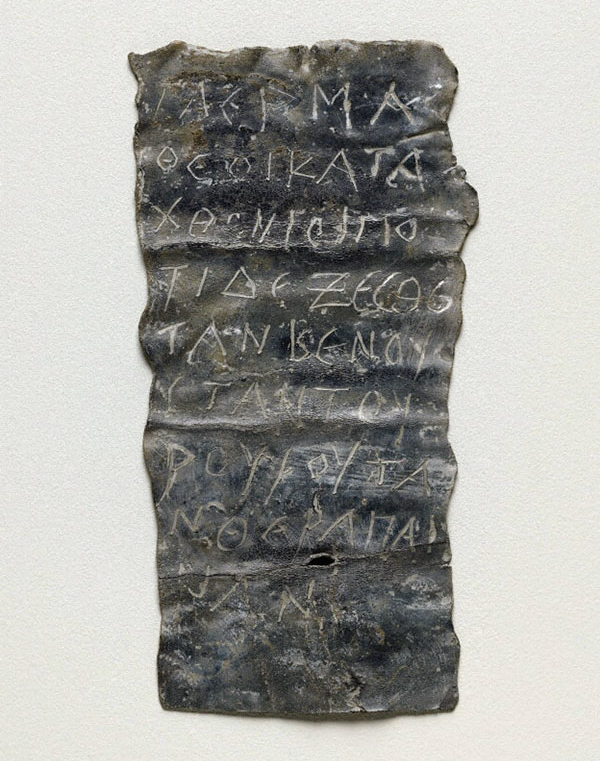
Several lead curse tablets have also been found at Morgantina, and most have been unearthed from the offering pit in the sanctuary / propylon to the still-unnamed Chthonian goddess. One tablet, pictured below, is part of a group of four tablets all cursing a slave named Venusta, and asking the gods of the Underworld to take her to their realm of the dead.

Curse Tablet, about 100 B.C., found in Morgantina, Sicily. Lead, 3 11/16 x 1 13/16 in. (9.4 x 4.6 cm). Museo Archeologico Regionale of Aidone. Photo from Getty Images.

I hope you enjoyed this short essay on Hekate in Magna Graecia: Morgantina. I will expand on this specific topic of Morgantina in the future.

© Melissa McNair / The Torch and Key


Sources:

Demeter and the Madonna Addolorata

Exploring the Misteri di Trapani and Demeter’s Search for Persephone

Trapani (sometimes referred to as “Drepana”) is a city on the northwest tip of Sicily, and was founded by the Elymians approximately 3rd century BCE. There are a few legends as to the founding of Trapani (near Eryx / Erice), and one of them involves Demeter’s search for Persephone after her abduction by Hades. According to the legend, Demeter dropped her sickle while searching for Persephone, which would explain why the coastal land resembles the curved blade of a sickle.

Sicily was once known as Magna Graecia, and the echoes of that past are evident just about everywhere you go on that magical island. Even though Catholicism became the dominant religion in Italy, the “old ways” were kept by rural peasants especially in Sicily, and were disguised as Catholic to keep up appearances. One such practice is the veneration of the Black Madonna. The Catholic Church has a simplistic explanation for Black Madonnas – mostly that the statues / icons of the Virgin Mary “aged” over the years, darkening the coloring of the icon. But those who know, know that the Black Madonna is the divine feminine – a concept carried over from the old ways. We know Her by many names: Dark Mother, Demeter, Melaina, etc. The Catholic Virgin and Child is said by many to actually represent Demeter and Persephone, especially in Sicily where the Eleusinian Mysteries were carried out long ago in places like Selinunte and Locri. The story of Demeter and Persephone – from Persephone’s abduction to Demeter’s search for her – has been kept alive in Sicily in various ways, and one can find echoes of that in the annual Easter procession in Trapani.

Misteri

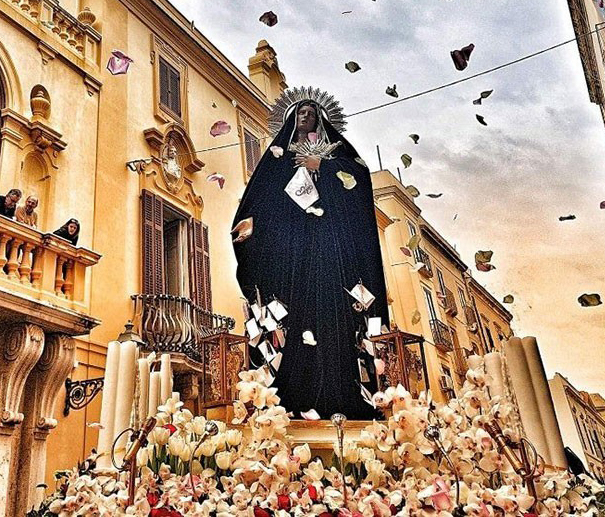
The Procession of the Mysteries in Trapani started over 400 years ago and people come from far and wide to witness this event every year. Near the end of Holy Week, on Good Friday (as of this writing in 2022 that day falls on April 15th), the procession begins with many floats depicting the passion and death of Christ. Each statue represents each station of the cross along the Via Dolorosa (“sorrowful road”), and the statues are usually crafted by local artisan guilds. In Trapani, there are two processions for the Holy Mother: an official church procession for the “white” Madonna Addolorata (“sorrowful mother”); and a second procession of the Black Madonna – the divine feminine. 

Many women of Sicily, to the dismay of the Catholic church, have always venerated the Black Madonna, sometimes in secret. To these women, the Black Madonna represents the divine feminine presence in all women and creation; the powerful Earth Mother whose blackness represents the dark, fecund earth and fertility. Simply, the Black Madonna is the protectress of the poor and marginalized people of society, and is called upon for social justice and righting wrongs. She is also the Dark Mother; the powerful force of life, death, and rebirth.

With the traditional Good Friday procession that includes the Madonna Addolorata, the statues of the son and mother separate at the beginning before the son begins the way of the cross that leads to his death. This is a solemn procession, with the mother cloaked in her dark mantle desperately searching for her beloved son. This scene transcends religions and cultures and is such a powerful display that evokes ancient, ancestral memories. During these mysteries, the statue of the Madonna is joined by a statue of John the evangelist (a saint, believed by some to be one of the Apostles), and they are carried all over town in search of the son. The Holy Week mysteries come to a conclusion on Easter Sunday, when the son is resurrected/reborn and reunited with his mother.

Madonna Addolorata, photo by Processione dei Misteri di Trapani

Eleusinia

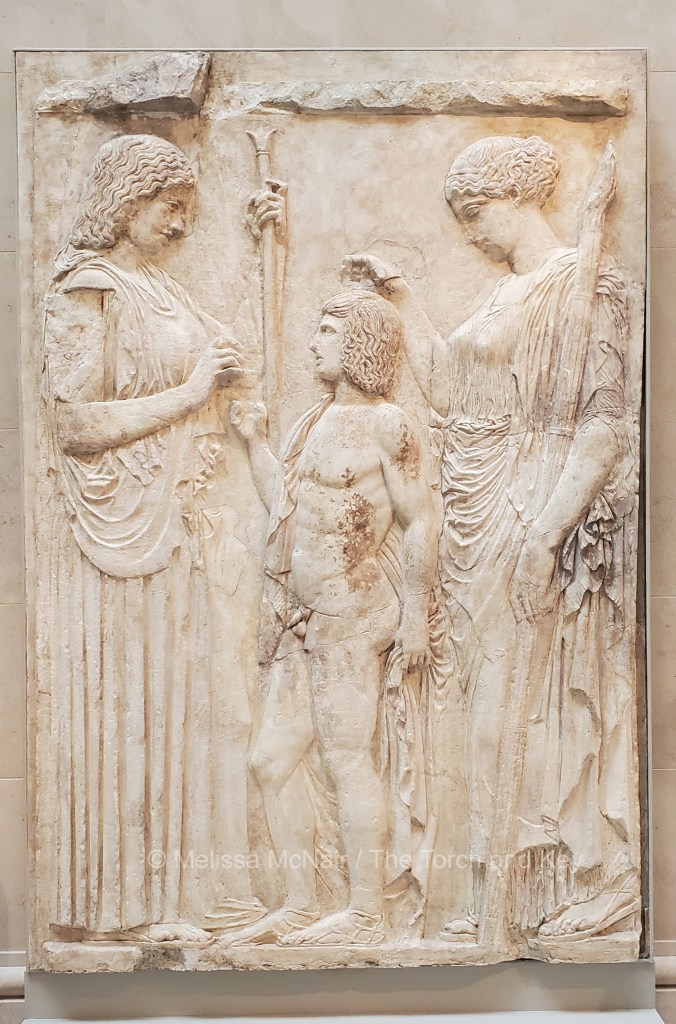
Trapani is not that far from Enna, where according to Sicilian lore Persephone was abducted by Hades on the shores of Lake Pergusa while she was picking flowers with her maidens. The story of Persephone’s abduction and Demeter’s search for her is told in the Homeric Hymn to Demeter. Hekate assisted Demeter in her search for Persephone, with her torches illuminating the way. During this time, Demeter caused all crops to wither and trees and flowers went dormant while Persephone was in the underworld with Hades. Eventually, Demeter and Persephone were reunited after Zeus intervened and tasked Hermes the Messenger to mediate between Demeter and Hades to make arrangements for Persephone’s return. Hades tricked Persephone into eating pomegranate seeds, forever binding her to the underworld. Hekate then became Persephone’s torch-bearing guide on her travels between the realms in the spring and autumn. The Eleusinian Mysteries celebrated the mysteries of life, death, and rebirth.

Eleusinian relief, The Metropolitan Museum of Art, New York. Photo © Melissa McNair, personal collection
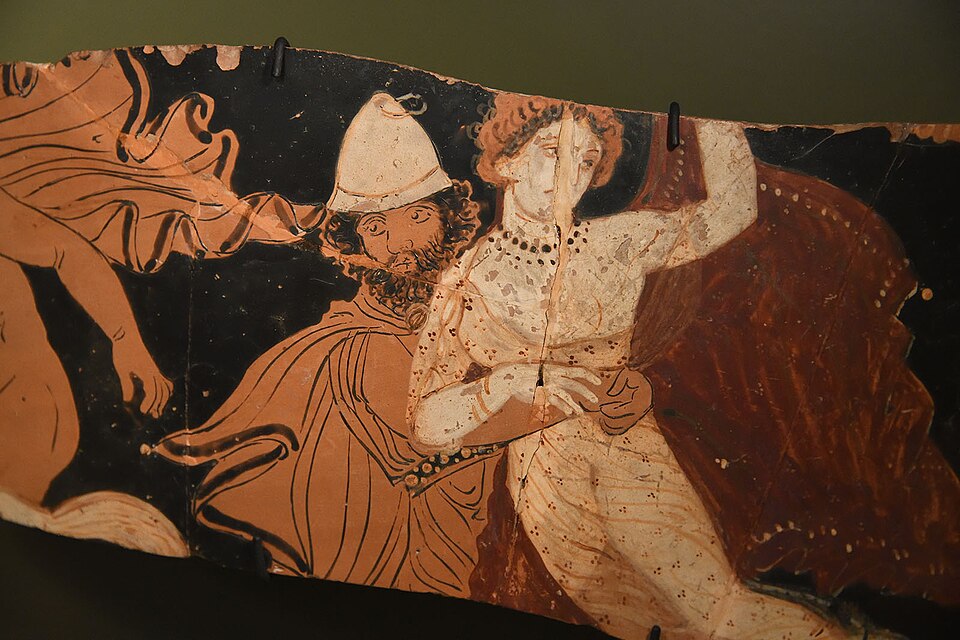
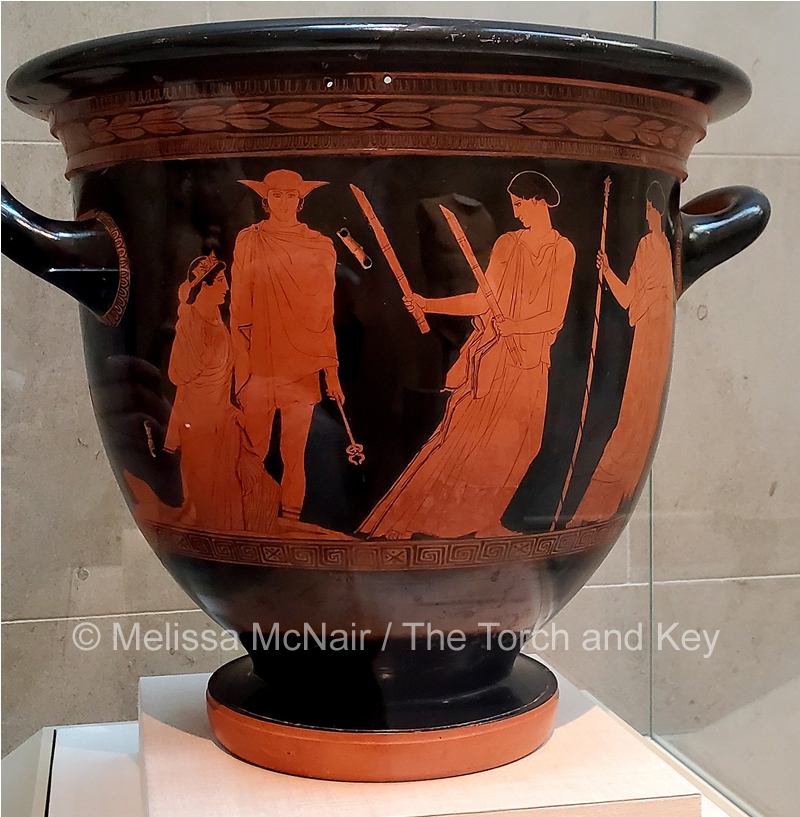
Terracotta bell-krater attributed to “Persephone Painter”, 440 BCE. Hekate and Hermes, assisting in returning Persephone from the underworld. The Metropolitan Museum of Art, New York. Photo © Melissa McNair, personal collection

Κυανοπεπλος / Kyanopeplos

The Madonna’s search for her beloved son is similar to Demeter’s search for Persephone. Both mother figures are experiencing pain and a deep, aching dread. Their searches are wrought with sorrow, frustration, and grief. One may say, when witnessing the procession of the Madonna Addolorata cloaked in her dark mantle, that she held a quiet rage within her. Rage for being separated from her child, and rage for wanting justice.

Demeter’s grief over losing Persephone eventually turned to rage, when she caused all crops, plants, flowers, and trees to wither and die while she was searching for her daughter. She decreed the lands to be eternally barren while separated from her beloved Persephone. In the Homeric Hymn to Demeter, she is described as being veiled (“Kyanopeplos”), not unlike the Madonna, during her search for Persephone:

“Bitter pain seized her heart, and she rent the covering upon her divine hair with her dear hands: her dark cloak she cast down from both her shoulders and sped, like a wild-bird, over the firm land and yielding sea, seeking her child.”

“[Demeter mourning Persephone] walked behind . . . with her head veiled and wearing a dark cloak which waved about the slender feet of the goddess . . . “

Homeric Hymn 2 to Demeter

The ancient Greeks associated this myth with the changing of the seasons from summer to dormant autumn with her abduction, and Persephone’s return to the world of the living with the return of spring. To this day, many Sicilians living on country farms make offerings to Demeter for bountiful harvests and express their gratitude for their prosperity and abundance during the growing seasons.


I hope you enjoyed this short blog post about the magical Misteri, and that it has perhaps inspired you to delve into the mysteries of the Black Madonna and her connections to Demeter and Hekate. Sicily is forever in my heart, my soul, and in my bones. It is my ancestral land; the history, the lore, the ancient memories are etched within me. I have been a devotee of Hekate for many years, and Demeter and Persephone are close to my heart as well.

© Melissa McNair / The Torch and Key


Sources:

My Breath, My Body

Valley of the Temples, Agrigento Sicily

One day, I will set foot on the land of my ancestors

I long to be where they once lived and breathed

I want to lay down on the Earth, with my head in the grass

And feel the energy of the land and of those who have gone before

I yearn to stand in that valley among the olive and almond groves

What do they remember? Trees remember.

I want to root myself to the Earth, and stand tall

Power building

Hear the whispers of the wind

Among the temple ruins, I stand

The echoes of the memories of those who have gone before

Voices on the wind, asking for remembrance

I feel their presence

My blood begins to sing the songs of the forgotten priestesses

The Women

Power building

Juno, Demeter, Persephone, Hekate

Their call is speaking to my soul

Running through the blood in my veins

Power building

Deepening into my bones

My breath, my voice will sing their names

My breath, my body honors them

Always

Remember

© Melissa McNair / The Torch and Key

The Return of Spring and Persephone

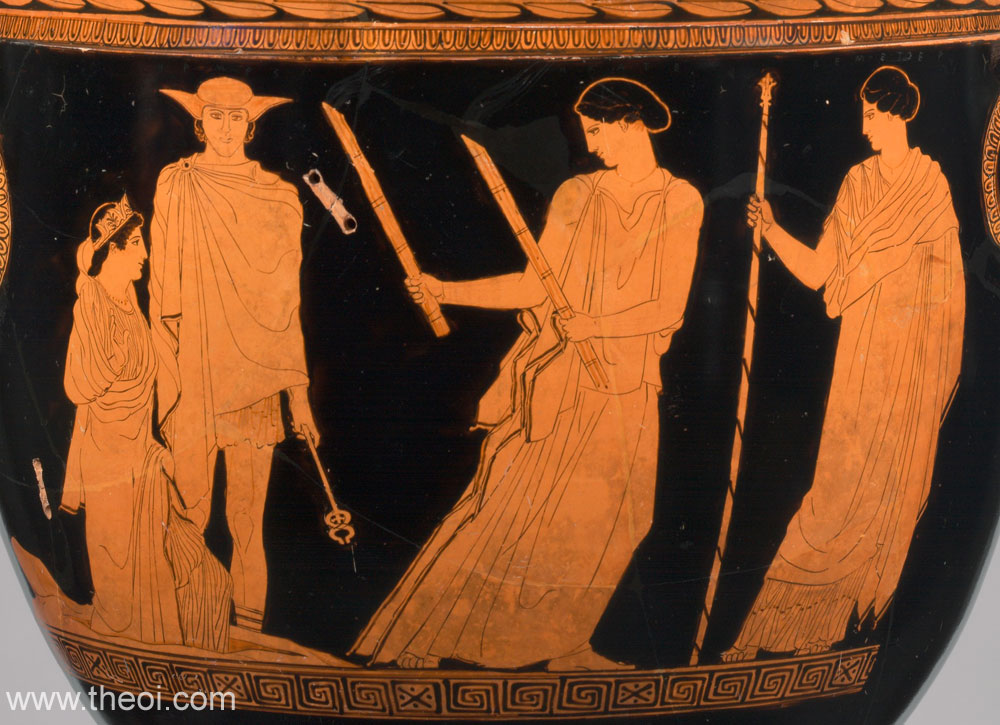
“The Return of Persephone”, Attic vase dated circa 440 BCE

Spring is traditionally a time of rebirth and renewal. The Earth is awakening from her winter slumber, and life is beginning to stir in both flora and fauna. The return of Spring also brings the return of Persephone from the Eleusinian Mysteries. The Rites of Eleusis were initiatory mysteries taking place in the autumn and spring, marking the descent of Persephone into the realm of the dead with her consort Hades (autumn), and Persephone’s return to the mortal world above to be reunited with her mother Demeter (spring). (see related blog post regarding Enna in Sicily).

Hekate had an integral role in these mysteries, acting as Persephone’s companion and guide during both her descent and return. Much isn’t known about the Eleusinian Mysteries, but scholars agree that it centered on the concept of life, death, and rebirth. The Eleusinian Mysteries were tied to the agricultural season of the Mediterranean region, and the mysteries were used to help explain the seasonal changes of growth and life, death and decay, and regeneration of that which died.

Hekate is a liminal goddess that straddles the realms of these forces with ease. Demeter represents life, Persephone represents death and rebirth, and Hekate as Creatrix weaves these energies together. All three goddesses were honored during these rites.

The image above is from a vase dated back to 440 BCE. It shows Persephone, on the left, returning from the realm of Hades. Hermes is standing next to Persephone, and Demeter is on the far right holding a scepter. Hekate is in the center, bearing two torches while guiding Persephone’s return.

🗝


© Melissa McNair / The Torch and Key


Image source: Theoi, https://www.theoi.com/Gallery/T16.6.html

The Sanctuary of Demeter Malophoros, Selinunte (Part I)

The ancient Greek community of Selinunte was founded as a sub-colony of Megara Iblea in 651-650 BCE. One of the first sacred sites in the western Sicilian city, which is considered one of the world’s largest archaeological zones, is the Santuario della Malophoros or the Sanctuary of the Fruit Bearer. “Malophoros” implies pomegranates or apples, […]

The Sanctuary of Demeter Malophoros, Selinunte (Part I)

Hekate in Magna Graecia: Locri


Locri

Locri was a Greek colony of Magna Graecia, located in the Calabria region of southern Italy. Locri was the site of a great sanctuary to Persephone – worshipped as a protectress of fertile marriage. Pinakes (or plaques) unearthed at this site depict Persephone as “Queen of the Dead”, residing in Hades. Hundreds of votives, plaques, and other artifacts were found in the temple remains, dating back to about the 5th century BCE. The images depicted on these items tell Persephone’s story as it is described in the Homeric Hymn to Demeter and Eleusinian Mysteries, including pottery tablets depicted Persephone and Hades, sitting side by side on their thrones as King and Queen of the Underworld.

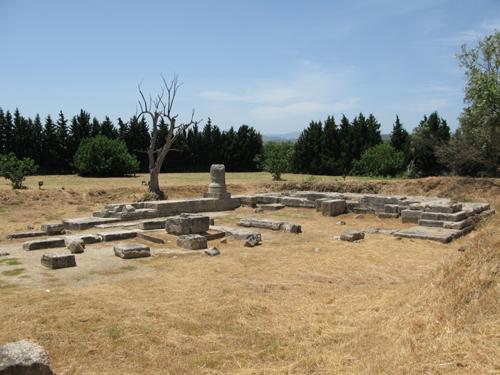
The sanctuary dedicated to Persephone in Locri (also known as Locri Epizefiri) was described by Diodorus Siculus as one of the most famous of the sanctuaries in Magna Graecia. Persephone’s temple featured a propylaia, and possibly had underground rooms for chthonic rites. Based on archaeological findings, it is believed that the Eleusinian Mysteries were re-enacted here.

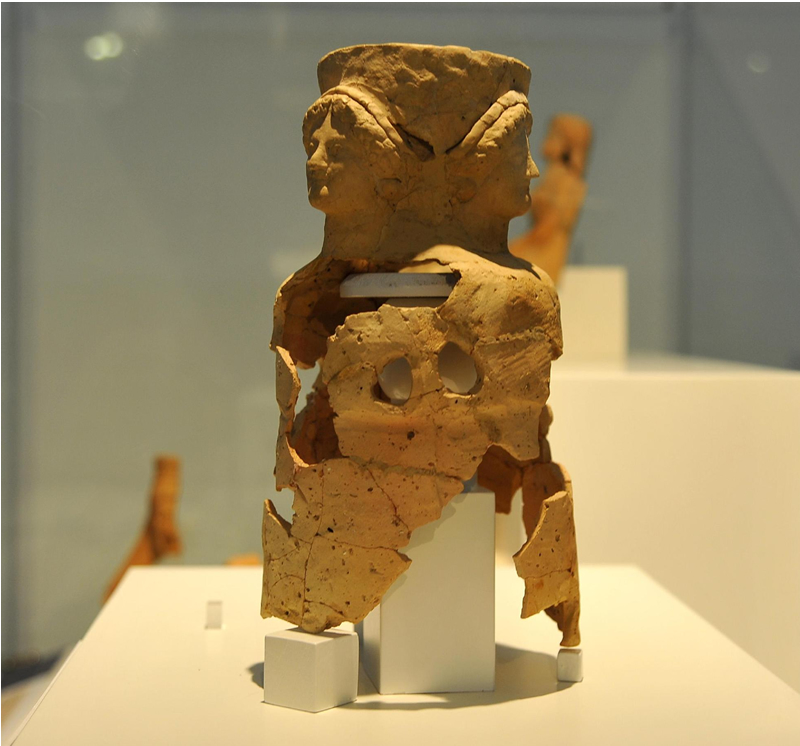
Outside the temple walls was another location for rituals – the Cave of the Nymphs, also known as the Grotta Caruso. Here, women would undergo katabasis (underworld journey); caves are a common location for rituals involving chthonic deities. Excavations of this site revealed stairs leading down into a subterranean area containing a natural spring basin used for ritual bathing, complete with an altar. Niches were set into the walls for votive offerings. Some of the votives uncovered included figurines of women, many of which were triple-headed (triform).

A very interesting archaeological find was discovered within Persephone’s temple – a pinake of a winged female daimon. This brings to mind the earlier mention of Angelos – the winged messenger/angelic chthonic deity who is identified with both Hekate and Artemis. Winged deities who travel between the worlds are typically messengers or guides of the dead and departed souls.

image8

Temple of Persephone remains at Locri – from Wikimedia


I hope you enjoyed this essay on Hekate in  Magna Graecia: Locri.

© Melissa McNair / The Torch and Key


Sources:

Hekate in Magna Graecia: Enna


Enna

Enna is located in central Sicily, and according to Diodorus Siculus, is the famed mythical location for Persephone’s abduction, which was said to have happened near Lake Pergusa. Enna was one of the most prominent locations in Sicily for Demeter and Persephone’s cult. Near Lake Pergusa is an archaeological site known as Cozzo Matrice, where one will find the remains of a fortified village believed to be dated to about 8000 BCE. Other archaeological remains date back to a little over 2000 years old, and they include a citadel, remains of a necropolis, and remains of a temple to Demeter. Today, the area of Lake Pergusa is home to a park called “Proserpina Park”, named after Persephone (Proserpina or Proserpine is how Persephone was referred to by the Romans). Nearby, the Rocca (or Rocco) di Cerere Geopark is now known as the land that was once consecrated to the chthonian deities of the Eleusinian mysteries, and their power and presence is very much felt to this day.

The story of Persephone’s abduction and Demeter’s subsequent search is recounted in the Homeric Hymn to Demeter, in which Hekate plays a very prominent role. It is also lays the foundation for the Eleusinian Mysteries.

Persephone was picking flowers, when Hades emerged from a nearby cave and stole her away to his realm in the underworld. Hekate and the sun god Helios witnessed this abduction, though Hekate did not see it happen; She only heard Persephone’s cries for help. Demeter wandered all over the earth for Persephone for nine days, and on the tenth day Hekate appeared before Demeter to tell her what She had witnessed, as told in this passage from the Homeric Hymn to Demeter:

“But when the tenth enlightening dawn had come, Hecate, with a torch in her hands, met her, and spoke to her and told her news: “Queenly Demeter, bringer of seasons and giver of good gifts, what god of heaven or what mortal man has rapt away Persephone and pierced with sorrow your dear heart? For I heard her voice, yet saw not with my eyes who it was. But I tell you truly and shortly all I know.”

Together, Demeter and Hekate went to Helios to ask for his help in finding Persephone. Helios told Demeter where her daughter was taken, but also tried to tell her that she should remain where she was. Demeter did not want to accept that, and continued to wander until she ended up at Eleusis, where she decreed that a temple be built in her honor. During this time when Demeter was in despair, the earth and it’s fruits wasted away. Zeus took notice of the suffering of the earth and it’s inhabitants, and arranged for Hermes to mediate between Hades and Demeter for Persephone’s return. Hades agreed, but, tricked Persephone into eating some pomegranate seeds, which then forever bound her to the underworld for part of the year. Persephone and Demeter were reunited, and Hekate joined them in their reunion. From that moment on, Hekate became Persephone’s torch-bearing guide to and from the underworld twice a year. One of Hekate’s epithets is “Propolos”, which means “guide”.  From the Homeric Hymn to Demeter:

Then bright-coiffed Hecate came near to them, and often did she embrace the daughter of holy Demeter: and from that time the lady Hecate was minister and companion to Persephone.”

image9

Rocca di Cereri – Enna – from Wikimedia


I hope you enjoyed this essay on Hekate in  Magna Graecia: Enna.

© Melissa McNair / The Torch and Key


Sources: