My Breath, My Body

Valley of the Temples, Agrigento Sicily

One day, I will set foot on the land of my ancestors

I long to be where they once lived and breathed

I want to lay down on the Earth, with my head in the grass

And feel the energy of the land and of those who have gone before

I yearn to stand in that valley among the olive and almond groves

What do they remember? Trees remember.

I want to root myself to the Earth, and stand tall

Power building

Hear the whispers of the wind

Among the temple ruins, I stand

The echoes of the memories of those who have gone before

Voices on the wind, asking for remembrance

I feel their presence

My blood begins to sing the songs of the forgotten priestesses

The Women

Power building

Juno, Demeter, Persephone, Hekate

Their call is speaking to my soul

Running through the blood in my veins

Power building

Deepening into my bones

My breath, my voice will sing their names

My breath, my body honors them

Always

Remember

© Melissa McNair / The Torch and Key

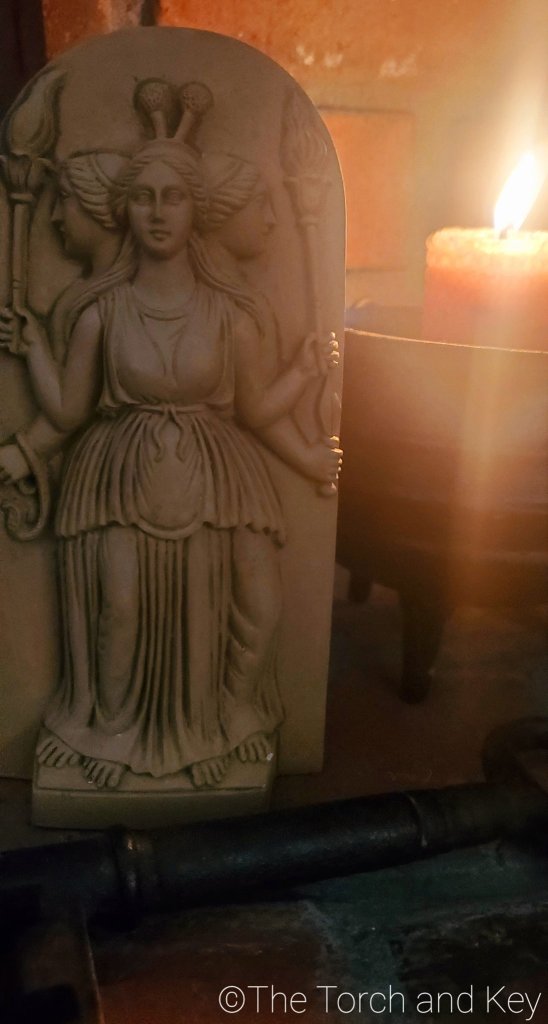
Hekate Phosphoros

One of Hekate’s roles is that of Phosphoros – “Lightbringer” or “Lightbearer”. Hekate’s torches illuminate that which is dark. She leads the way, torch in hand, for those who have heeded Her call to immerse themselves in Her mysteries. Hekate’s torches also illuminate Truth by banishing ignorance and fear that breeds in the dark. That illumination can sometimes be a difficult and life changing process. There is a saying among many Hekateans: “En Erebos Phos” – “In darkness, there is light”. Darkness cannot exist without light, and light cannot exist without darkness. For me,  Hekate Phosphoros embodies that concept.

On this Equinox and another turn of the wheel, we in the Northern Hemisphere are celebrating Spring and the ever-growing light as we progress to brighter and longer days. In the Southern Hemisphere, Autumn has descended and the days are growing shorter and darker. Wherever you are in the world, we are all experiencing that balance of light and dark in this moment. Hekate as Anima Mundi stands at the crossroads of the universe – a place of balance.
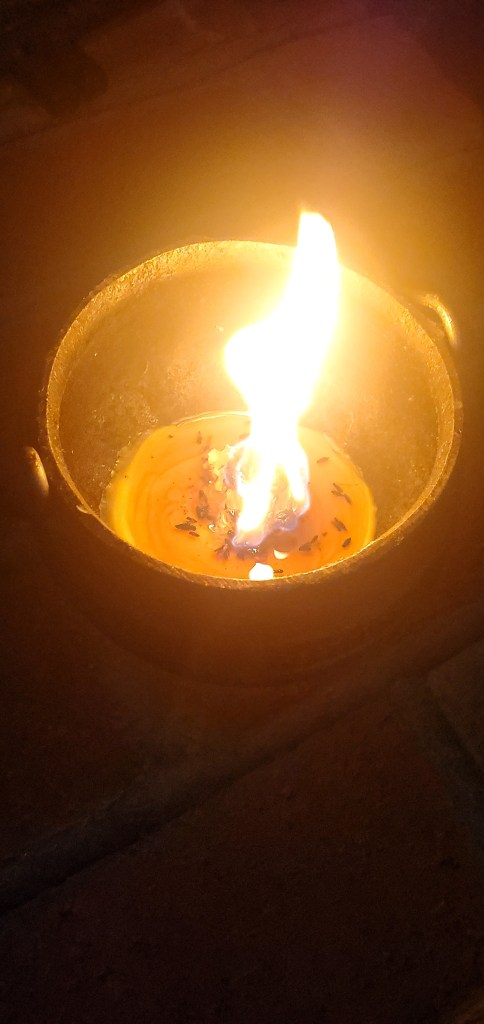
Photo © Melissa McNair / The Torch and Key

Today, I celebrated the return of Spring in a simple yet meaningful ritual. I made a beeswax candle using an ethically crafted beeswax sheet and rolled it up with dried organic lavender buds and a eco-friendly cotton wick. I decided to burn this candle completely in my mini cast iron cauldron, and I’m glad I did because once it neared the bottom, the sacred fire came alive, becoming enlarged and beautiful (see above photo). I sang praise to Hekate, honoring Her role as Phosphoros and Anima Mundi.
The Return of Spring and Persephone

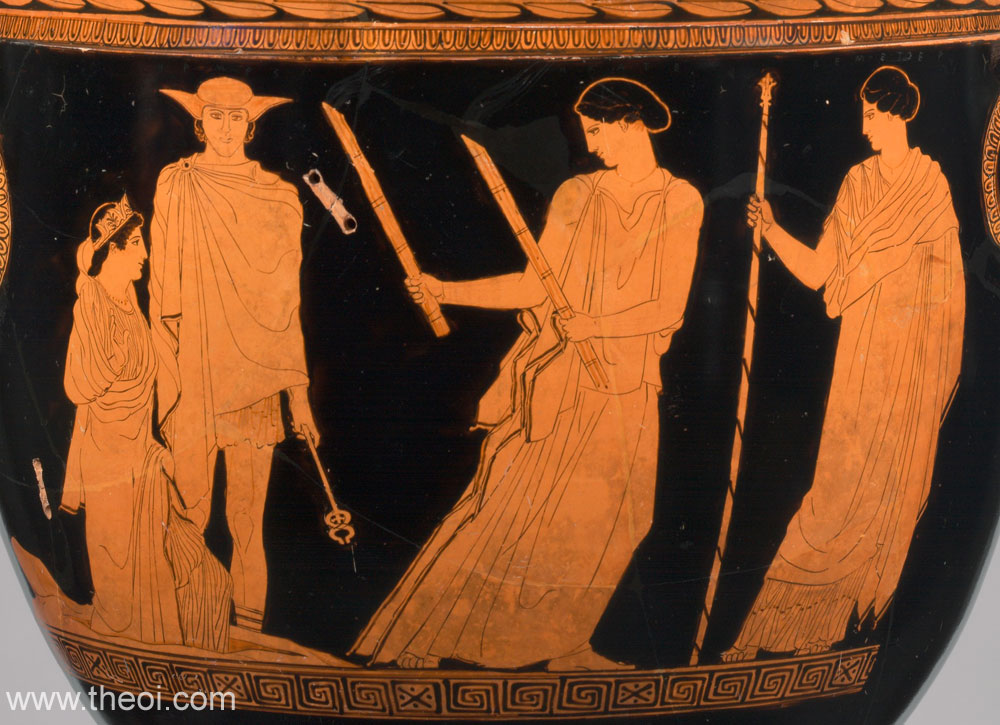
“The Return of Persephone”, Attic vase dated circa 440 BCE

Spring is traditionally a time of rebirth and renewal. The Earth is awakening from her winter slumber, and life is beginning to stir in both flora and fauna. The return of Spring also brings the return of Persephone from the Eleusinian Mysteries. The Rites of Eleusis were initiatory mysteries taking place in the autumn and spring, marking the descent of Persephone into the realm of the dead with her consort Hades (autumn), and Persephone’s return to the mortal world above to be reunited with her mother Demeter (spring). (see related blog post regarding Enna in Sicily).

Hekate had an integral role in these mysteries, acting as Persephone’s companion and guide during both her descent and return. Much isn’t known about the Eleusinian Mysteries, but scholars agree that it centered on the concept of life, death, and rebirth. The Eleusinian Mysteries were tied to the agricultural season of the Mediterranean region, and the mysteries were used to help explain the seasonal changes of growth and life, death and decay, and regeneration of that which died.

Hekate is a liminal goddess that straddles the realms of these forces with ease. Demeter represents life, Persephone represents death and rebirth, and Hekate as Creatrix weaves these energies together. All three goddesses were honored during these rites.

The image above is from a vase dated back to 440 BCE. It shows Persephone, on the left, returning from the realm of Hades. Hermes is standing next to Persephone, and Demeter is on the far right holding a scepter. Hekate is in the center, bearing two torches while guiding Persephone’s return.

🗝


© Melissa McNair / The Torch and Key


Image source: Theoi, https://www.theoi.com/Gallery/T16.6.html