Aphrodite
Hekate in Magna Graecia: Segesta
- Please see the Hekate in Magna Graecia page for more information on this project
Segesta
Segesta was a colony located on the northwest coast of Sicily, near current-day Castellamare del Golfo. There is an almost perfectly preserved Doric temple in Segesta, though it was never completed. The temple’s origins are shrouded in mystery; no one can seem to figure out why or for whom it was built. Segesta was originally settled by the Elymians, believed to be from Anatolia (modern day Turkey), and they arrived in Sicily around 1200 BCE. Nearby, in Eryx (also known as Erice, also settled by the Elymians), Astarte was worshipped, with a temple dedicated to her in Eryx. Astarte was later conflated with Venus by the Romans; Aphrodite would be the Greek counterpart to Venus. Pottery fragments found in the Segesta area show that they had been engraved with Phoenician and Greek letters and symbols.
Hekate was associated with Aphrodite in a 6th century BCE fragment of Greek lyrics attributed to either Sappho or Alcaeus:
“[Hekate] the golden-shining attendant of Aphrodite.”
The great temple of Aphrodite at Eryx was written about by Strabo and Pausanias, both prominent Greek writers in antiquity.
There is also a traditional Greek amphitheatre in Segesta. Parts of it were decorated with scenes of the nature god Pan, though those images have faded over time. Amazingly, this amphitheatre is still in use today for various outdoor events.
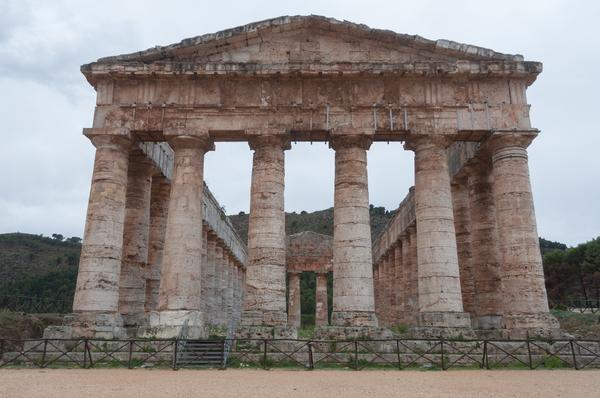
Temple of Venus Erycina – Segesta – Wikimedia
I hope you enjoyed this essay on Hekate in Magna Graecia: Segesta.
© Melissa McNair / The Torch and Key
Sources:
- Cartwright, Mark. “Segesta”, http://www.ancient.eu/Segesta/
- “Elymians”, https://en.wikipedia.org/wiki/Elymians
- “Erice”, http://www.bestofsicily.com/erice.htm
- “Segesta”, http://www.bestofsicily.com/segesta.htm
- “Hekate Goddess of the Night”, http://www.theoi.com/Khthonios/HekateGoddess.html
- “Aphrodite Cult”, http://www.theoi.com/Cult/AphroditeCult2.html#Sikelia

