Hekate Soteira

The epithet “Soteira” is an important title of Hekate. Soteira means “Savior” and for me personally it is used in conjunction with Hekate’s role as “Cosmic World Soul”. An excellent book to read from scholar Sarah Iles Johnston titled “Hekate Soteira” delves into Hekate’s role as Savior and Cosmic World Soul within the Platonic / Chaldean philosophy.

What does “Cosmic World Soul” mean?

In the Chaldean Oracles, Hekate is irrevocably defined as the Cosmic World Soul – the Great Mother, the Anima Mundi, Creatrix of All. The source of primordial fire.

I have experienced many different sides to Hekate over the years, but the one that I “feel” the most is Hekate as this Great Mother; as one who facilitates life, death, rebirth, and everything in between. This excerpt from the Chaldean Oracles sums it up well, and the accompanying text (version from G.R.S. Mead), describes Hekate as “Great Mother/Magna Mater”, “Life of the Universe”, “Mother of Souls”, “Inbreather of Life”.

45

“About the hollows beneath the ribs of her right side there spouts, full-bursting, forth the Fountain of the Primal Soul, all at once ensouling Light, Fire, Aether, Worlds.”

47

“After the Father’s Thinkings, you must know, I, the Soul, dwell, making all things to live by Heat.”

In the Chaldean Oracles, the “Father” is described as existing as intellect or pure thought, while Hekate, as the Anima Mundi, puts forth his thoughts through creation.

During my personal devotionals, I often feel Hekate’s presence as this warm, glowing light. It’s hard to describe – but I when I feel Her presence in this way, I feel an abundance of Love. It is so pure; it’s hard to put into words. There were a few times where I actually witnessed a warm, golden glow appear around me. It is a very emotional and powerful experience; and very real. It doesn’t always happen. But when it does, I will most definitely bask in this sacred glow and honor Her radiance.

Photo © Melissa McNair / The Torch and Key

Autumn Equinox 2020: Trying to Find Balance in an Unbalanced World

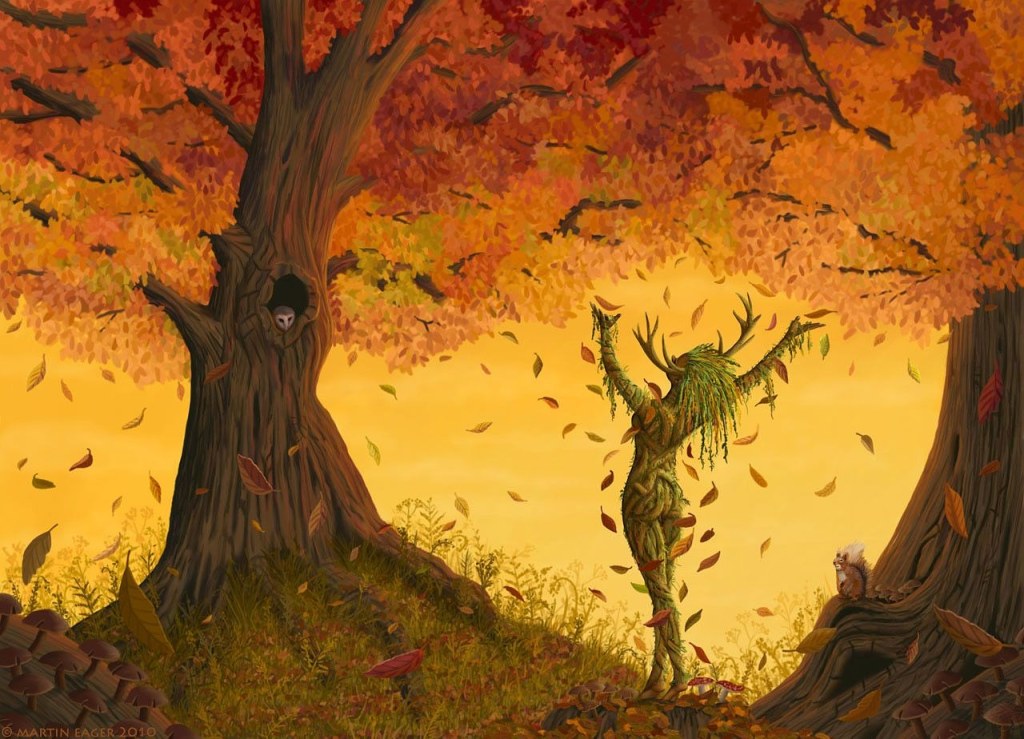
“The Leaf Charmer” by Martin Eager

Today is September 22, 2020, and once again the Autumn Equinox is upon us. I love the changing of the seasons; I am blessed to live in an area where these changes are very much felt and seen. Autumn is my favorite time of year; it marks the beginning of the Season of the Witch. I love observing nature’s changes during this time: frosty mornings, leaves changing colors, squirrels hoarding acorns, spiders spinning their massive webs outside… my love for this time of year is endless.

The Equinox is the seasonal tide that brings balance, and reflection. We are reaping the last of our harvests from the summer growing season, and preparing for the winter ahead. Our own backyard vegetable garden actually saw it’s last harvest about a week ago, and we are prepping for what may be a long, cold winter here in Upstate New York. Today is a balance of light and dark, and I eagerly await the longer nights and shorter days. I love cocooning myself in the dark and nurturing my inner self. Samhain marks the Witches New Year, and today’s ever important seasonal change before then is a day for reflection on the days past. We traditionally use this time to look back on the last several months and celebrate and give thanks for our blessings, and we mourn what we lost. We try to balance those energies and feelings in order to harmonize ourselves and use those energies in the coming year.

The events of this year thus far has thrown the world into UNbalance, and right now I am feeling anything but balanced. I’m sure many feel the same. COVID took over the world, and threw us into a state of fear, despair, and hopelessness. We saw millions fall ill, nearly 1 million tragically die worldwide, millions more economically impacted by the pandemic. However, what we also saw were countless heroes in our communities helping anyone they were able to help whether it was financial or health assistance, or some form of community outreach. My own community formed groups to help homebound/vulnerable people go grocery shopping or otherwise help them with daily tasks that they were unable to do on their own. We saw birthday parades for children in our town, drive through graduation celebrations for our high school and college graduates. I spent much time searching for positive news stories during this dark time and learned that communities across the US and abroad came together in very similar ways and it was very uplifting to my soul.

Here in the U.S., we are in the middle of a volatile presidential election season. I have never witnessed anything like this in my life. We are literally fighting for the soul of this nation right now, and the stress of this fight is sometimes too much to bear. I fear for our future. The Trump administration has systematically destroyed our democracy and rule of law by bypassing checks and balances within our own government that is supposed to protect this nation from an UNbalance of Power. With the devastating death of Justice Ruth Bader Ginsburg a few days ago, the stakes were raised exponentially and we are now in a fight for our lives. The future of health care, women’s rights, LGBTQ rights are in the crosshairs. A third Trump-appointed Supreme Court Justice threatens to undo much of the progress this nation has made in the aforementioned areas.

My resolve to fight has only grown stronger. My daughters and son have also taken up this fight for our nation. My older daughter will be a first-time voter this year, and I cannot wait to take her to her first presidential election to cast her ballot for our country’s future. We will be voting in person together.

The turmoil of this election season is unlike anything I’ve seen, and I am trying to find balance. It’s not easy, but, I am discovering that it can be done. I’m learning to take my anger, stress, and grief and transmute those emotions into a force for positive change. Social media is one tool for wider community outreach, but nothing beats getting out in your community and engaging with people in your area. I’ve learned that our youth is very invested in this election, and they are our future. They are so intelligent and engaged and seeing their passion gives me hope. As many of us witnessed the complete lack of accountability in our governing body & Department of Justice with regards to rampant corruption in the office of the President, we must collectively take up this fight and mobilize every American who is able to vote and hope that our efforts will be successful.

🗝

In the midst of all this, I am always ever reminded that Hekate is a Goddess of Transformation and Change. She is there, facilitating and observing. It is very difficult for a devotee of Hekate to not be politically engaged, especially now in these tumultuous times. Human rights are always at the forefront. Being a voice for the voiceless. Being an Ally. Being an advocate for those who are unable to take up their fight by themselves. Fighting for what is fair and just, taking special care of those that society deems “unworthy” due to their own prejudices. Sometimes, “tearing that shit down” is the only way forward.

🗝

En Erebos Phos,

Melissa
Hekate in Magna Graecia: Locri


Locri

Locri was a Greek colony of Magna Graecia, located in the Calabria region of southern Italy. Locri was the site of a great sanctuary to Persephone – worshipped as a protectress of fertile marriage. Pinakes (or plaques) unearthed at this site depict Persephone as “Queen of the Dead”, residing in Hades. Hundreds of votives, plaques, and other artifacts were found in the temple remains, dating back to about the 5th century BCE. The images depicted on these items tell Persephone’s story as it is described in the Homeric Hymn to Demeter and Eleusinian Mysteries, including pottery tablets depicted Persephone and Hades, sitting side by side on their thrones as King and Queen of the Underworld.

The sanctuary dedicated to Persephone in Locri (also known as Locri Epizefiri) was described by Diodorus Siculus as one of the most famous of the sanctuaries in Magna Graecia. Persephone’s temple featured a propylaia, and possibly had underground rooms for chthonic rites. Based on archaeological findings, it is believed that the Eleusinian Mysteries were re-enacted here.

Outside the temple walls was another location for rituals – the Cave of the Nymphs, also known as the Grotta Caruso. Here, women would undergo katabasis (underworld journey); caves are a common location for rituals involving chthonic deities. Excavations of this site revealed stairs leading down into a subterranean area containing a natural spring basin used for ritual bathing, complete with an altar. Niches were set into the walls for votive offerings. Some of the votives uncovered included figurines of women, many of which were triple-headed (triform).

A very interesting archaeological find was discovered within Persephone’s temple – a pinake of a winged female daimon. This brings to mind the earlier mention of Angelos – the winged messenger/angelic chthonic deity who is identified with both Hekate and Artemis. Winged deities who travel between the worlds are typically messengers or guides of the dead and departed souls.

image8

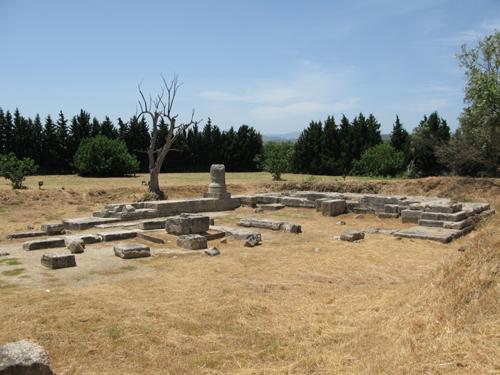
Temple of Persephone remains at Locri – from Wikimedia


I hope you enjoyed this essay on Hekate in  Magna Graecia: Locri.

© Melissa McNair / The Torch and Key


Sources:

Hekate & the Perseids

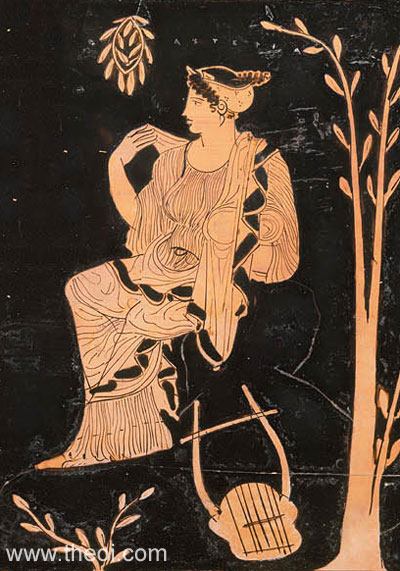
T15.1Asteria

Asteria, Athenian red-figure amphora C5th B.C., Museum of Fine Arts Boston

“Also she [Phoebe] bore Asteria of happy name, whom Perses once led to his great house to be called his dear wife. And she conceived and bore Hecate whom Zeus the son of Cronos honored above all. He gave her splendid gifts, to have a share of the earth and the unfruitful sea. She received honor also in starry heaven, and is honored exceedingly by the deathless gods.”

-“Theogony”, Hesiod

Hesiod’s Theogony is the oldest written account of the Greek Gods, and Hekate is described as being honored by Zeus above all others in this story. The Theogony also names Asteria and Perses as Hekate’s parents. Asteria was a Titaness; she ruled the  starry skies and her name means “starry one” or “falling star”. Perses was a Titan as well, and was the God of Destruction; his name means “Destroyer”.

The Perseids

The Perseid meteor showers are an annual stellar event that begins around the third week of July and typically peaks the second week of August, around the 10th or 11th and lasts a few days. The peak dates for 2020 are August 11th-13th. The meteors originate from the Perseus (a derivative of Perses) constellation. Because Perses is Hekate’s father and Hekate’s mother Asteria is associated with falling stars, the days that the Perseids are peaking are a wonderful time to honor Hekate (and Her parents).

Star Gazing

I love the night sky. Each evening before bed, I go outside and just soak in the beauty of the dark night. I gaze at the sky, and take note of every star twinkling like night’s own torches. I raise my hands to the sky, recite a portion of an Orphic oath from the Petelia tablet:

“I am a child of Earth and Starry Heaven, but my race is of Heaven alone”

From there, I utter words honoring Hekate, her role as guardian of the Heavens (as apportioned to her by Zeus in the Theogony), and recite epithets, chants – whatever I am moved to speak at that moment. There is no script, there are no written rules. Most often I will see a shooting star while I am speaking, or after I am done. I always humbly accept that as a sign that my words and offerings were received favorably and with gratitude. In turn, I express my own gratitude for Hekate’s recognition and presence.

That is my nightly ritual before I go to bed. Doing this each night feeds my soul like nothing else. It is a very fulfilling part of my devotional practice. When the Perseids are at peak, I spend more time outside, chanting and gazing in wonder at the night sky while this magical stellar event takes place.


© Melissa McNair / The Torch and Key


Sources:

  1. https://www.theoi.com/Khthonios/Hekate.html
  2. https://www.theoi.com/Titan/TitanisAsteria.html

Hekate, Sekhmet, & Lions

Before COVID took over our corner of the Earth, my daughters and I visited the Albany Institute of History and Art near our home. On the third floor, they have an amazing exhibit dedicated to Ancient Egypt, with many artifacts and two preserved mummies of Egyptian Priests from the Ptolemaic Period (c. 305 BCE).

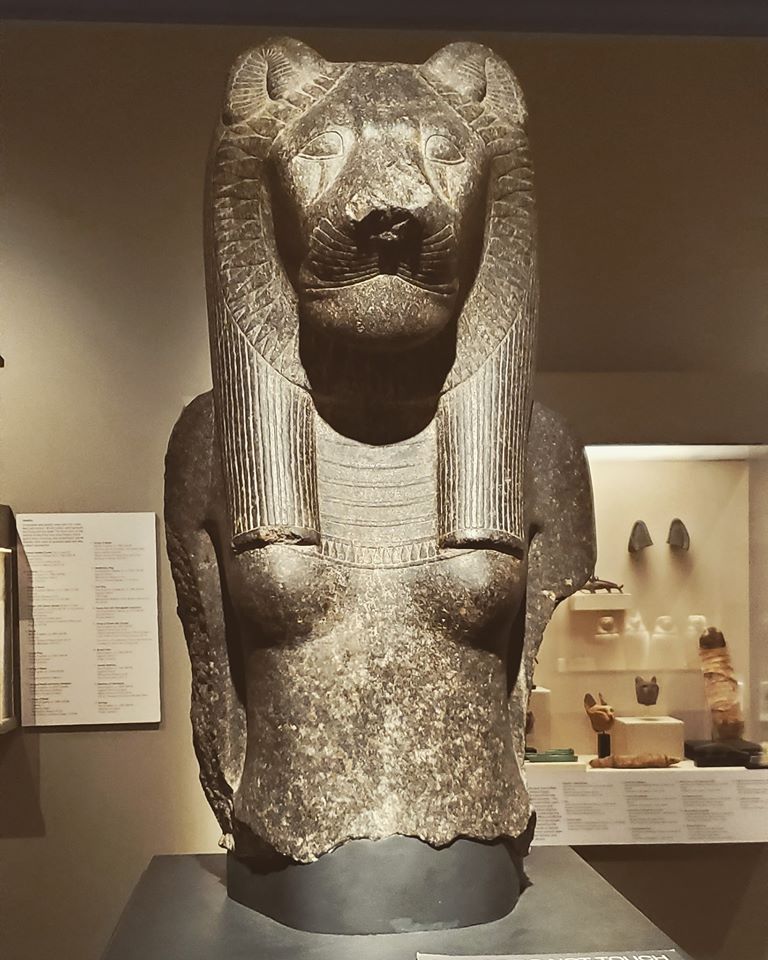
Almost everything on display was safely stored behind protective glass, except for the bust of the Goddess Sekhmet (see photo below). Seeing this bust of the great Lioness was breathtaking. It was displayed on a heavy stand, with a simple sign asking visitors not to touch it.

81602614_10220424119774269_5219959451758362624_o

Bust of the Goddess Sekhmet from the Temple of Mut at Karnak, dated between 1388-1350 BCE / Albany Institute of History and Art  © 2020 Melissa McNair / The Torch and Key

This particular bust of Sekhmet was commissioned by Amenhotep III for the Temple of Mut at Karnak, and is believed to be dated from about 1388-1350 BCE. The temple of Mut was located in the present city of Luxor, Egypt on the banks of the Nile River.  The Goddess Mut was the consort of the God Amun-Ra, and was known as a Mother Goddess, a Sky Goddess, and was the mother of Khonsu, a Moon God.

Amenhotep III commissioned more than 500 statues of Sekhmet for the Temple of Mut, and it is believed that his intention was to have a “forest” of Sekhmet statues.

Sekhmet is a complex Goddess who embodies many different qualities. She is a terribly fierce defender of Ma’at (justice or balance), who is known to show her wrath when Ma’at is threatened. Sekhmet also has a nurturing side due to her role as healer and patroness of physicians –  but that gift of healing can also be used to harm by sending disease to those who offend her. She holds life and death in her hands.

Sekhmet and the Goddess Hekate do share similar qualities such as being mistresses of life and death, and as protectresses of justice and balance.

Hekate & Lions

Hekate is linked to lions through the Chaldean Oracles, temple remains found at Lagina, temple remains found near Syracuse (Sicily), various ancient coins showing Hekate with lions, and spells from the Greek Magical Papyri (PGM).

Chaldean Oracles

In the Chaldean Oracles, Hekate is seen as the Cosmic World Soul. She is the Anima Mundi; the mediator / messenger between the intellectual and material realms and within Her Cosmic Womb is where creation begins, with the paternal intellect planting the ideas within that womb. The Epiphany of Hekate in the Chaldean Oracles mentions lions in some translations:

“If you say this to me many times, you will observe all things to be a lion”

Meaning, if you called upon Hekate correctly, She will appear in lion form as a result.

Lagina

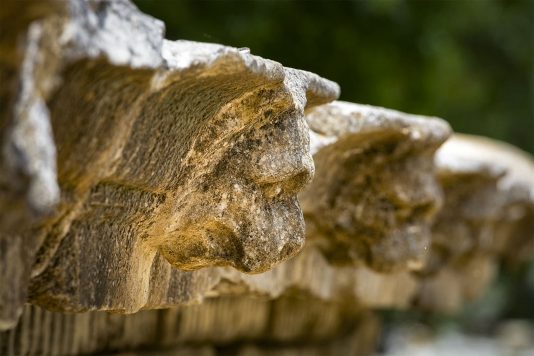
The Temple of Hekate in Lagina, Turkey is an ancient temple that was built around the 2nd century BCE. It was a sacred site dedicated to Hekate and was an important center of worship. There are preserved temple remains still there today, and one of them is a frieze containing lion heads (see below photo).

stunning-lion-heads-at-lagina-ancient-site-534x356

Lion heads at the Temple of Hekate at Lagina / photo © Slow Travel Guide


Sicily

In the ancient Greek colony of Akrai in modern day Sicily, there once stood a great temple to the Magna Mater (“Great Mother”). This temple is believed to have been built to worship the goddess Cybele. Many of the carvings / statues depict Cybele with lions.  Hekate and Cybele are closely related and some statues and carvings from the temple in Akrai depict Hekate either alone or alongside Cybele.

Ancient Coins

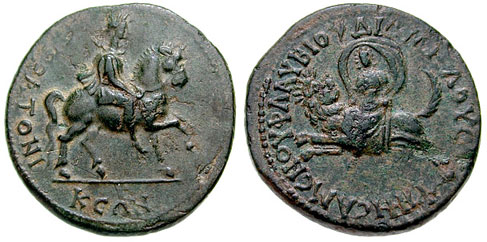
There are many ancient coins that depict Hekate either alone or with another deity. One particular coin from the region of Stratonikeia, near Lagina, shows Zeus on one side on horseback, with Hekate on the other side sitting atop a lion (see photo below).

coin

Coin depicting Zeus (left) and Hekate (right), CARIA, Stratonikeia. 1st-2nd Century AD. Image © WildWinds

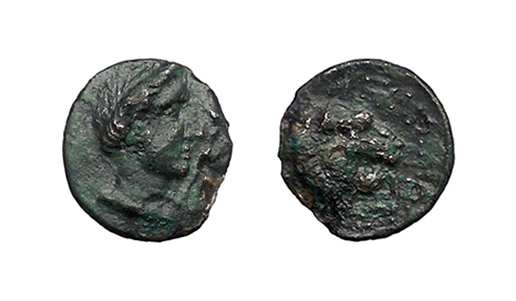
Another coin from Thessaly, dated to about 400 BCE, depicts Hekate’s head with a torch on one side and a lion on the other side (see below photo).

thessaly

Hekate / Lion coin from Thessaly, 400 BCE Image © WorthPoint


Sources:

  1. “Hekate Soteira” by Sarah Iles Johnston
  2. https://www.worthpoint.com/worthopedia/pherai-thessaly-404bc-hekate-1826761086
  3. https://www.wildwinds.com/coins/greece/caria/stratonikeia/i.html
  4. https://en.wikipedia.org/wiki/Precinct_of_Mut

Sacred Fires of the Summer Solstice

I love the Summer Solstice. We are at the height of summer, where the Sun it at it’s strongest and the day is the longest of the year. Even though summer will have some of the hottest temperatures in the days and weeks ahead, the sunlight begins to wane ever so slightly each day after the Solstice, until the wheel turns to the Autumn Equinox where light and dark is once again balanced.

Midsummer is a time when the Earth’s bounties are ripening towards harvest, and we are celebrating the light and warmth of the Sun’s eternal power, which in turn helps give life to growing crops. In ancient Greece, the Summer Solstice was said to mark the start of a new year. It was also when preparations for the Olympic games were said to begin.

Each Midsummer’s Eve, I light the sacred fires in my  backyard at sundown, and then again at sunrise the next morning. I call on the power of the Sun to bless our land and home, and to give thanks for all that we have.

Fire is transformational. It destroys, and out of that destruction comes creation and new beginnings. This year’s Summer Solstice was even more auspicious than usual since it also coincided with the New Moon; another time of transition and new beginnings because the New Moon marks the start of a new lunar cycle.

As a devotee of Hekate, She is honored at every transition of the lunar phases. This Solstice celebration was especially powerful and poignant due to the celebration of the Solstice and New Moon together.

As I lit the flames that Midsummer’s Eve, I began my incantations to the Sun, and to Hekate. Thunder pealed overhead from a storm that was passing just to the North of me. I love thunderstorms; the raw power of the thunder and lightning  is awe-inspiring and electrifying; and while that particular storm wasn’t directly overhead, it’s power was still very much felt, acknowledged, and honored.

summersolstice2020

Photo © 2020 Melissa McNair, The Torch and Key

Hekate in Magna Graecia: Bosco Littorio


Bosco Littorio

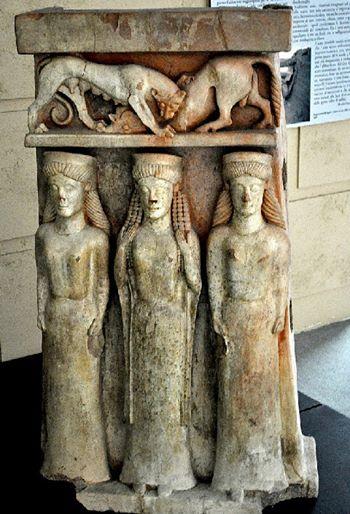
This location, the Greek Baths in Gela in the province of Caltanissetta, deserves a mention although information is scarce. It is situated on the southern Sicilian coast, and some curious archaeological remains were found here. Named the “archaic emporium”, the remains of three stone altars dating to approximately 6th century BCE were found. One depicted Medusa the Gorgon, the famed sea creature of Greek myths who had snakes for hair and turned anyone to stone who dared to look at her. With Medusa were her children Pegasus and Chrysaor. Another altar depicted Eos (goddess of the dawn) kidnapping Thanatos (personification of death). The third altar is showing a trio of female figures but they have yet to be positively identified. All three altars are currently on display in the Regional Archaeological Museum of Gela.

It is also worth noting that some type of catastrophic natural disaster happened here, possibly a tsunami preceded by an earthquake, around 480 BCE. Numerous shipwrecks were found in the vicinity and no archaeological remains dated from after that time have been found there.

image10

Altar figure of a trio of females – Bosco Littorio – from Wikipedia


I hope you enjoyed this essay on Hekate in  Magna Graecia: Bosco Littorio.

© Melissa McNair / The Torch and Key


Source:

Hekate in Magna Graecia: Scyllaeum


Scyllaeum

Scyllaeum is another colony in Magna Graecia, and was home to the mythical sea monster Scylla (or Skylla). Scyllaeum was located in the Calabria region of Southern Italy. The Hekatean connection here is parentage. In Appollonius Rhodius Argonautica, Hekate Krataiis (epithet meaning “rocky” or “mighty”) and the sea god Phorkys were parents to the sea monster Skylla:

“Ausonian Skylla (Scylla), the wicked monster borne to Phorkys (Phorcys) by night-wandering Hekate (Hecate), whom men call Kratais (Crataeis).”

Skylla was a sea monster that haunted the rocks in the waters off the coast, and any ships that sailed too close would lose their men to one of Skylla’s many monstrous heads. Skylla was situated between the coast and a whirlpool of Kharybdis, another sea monster that threatened ships in the waters off the coast. Another passage from the Argonautica details the warnings given against Skylla and Kharybdis: 

“[Hera commands the sea-goddess Thetis to guide the Argonauts safely past Skylla (Scylla) :] ‘And do not let my friends [the Argonauts] be so unwary as to fall into Kharybdis (Charybdis), or at one gulp she will swallow them all. Nor let them go too near the hateful den of Ausonian Skylla (Scylla), the wicked monster borne to Phorkys by nigh-wandering Hekate (Hecate), whom men call Kratais (Crataeis)–or she may swoop down, take her pick and destroy them in her terrible jaws. What you must do is so to guide the ship that they escape disaster, if only by a hair’s breadth.’”

Strabo described Scyllaeum as a projecting rocky headland that juts out into the sea, joined to the mainland by an isthmus that forms a bay on each side. The village is active today and is known by the name of Scilla, and boasts a little over 5000 residents. It is primarily a fishing village, and it is also an active tourist destination.

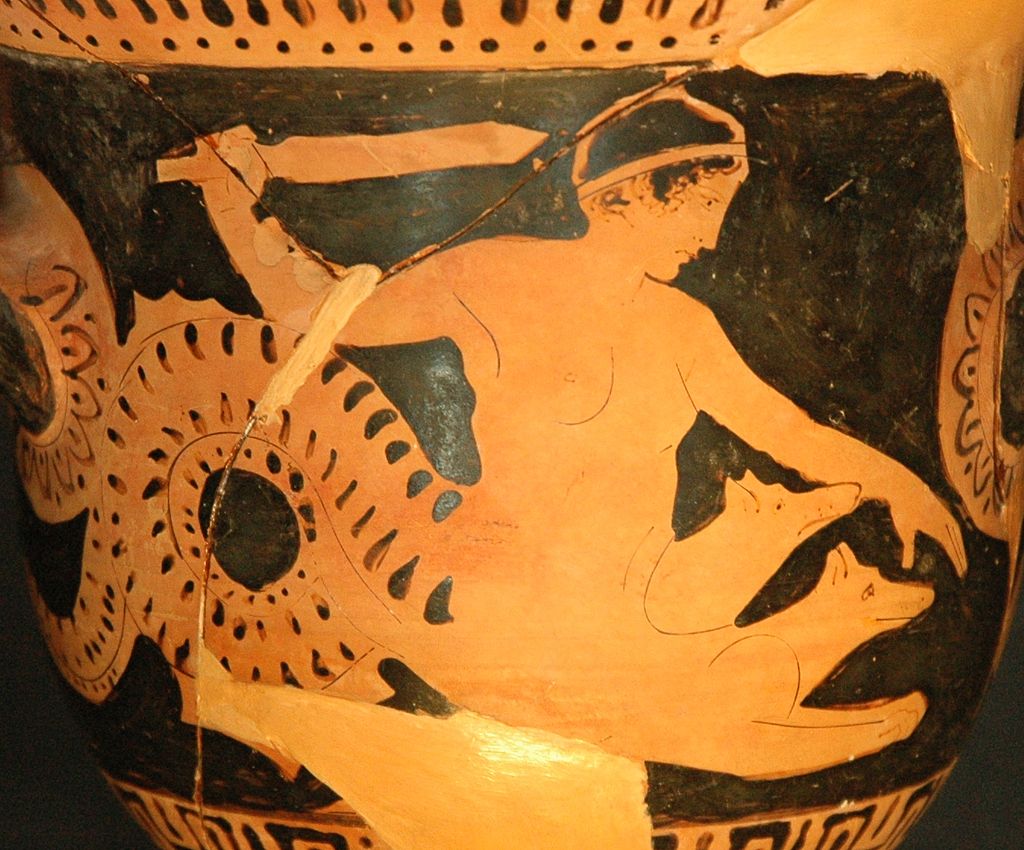
Scylla_Louvre_CA1341

Scylla as a maiden with a kētos tail and dog heads sprouting from her body. Detail from a red-figure bell-crater in the Louvre, 450–425 BCE. This form of Scylla was prevalent in ancient depictions, though very different from the description in Homer, where she is land-based and more dragon-like. Image from Wikimedia.

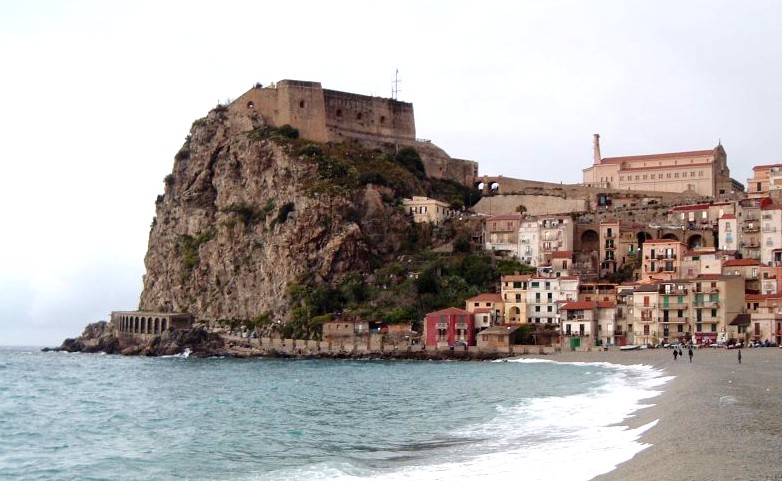
Castello_scilla

The Rock of Scilla, Calabria, which is said to be the home of Scylla. Image from Wikimedia.


I hope you enjoyed this essay on Hekate in  Magna Graecia: Scyllaeum.

© Melissa McNair / The Torch and Key


Sources:

Hekate in Magna Graecia: Cumae


Cumae

The Cumaean Sybil is a well-known figure in Virgil’s Aeneid, as well as one of the most well known oracles in Magna Graecia. Cumae was a Greek colony located near coastal Naples in southern Italy, belonging to Magna Graecia. The Latin word “sybil” comes from the Greek word “sibylla”, which means “prophetess”.  The Cumaean Sybil quickly became famous across southern Italy, and gained favor with Rome, with people coming from afar to hear her prophecies, much like the Delphic Oracle in Greece.

The Sybil was said to reside in a cave, and called on Hekate to enlist Her aid in necromantic rites, as written in Virgil’s Aeneid, where Aeneas was attempting to reach the underworld:

“[The Sibyl performs the rites of necromancy at the oracle of the dead at Cumae] : The Sibyl first lined up four black-skinned bullocks, poured a libation wine upon their foreheads, and then, plucking the topmost hairs from between their brows, she placed these on the altar fires as an initial offering, calling aloud upon Hecate, powerful in heaven and hell.”…..” But listen!–at the very first crack of dawn, the ground underfoot began to mutter, the woody ridges to quake, and a baying of hounds was heard through the half-light : the goddess was coming, Hecate. [A path was then opened for the Sibyl and Aeneas to journey on through the underworld.]”

The rites that the Cumaean Sybil performed to Hekate always took place within the cave in Cumae where the Sybil resided.

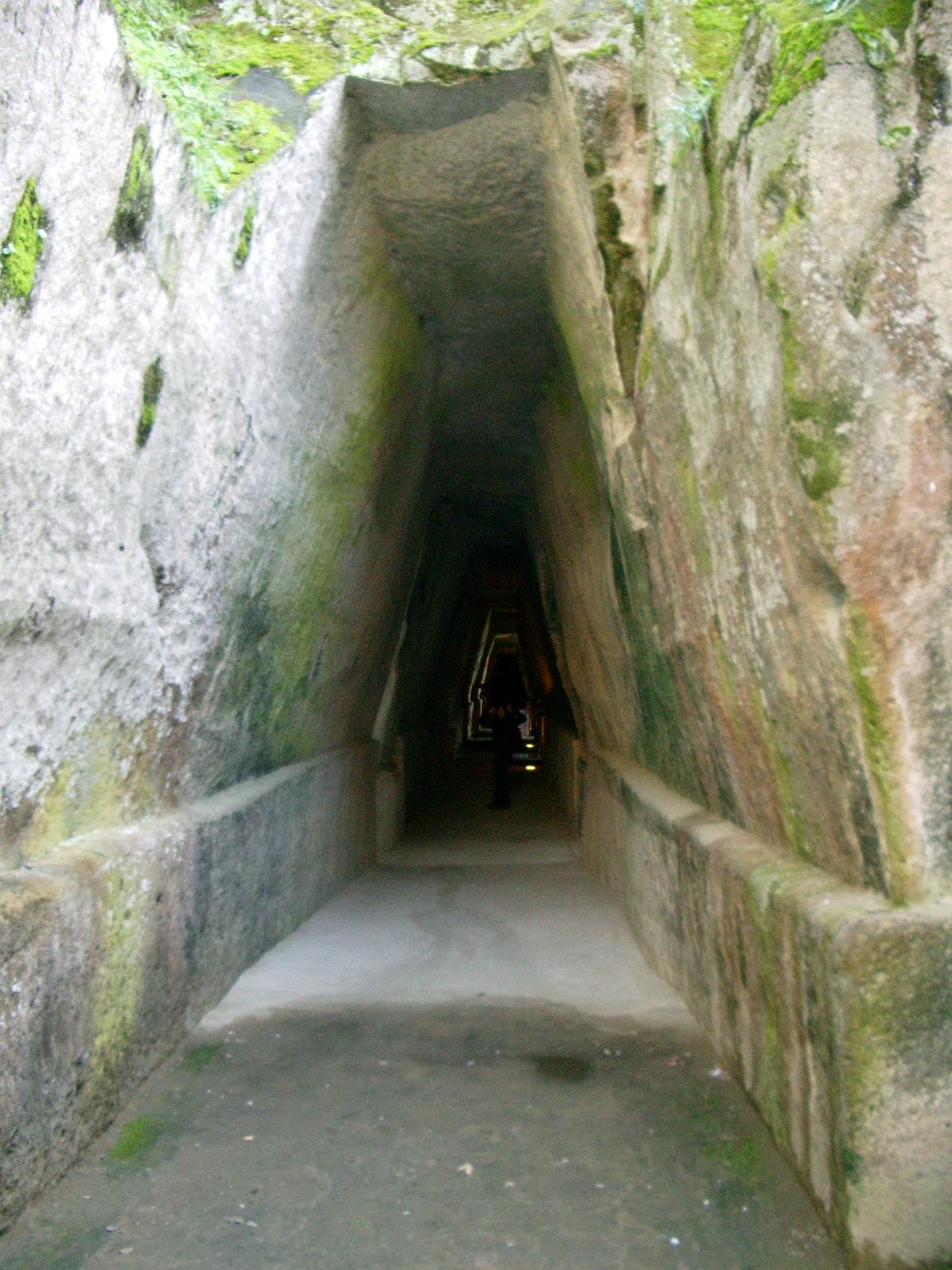
image11

Entrance to the cave of the Cumaean Sybil – from Wikimedia


I hope you enjoyed this essay on Hekate in  Magna Graecia: Cumae.

© Melissa McNair / The Torch and Key


Sources:

Hekate in Magna Graecia: Enna


Enna

Enna is located in central Sicily, and according to Diodorus Siculus, is the famed mythical location for Persephone’s abduction, which was said to have happened near Lake Pergusa. Enna was one of the most prominent locations in Sicily for Demeter and Persephone’s cult. Near Lake Pergusa is an archaeological site known as Cozzo Matrice, where one will find the remains of a fortified village believed to be dated to about 8000 BCE. Other archaeological remains date back to a little over 2000 years old, and they include a citadel, remains of a necropolis, and remains of a temple to Demeter. Today, the area of Lake Pergusa is home to a park called “Proserpina Park”, named after Persephone (Proserpina or Proserpine is how Persephone was referred to by the Romans). Nearby, the Rocca (or Rocco) di Cerere Geopark is now known as the land that was once consecrated to the chthonian deities of the Eleusinian mysteries, and their power and presence is very much felt to this day.

The story of Persephone’s abduction and Demeter’s subsequent search is recounted in the Homeric Hymn to Demeter, in which Hekate plays a very prominent role. It is also lays the foundation for the Eleusinian Mysteries.

Persephone was picking flowers, when Hades emerged from a nearby cave and stole her away to his realm in the underworld. Hekate and the sun god Helios witnessed this abduction, though Hekate did not see it happen; She only heard Persephone’s cries for help. Demeter wandered all over the earth for Persephone for nine days, and on the tenth day Hekate appeared before Demeter to tell her what She had witnessed, as told in this passage from the Homeric Hymn to Demeter:

“But when the tenth enlightening dawn had come, Hecate, with a torch in her hands, met her, and spoke to her and told her news: “Queenly Demeter, bringer of seasons and giver of good gifts, what god of heaven or what mortal man has rapt away Persephone and pierced with sorrow your dear heart? For I heard her voice, yet saw not with my eyes who it was. But I tell you truly and shortly all I know.”

Together, Demeter and Hekate went to Helios to ask for his help in finding Persephone. Helios told Demeter where her daughter was taken, but also tried to tell her that she should remain where she was. Demeter did not want to accept that, and continued to wander until she ended up at Eleusis, where she decreed that a temple be built in her honor. During this time when Demeter was in despair, the earth and it’s fruits wasted away. Zeus took notice of the suffering of the earth and it’s inhabitants, and arranged for Hermes to mediate between Hades and Demeter for Persephone’s return. Hades agreed, but, tricked Persephone into eating some pomegranate seeds, which then forever bound her to the underworld for part of the year. Persephone and Demeter were reunited, and Hekate joined them in their reunion. From that moment on, Hekate became Persephone’s torch-bearing guide to and from the underworld twice a year. One of Hekate’s epithets is “Propolos”, which means “guide”.  From the Homeric Hymn to Demeter:

Then bright-coiffed Hecate came near to them, and often did she embrace the daughter of holy Demeter: and from that time the lady Hecate was minister and companion to Persephone.”

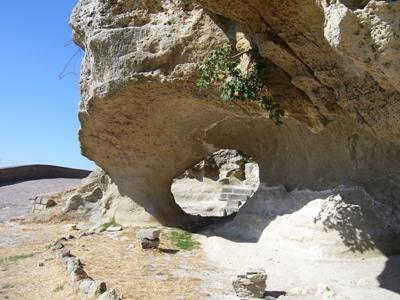
image9

Rocca di Cereri – Enna – from Wikimedia


I hope you enjoyed this essay on Hekate in  Magna Graecia: Enna.

© Melissa McNair / The Torch and Key


Sources: