Hekate in Magna Graecia: Akragas / Agrigento


Agrigento/Akragas

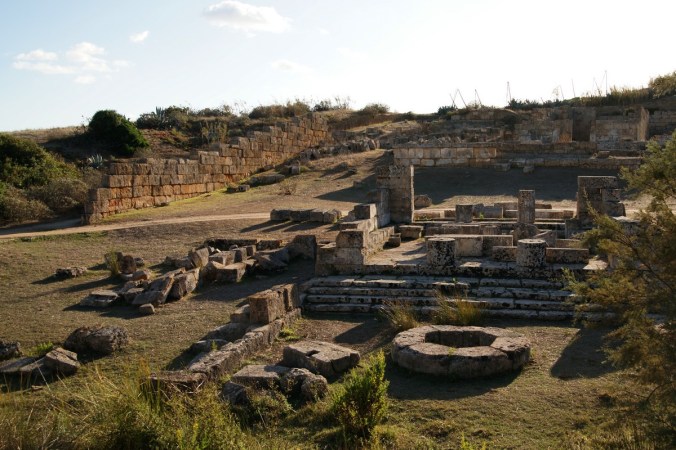
Another major area that was settled by the Greeks in Sicily is Agrigento (also known as Akragas or Agrigentum), and the area is named “Valley of the Temples” due to the many temples that have remains in this area. The Valley of the Temples is a major tourist destination, attracting visitors from all over the world.

Agrigento was a very prosperous city, which rivaled that of Syracuse’s power and prosperity. Agrigento is located on the southern coast of Sicily, situated between two rivers. This area boasts many temples, including temples to Zeus, Hera, Heracles, Concordia (one of the best preserved temples in Magna Graecia), Castor and Pollux (the Dioscuri), Hephaestus, Isis, Asclepius, Athena, and of course – Demeter and Persephone, which was part of a temple to Chthonic deities.

The temple in Agrigento dedicated to chthonic deities, namely Demeter and Persephone, will also include Hekate, though Hekate’s associations may be a bit obscure. This trio of goddesses was frequently worshipped together due to their Eleusinian connections.

Today, the temple itself is actually partially buried under ground, with the church of San Biagio now standing above it. San Biagio – how he is known in Italy – is in other areas of Europe known by the name of Saint Blaise, and was known for being a “physician of souls”. Curiously, icons representing Saint Blaise depict him bearing two crossed candles. Other icons representing him show him in a cave surrounded by wild beasts. His feast day falls on February 3rd, the day after Candlemas (also known as Imbolc). Some areas of Europe also honor him on Candlemas itself. Hekate, as it is known, is most often depicted carrying a torch in each hand and is sometimes celebrated on Imbolc, due to Her epithet of “Phosphorus”, which means “light-bearer” or “light-bringer”.

The remains of Demeter’s temple dates back to approximately 470 BCE. The base of the original structure of the temple is still preserved and partly visible, and it measures approximately 30 by 13 meters. Other remaining, visible parts of this temple have been incorporated into the church, such as water spouts in the shape of lions’ heads that can still be seen today. Some of these may be found in the regional Agrigento museum. If you are familiar with the Chaldean Oracles, then this piece of architecture would be of great interest, as Hekate was said to at times appear in “lion form” in the Oracles. Other interesting archaeological finds from this temple include ritual vessels (kernoi) linked to Persephone (likely used for offerings), remains of oil lamps used for ritual processions, and remains of stone busts possibly depicting Demeter, though that has not been confirmed to indeed be Demeter.

Next to the Temple of Demeter, you will find a series of connected caves used for ritual purposes. The walls of this subterranean complex contain grooves for holding ritual offerings and votive statues. A connecting rock wall between the caves reveals an aqueduct, utilizing the natural underground waterway found there. This is an exciting find, because this ritual cave complex is believed to have been connected to Demeter’s temple and would likely have been considered a “gateway to the underworld”, similar to other temple sanctuaries found in Greece, most notably Eleusis itself. It is known that many cults belonging to Hekate in Greece used caves for rituals honoring Her, such as the Zerynthian caves in Samothrace.

Separately from Demeter, it is believed that Artemis was worshiped in Akragas as “Artemis Soteira”. “Soteira” is another epithet belonging to Hekate and means “savior”. Hekate is referenced as savior in the Chaldean Oracles and Sarah Iles Johnston has devoted an entire book on the subject, titled Hekate Soteira: A Study of Hekate’s Roles in the Chaldean Oracles and Related Literature. 3rd century coins depicting the head of Artemis as “Soteira” have been found.

Hekate and Artemis do share a couple of other epithets, including “Phosphoros” (“light-bearer” or “light-bringer”); “Propylaia” (“at the gate” or “before the gate”).
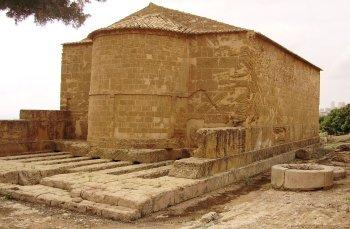
image2

Agrigento – Church of San Biagio on foundation of the Temple of Demeter – Wikimedia
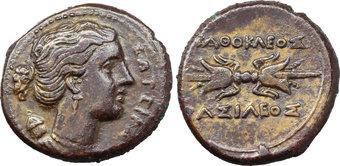
image5

3rd century BCE coin depicting Artemis Soteira, found in Akragas


I hope you enjoyed this essay on Hekate in  Magna Graecia: Akragas/Agrigento.

© Melissa McNair / The Torch and Key


Sources:

Hekate in Magna Graecia: Selinunte

Selinunte

Selinunte (also known as Selinus or Selinous) was a major settlement on the southwest coast of Sicily, and was believed to have been settled in the mid-6th century BCE, though the exact date remains unknown. The acropolis of Selinunte was situated between two rivers, and a major sanctuary dedicated to Demeter Malophoros was located there. This sanctuary contained several buildings within it, the largest one being Demeter’s temple. “Malophoros” (or Malophorus) is an epithet meaning “fruit-bearer”, which correlates to Demeter’s role as goddess of fertility and agriculture. The lands surrounding Selinunte were very rich and fertile, perfect for farming. Some interpret the epithet “Malophoros” as meaning either “apple bearer” or “pomegranate bearer”. “Pomegranate bearer” makes sense to me personally, considering the pomegranate fruit featured prominently in the Homeric Hymn to Demeter, which tells the story of the Rites at Eleusis. Persephone, Demeter’s daughter, ate seeds of the pomegranate fruit, which forever bound her to the Underworld.

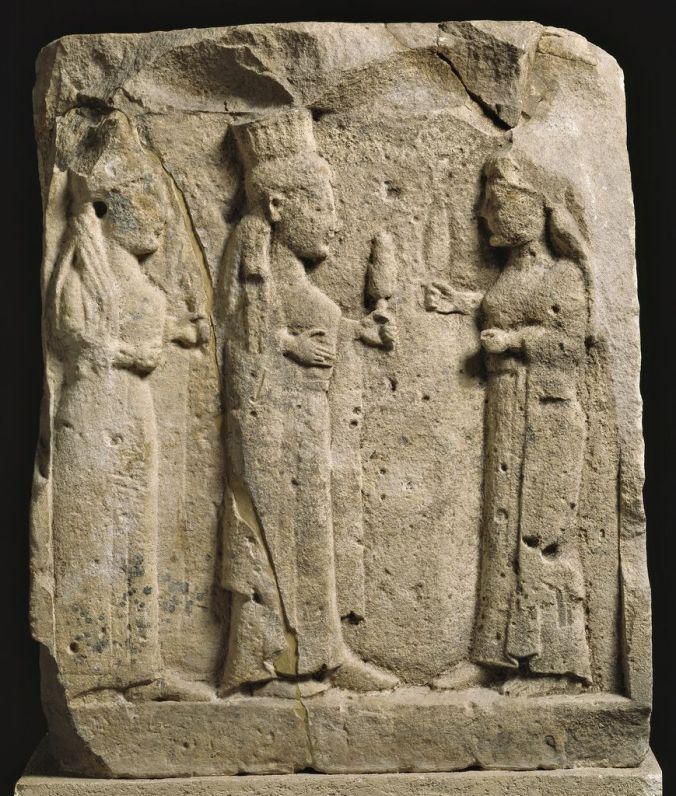
Votive remains depicting Hekate, Demeter, and Persephone together have been found within these sanctuary remains, which is not surprising considering these three goddesses are the focus of the Eleusinian Mysteries, with Persephone’s abduction said to have taken place in Sicily according to various Sicilian cult beliefs. The worship of Hekate, Demeter, and Persephone together in Sicily is a result of Greek migration to this area, and a continuation of religious and ritual practice dating back centuries before.

The temple sanctuary featured a very large altar, stone temenos walls, and a “propylaia”, and this temple is the only one in Sicily that was constructed in such a manner and is believed to pre-date the temple style that features the tall Doric columns. One of Hekate’s many epithets is “Propylaia”, a Greek term which translates to “before the gate”. Hekate is widely known as a liminal Goddess, guarding crossroads, entryways/doorways, and other areas with a defined border, such as where grass meets forest or where sand meets the sea. The enclosed propylon had to be entered from the East, and was dedicated to Hekate, based on engraved votives found in the vicinity.

Sadly, this city was destroyed by the Carthaginians around 400 BCE and was eventually resettled, with the temples being reused. Approximately 12,000 remains of female votive figurines and defixiones (curse tablets) were also recovered in excavations of this site.  These defixiones, often referred to as the “Getty Hexameters”, specifically mention Hekate by name (as well as identifying Her as Enodia), along with Persephone and Demeter. An excerpt of the words on these defixiones describes Hekate as shouting in a terrifying voice, bearing torches:

“…down from the shadowy mountains in a dark gleaming land a child brings from Persephone’s garden for milking, by necessity, the four-footed holy servant of Demeter, a nanny laden with an unceasing flow of rich milk, and she follows, trusting in the bright goddesses…torches, and Hecate Enodia, shouting a foreign-sounding shout in a terrifying voice…”

This temple appears to have been a major worship area for Selinunte, even eclipsing the Temples of Hera and Zeus, also in the same area. Archaeological evidence also suggests that Demeter’s temple was a hub of sorts for funerary rites, which fits with Hekate’s role as Psychopomp (guide of souls) and the reincarnation theme of the Eleusinian Mysteries, with Hekate, Demeter, and Persephone at the center of them.

Many of the archaeological finds from Selinunte are currently housed in the museum in Palermo, Sicily.

Selinunte-demeter-malaphoros

Propylon of Hekate at Temple of Demeter Malophoros – image source: Wikimedia commons

66bdb8310ffb35c600fe4ae90ad55533

Relief of Demeter, Persephone, & Hekate – Selinunte – Palermo Archaeological Museum


I hope you enjoyed this essay on Hekate in  Magna Graecia: Selinunte.

© Melissa McNair / The Torch and Key


Sources:

Hekate in Magna Graecia: An Introduction

Hekate had many cults throughout the ancient Greek and Roman world, scattered between Greece, Italy, Turkey, and possibly beyond. These essays will focus on Her known connections in Magna Graecia, with each month featuring a different colony. But first, a small bit of history.

Magna Graecia was the name given by the Romans to the coastal areas of Southern Italy in the present-day regions of CampaniaApuliaBasilicataCalabria and Sicily. Magna Graecia is Latin for “Great Greece” (Greek: Μεγάλη Ἑλλάς, Megálē Hellás). This area of Southern Italy has a very rich and diverse history. Due to it’s location in the Mediterranean Ocean, it has attracted people from all over the region and the island of Sicily was conquered by many different nations in the past. Many will be surprised to learn that those who are from modern-day Southern Italy/Sicily will have traces of ethnic origins from areas in the Middle East, Turkey, and North Africa.

Greeks began to settle in southern Italy in the 8th and 7th centuries BCE, with the hopes of finding a new life after leaving Greece for various reasons, including famine, new coastal job opportunities, or they were exiled from their homeland. Due to the heavy influx of Greek citizens into Magna Graecia, Hellenic culture quickly followed. Religion, language/dialect, and Greek civilization took root and flourished there. Some major and powerful Hellenic settlements in Magna Graecia included the following locations in Sicily: Segesta (my family is from that region, specifically Scopello and Castellamare del Golfo), Syracuse, Agrigento/Akragas, Selinunte; and in Southern mainland Italy there is Cumae and Kroton – all on or near the coast. Preserved archaeological remains in these cities are a testament to a bygone era of Hellenic civilization in Southern Italy, and to this day they attract thousands of tourists from around the world.

This research is very personal for me; I am a third generation Sicilian-American and my grandparents were born and raised in a small village on the northern coast of Sicily. They are from the region that was Segesta, a major Greek colony belonging to the Elymians, who were one of three indigenous peoples of Sicily. My family began immigrating to America after the end of the Second World War, with many of them arriving by the late 1970s. Most have stayed behind and remain in Sicily today (with some settling on the island of Sardegna).

A bit of a disclaimer before we delve into Hekate’s presence in southern Italy: these essays are by no means exhaustive; there is a lot that remains unknown as to the finer details of cult worship as outlined below. There really isn’t much to go on apart from the archaeological remains that have been found to date and thoroughly examined. Written records are rare; all we have are fragments written by historians from antiquity such as Strabo and Diodorus Siculus (and others). These remains and the scattered written fragments of history are the only clues we have with regards to ritual practices and worship in ancient times. The Eleusinian Mysteries were re-enacted in Sicily after temples and sanctuaries were established for Demeter, Persephone, and Hekate. Cult worship of Demeter and Persephone was widespread across Sicily. Many of you reading this may already know that the Eleusinian Mysteries were highly secretive; participants were sworn to secrecy and were not allowed to discuss the rites with non-initiates, and as a result there is virtually no written record of them.

I have no doubt that there are many areas where archaeological remains in Sicily are buried and have yet to be discovered. I am not a professional scholar; I am just a devotee of Hekate who also honors Demeter and Persephone – the holy triad of the Eleusinian goddesses. Hekate appeared in my life and claimed me in March of 2010, and I have spent much of my time since then researching and studying historical practices as related to them and ancient Hellenic rituals in general. I have devoted a good portion of that time studying Hekate’s presence in Magna Graecia; many references to Hekate in this region are, unfortunately, obscure and I did my best to piece together what wasn’t so obvious based on my own knowledge and other historical data. My hope is that these essays will light a fire within you and inspire you to explore these ancient sites in Sicily and southern Italy and beyond, and to try and piece together Hekate’s living history of worship. Hekate is a multi-faceted goddess who transcends cultures and geographical locations.

Editorial note: throughout these essays I often refer to Hekate using the pronouns “She” or “Her”. I have written these words beginning with a capital letter as a sign of honor and respect.

The February essay that will be shared will discuss the remains found in the colony of Selinunte, located on the southwest coast of Sicily. I do hope that you will find these essays informative and enjoyable. If you would like notifications of new posts, be sure to subscribe to my blog either directly through WordPress if you have an account, or via email (both subscribe options may be found on the blog home page).


© Melissa McNair / The Torch and Key. All rights reserved.