Hekate in Magna Graecia: Syracuse


Syracuse/Siracusa

Syracuse (also known as Siracusa) was a major Greek colony on the southeast coast of Sicily. One of Hekate’s connections to Syracuse is through the goddess Artemis. Artemis was worshipped at Syracuse under the cult title of Artemis Angelos. “Angelos” is a title or epithet meaning “messenger” (or “angel”).  In Greek mythology, Angelos was the daughter of Zeus and Hera who eventually became a chthonic goddess. Writer Sophron explains:

“Angelos was raised by nymphs to whose care her father had entrusted her. One day she stole her mother Hera’s anointments and gave them away to Europe. To escape Hera’s wrath, she had to hide first in the house of a woman in labor, and next among people who were carrying a dead man. Hera eventually ceased from prosecuting her, and Zeus ordered the Cabeiroi to cleanse Angelos. They performed the purification rite in the waters of the Acherusia Lake in the Underworld. Consequently, she received the world of the dead as her realm of influence, and was assigned an epithet katachthonia (“she of the underworld”)

The title “Angelos” is also associated with Hekate; a votive found among the archaeological remains at the Temple of Demeter Malophoros in Selinunte was inscribed with Hekate’s name along with the title “Angelos”. References to Hekate bearing the title “Angelos” may also be found in the Chaldean Oracles and the Greek Magical Papyri (PGM). There are some spells in the PGM that call for Hekate’s aid, in addition to Her angelic assistants.

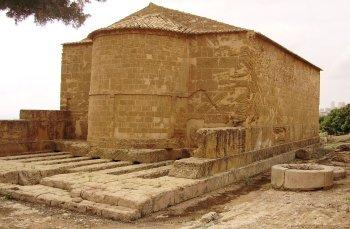
There are remains of the Temple of Apollo in Syracuse, and this temple was also attributed to Artemis. The temple was later converted to a Byzantine church; then converted to a mosque; then again reverted to a church; and it is now, sadly, in ruins.
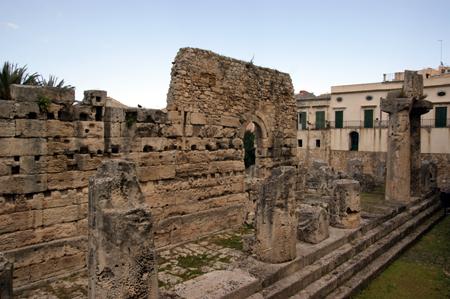
image4

Temple of Apollo/Artemis – Syracuse – from Wikimedia

Syracuse is also another location  where the Thesmophoria, a female-centered rite in honor of Demeter and Persephone, had taken place, as well Eleusinian rites. According to mythology, Syracuse is linked to these mysteries via the nymph/Nereid Arethusa (daughter of Nereus). Arethusa fled from her home in Arcadia; The goddess Artemis transformed Arethusa into a stream when trying to flee the river god Alpheus. According to myth, she traveled underneath the sea and emerged as a fountain in Ortygia.

While Demeter was searching for Persephone after her abduction, Arethusa pleaded with her to end her punishment of Sicily:

“Then that fair Nympha [Arethusa] whom once Alpheus loved rose from her pool and brushed back from her brow her loved dripping hair, and said: world hast sought thy child, mother of crops and harvest, ‘O thou, divine Mother, who through the cease at last thy boundless toil and end they savage rage against land that has kept faith with thee. The land is innocent; the against its will it opened for that rape. Nor is it mine, this land I for–I, a stranger here. My land is Pisa and plead I trace my stock from Elis [in Greece]. Here in Sicania (Sicily) I dwell an alien, but in all the world is dearer now to me. I, Arethusa, have no land here my home, my heart. This land, I pray, goddess most cherish and preserve. Why I forsook my home and fared so gentle, far ocome to tell, when cares are lightened and thine eyes are ‘er the vast ocean to Ortygia, a fitting time will bright. The earth opened a way for me and I was borne deepest caverns, until here I raised my head and saw the below its stars again. And so it was that, while beneath the earth I my Stygian stream, I saw, myself with my own eyes, glided in your Proserpina [Persephone]. Her looks were sad, and fear still in and yet a queen, and yet of that dark land Empress, and yet her eyes; with power and majesty the consort of the Sovereign lord of Hell.” – Ovid, Metamorphoses

Hekate always plays a part in rites honoring Demeter and Persephone; she was one of the first to hear Persephone’s cries as she was abducted, and Hekate was her guide during her travels to and from the Underworld.


I hope you enjoyed this essay on Hekate in  Magna Graecia: Syracuse.

© Melissa McNair / The Torch and Key


Sources:

  • Fischer-Hansen, Tobias (editor). Poulson, Birte (editor). From Artemis to Diana: Goddess of Man and Beast (Acta Hyperborea). Denmark: Museum Tusculanum Press, 2009
  • “Angelos (mythology)”, https://en.wikipedia.org/wiki/Angelos_(mythology)
  • Farnell, Lewis Richard. The Cults of the Greek States Vol. 2.  London: Oxford University Press, 1896
  • Fischer-Hansen, Tobias (editor). Poulson, Birte (editor). From Artemis to Diana: Goddess of Man and Beast (Acta Hyperborea). Denmark: Museum Tusculanum Press, 2009
  • Mead, G.R.S. Chaldean Oracles Vol. 2. London: The Theosophical Publishing Society, 1908
  • Betz, Hans Dieter. The Greek Magical Papyri in Translation. London: The University of Chicago Press, 1996
  • “Temple of Apollo, Siracusa”, http://www.sacred-destinations.com/italy/siracusa-temple-of-apollo
  • “Arethusa (mythology)”,  https://en.wikipedia.org/wiki/Arethusa_(mythology)
 

Hekate in Magna Graecia: Akragas / Agrigento


Agrigento/Akragas

Another major area that was settled by the Greeks in Sicily is Agrigento (also known as Akragas or Agrigentum), and the area is named “Valley of the Temples” due to the many temples that have remains in this area. The Valley of the Temples is a major tourist destination, attracting visitors from all over the world.

Agrigento was a very prosperous city, which rivaled that of Syracuse’s power and prosperity. Agrigento is located on the southern coast of Sicily, situated between two rivers. This area boasts many temples, including temples to Zeus, Hera, Heracles, Concordia (one of the best preserved temples in Magna Graecia), Castor and Pollux (the Dioscuri), Hephaestus, Isis, Asclepius, Athena, and of course – Demeter and Persephone, which was part of a temple to Chthonic deities.

The temple in Agrigento dedicated to chthonic deities, namely Demeter and Persephone, will also include Hekate, though Hekate’s associations may be a bit obscure. This trio of goddesses was frequently worshipped together due to their Eleusinian connections.

Today, the temple itself is actually partially buried under ground, with the church of San Biagio now standing above it. San Biagio – how he is known in Italy – is in other areas of Europe known by the name of Saint Blaise, and was known for being a “physician of souls”. Curiously, icons representing Saint Blaise depict him bearing two crossed candles. Other icons representing him show him in a cave surrounded by wild beasts. His feast day falls on February 3rd, the day after Candlemas (also known as Imbolc). Some areas of Europe also honor him on Candlemas itself. Hekate, as it is known, is most often depicted carrying a torch in each hand and is sometimes celebrated on Imbolc, due to Her epithet of “Phosphorus”, which means “light-bearer” or “light-bringer”.

The remains of Demeter’s temple dates back to approximately 470 BCE. The base of the original structure of the temple is still preserved and partly visible, and it measures approximately 30 by 13 meters. Other remaining, visible parts of this temple have been incorporated into the church, such as water spouts in the shape of lions’ heads that can still be seen today. Some of these may be found in the regional Agrigento museum. If you are familiar with the Chaldean Oracles, then this piece of architecture would be of great interest, as Hekate was said to at times appear in “lion form” in the Oracles. Other interesting archaeological finds from this temple include ritual vessels (kernoi) linked to Persephone (likely used for offerings), remains of oil lamps used for ritual processions, and remains of stone busts possibly depicting Demeter, though that has not been confirmed to indeed be Demeter.

Next to the Temple of Demeter, you will find a series of connected caves used for ritual purposes. The walls of this subterranean complex contain grooves for holding ritual offerings and votive statues. A connecting rock wall between the caves reveals an aqueduct, utilizing the natural underground waterway found there. This is an exciting find, because this ritual cave complex is believed to have been connected to Demeter’s temple and would likely have been considered a “gateway to the underworld”, similar to other temple sanctuaries found in Greece, most notably Eleusis itself. It is known that many cults belonging to Hekate in Greece used caves for rituals honoring Her, such as the Zerynthian caves in Samothrace.

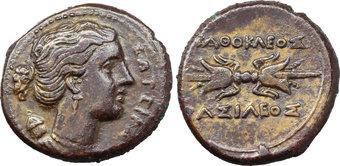
Separately from Demeter, it is believed that Artemis was worshiped in Akragas as “Artemis Soteira”. “Soteira” is another epithet belonging to Hekate and means “savior”. Hekate is referenced as savior in the Chaldean Oracles and Sarah Iles Johnston has devoted an entire book on the subject, titled Hekate Soteira: A Study of Hekate’s Roles in the Chaldean Oracles and Related Literature. 3rd century coins depicting the head of Artemis as “Soteira” have been found.

Hekate and Artemis do share a couple of other epithets, including “Phosphoros” (“light-bearer” or “light-bringer”); “Propylaia” (“at the gate” or “before the gate”).

image2

Agrigento – Church of San Biagio on foundation of the Temple of Demeter – Wikimedia

image5

3rd century BCE coin depicting Artemis Soteira, found in Akragas


I hope you enjoyed this essay on Hekate in  Magna Graecia: Akragas/Agrigento.

© Melissa McNair / The Torch and Key


Sources:

Hekate in Magna Graecia: Selinunte

Selinunte

Selinunte (also known as Selinus or Selinous) was a major settlement on the southwest coast of Sicily, and was believed to have been settled in the mid-6th century BCE, though the exact date remains unknown. The acropolis of Selinunte was situated between two rivers, and a major sanctuary dedicated to Demeter Malophoros was located there. This sanctuary contained several buildings within it, the largest one being Demeter’s temple. “Malophoros” (or Malophorus) is an epithet meaning “fruit-bearer”, which correlates to Demeter’s role as goddess of fertility and agriculture. The lands surrounding Selinunte were very rich and fertile, perfect for farming. Some interpret the epithet “Malophoros” as meaning either “apple bearer” or “pomegranate bearer”. “Pomegranate bearer” makes sense to me personally, considering the pomegranate fruit featured prominently in the Homeric Hymn to Demeter, which tells the story of the Rites at Eleusis. Persephone, Demeter’s daughter, ate seeds of the pomegranate fruit, which forever bound her to the Underworld.

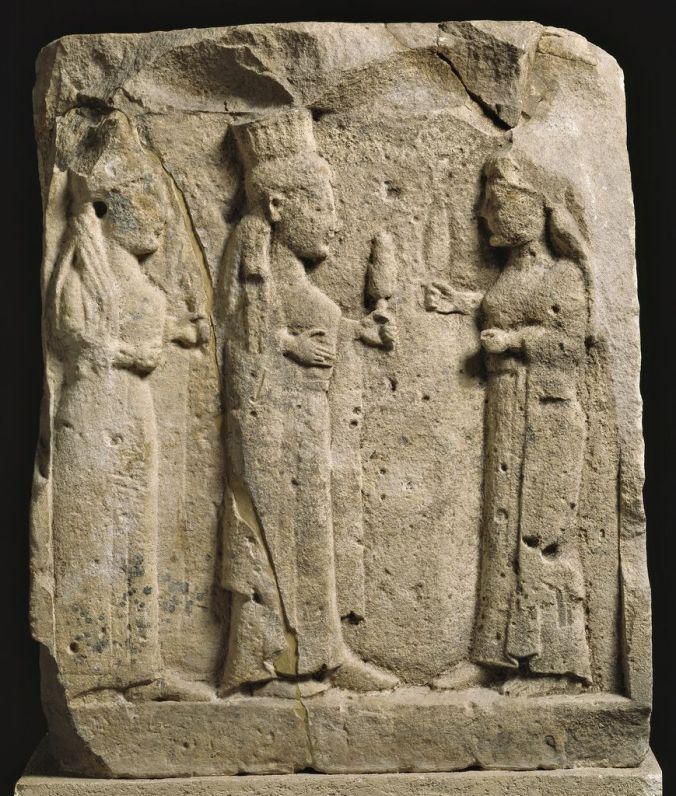
Votive remains depicting Hekate, Demeter, and Persephone together have been found within these sanctuary remains, which is not surprising considering these three goddesses are the focus of the Eleusinian Mysteries, with Persephone’s abduction said to have taken place in Sicily according to various Sicilian cult beliefs. The worship of Hekate, Demeter, and Persephone together in Sicily is a result of Greek migration to this area, and a continuation of religious and ritual practice dating back centuries before.

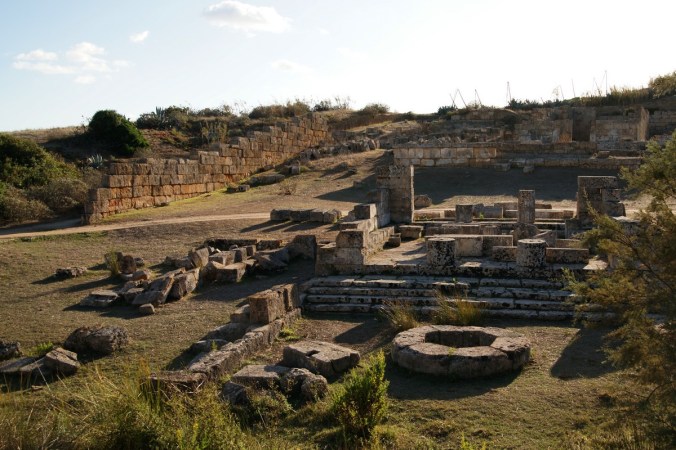
The temple sanctuary featured a very large altar, stone temenos walls, and a “propylaia”, and this temple is the only one in Sicily that was constructed in such a manner and is believed to pre-date the temple style that features the tall Doric columns. One of Hekate’s many epithets is “Propylaia”, a Greek term which translates to “before the gate”. Hekate is widely known as a liminal Goddess, guarding crossroads, entryways/doorways, and other areas with a defined border, such as where grass meets forest or where sand meets the sea. The enclosed propylon had to be entered from the East, and was dedicated to Hekate, based on engraved votives found in the vicinity.

Sadly, this city was destroyed by the Carthaginians around 400 BCE and was eventually resettled, with the temples being reused. Approximately 12,000 remains of female votive figurines and defixiones (curse tablets) were also recovered in excavations of this site.  These defixiones, often referred to as the “Getty Hexameters”, specifically mention Hekate by name (as well as identifying Her as Enodia), along with Persephone and Demeter. An excerpt of the words on these defixiones describes Hekate as shouting in a terrifying voice, bearing torches:

“…down from the shadowy mountains in a dark gleaming land a child brings from Persephone’s garden for milking, by necessity, the four-footed holy servant of Demeter, a nanny laden with an unceasing flow of rich milk, and she follows, trusting in the bright goddesses…torches, and Hecate Enodia, shouting a foreign-sounding shout in a terrifying voice…”

This temple appears to have been a major worship area for Selinunte, even eclipsing the Temples of Hera and Zeus, also in the same area. Archaeological evidence also suggests that Demeter’s temple was a hub of sorts for funerary rites, which fits with Hekate’s role as Psychopomp (guide of souls) and the reincarnation theme of the Eleusinian Mysteries, with Hekate, Demeter, and Persephone at the center of them.

Many of the archaeological finds from Selinunte are currently housed in the museum in Palermo, Sicily.

Selinunte-demeter-malaphoros

Propylon of Hekate at Temple of Demeter Malophoros – image source: Wikimedia commons

66bdb8310ffb35c600fe4ae90ad55533

Relief of Demeter, Persephone, & Hekate – Selinunte – Palermo Archaeological Museum


I hope you enjoyed this essay on Hekate in  Magna Graecia: Selinunte.

© Melissa McNair / The Torch and Key


Sources: