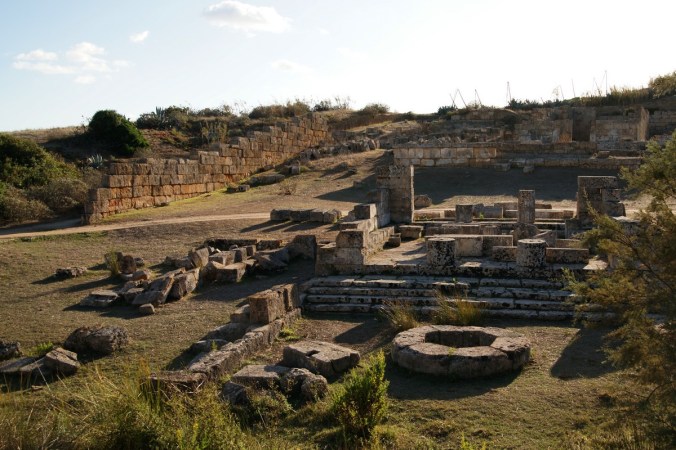
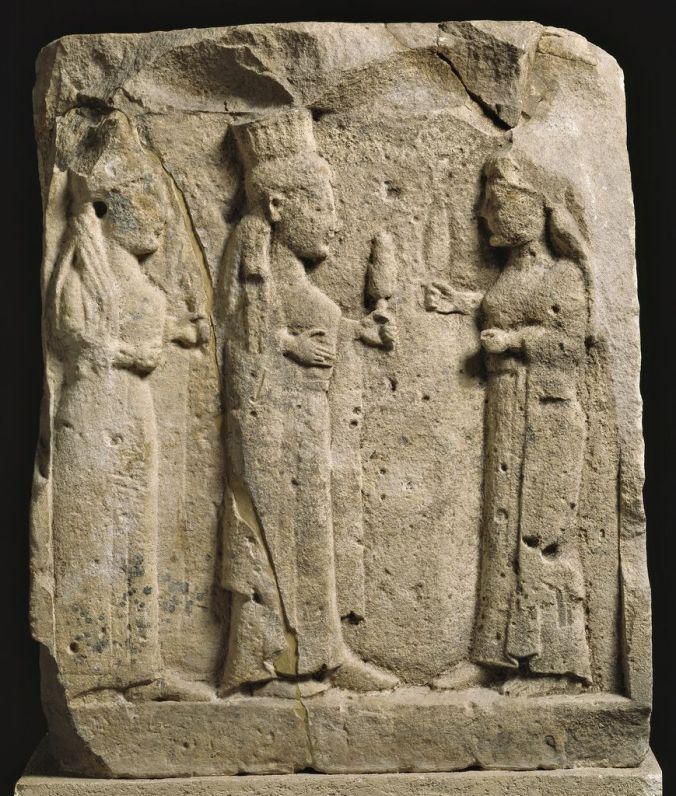
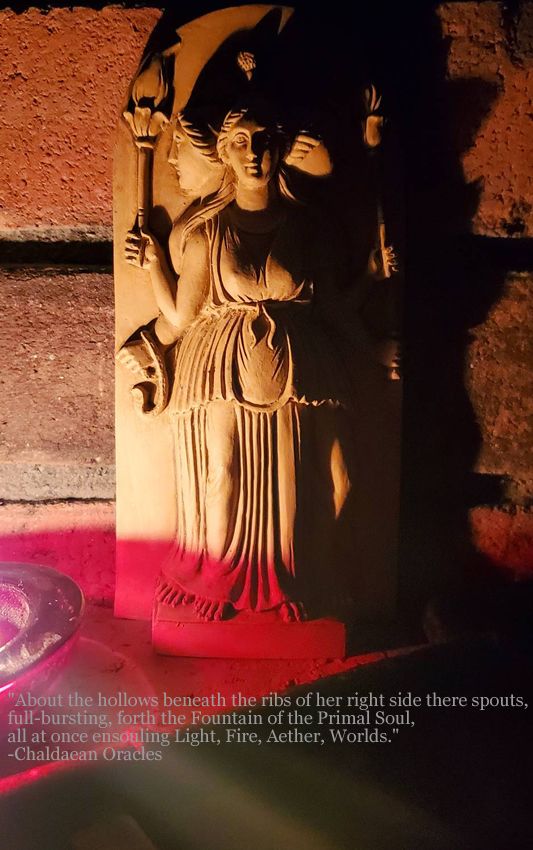
- Please see the Hekate in Magna Graecia page for more information on this project
Syracuse/Siracusa
Syracuse (also known as Siracusa) was a major Greek colony on the southeast coast of Sicily. One of Hekate’s connections to Syracuse is through the goddess Artemis. Artemis was worshipped at Syracuse under the cult title of Artemis Angelos. “Angelos” is a title or epithet meaning “messenger” (or “angel”). In Greek mythology, Angelos was the daughter of Zeus and Hera who eventually became a chthonic goddess. Writer Sophron explains:
“Angelos was raised by nymphs to whose care her father had entrusted her. One day she stole her mother Hera’s anointments and gave them away to Europe. To escape Hera’s wrath, she had to hide first in the house of a woman in labor, and next among people who were carrying a dead man. Hera eventually ceased from prosecuting her, and Zeus ordered the Cabeiroi to cleanse Angelos. They performed the purification rite in the waters of the Acherusia Lake in the Underworld. Consequently, she received the world of the dead as her realm of influence, and was assigned an epithet katachthonia (“she of the underworld”)
The title “Angelos” is also associated with Hekate; a votive found among the archaeological remains at the Temple of Demeter Malophoros in Selinunte was inscribed with Hekate’s name along with the title “Angelos”. References to Hekate bearing the title “Angelos” may also be found in the Chaldean Oracles and the Greek Magical Papyri (PGM). There are some spells in the PGM that call for Hekate’s aid, in addition to Her angelic assistants.
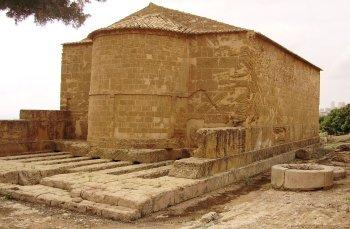
There are remains of the Temple of Apollo in Syracuse, and this temple was also attributed to Artemis. The temple was later converted to a Byzantine church; then converted to a mosque; then again reverted to a church; and it is now, sadly, in ruins.
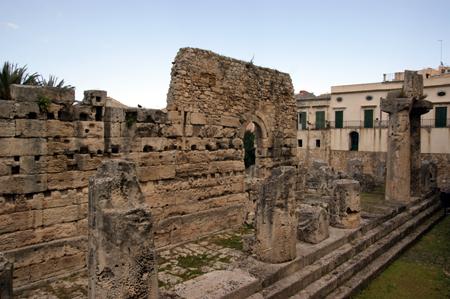
Temple of Apollo/Artemis – Syracuse – from Wikimedia
Syracuse is also another location where the Thesmophoria, a female-centered rite in honor of Demeter and Persephone, had taken place, as well Eleusinian rites. According to mythology, Syracuse is linked to these mysteries via the nymph/Nereid Arethusa (daughter of Nereus). Arethusa fled from her home in Arcadia; The goddess Artemis transformed Arethusa into a stream when trying to flee the river god Alpheus. According to myth, she traveled underneath the sea and emerged as a fountain in Ortygia.
While Demeter was searching for Persephone after her abduction, Arethusa pleaded with her to end her punishment of Sicily:
“Then that fair Nympha [Arethusa] whom once Alpheus loved rose from her pool and brushed back from her brow her loved dripping hair, and said: world hast sought thy child, mother of crops and harvest, ‘O thou, divine Mother, who through the cease at last thy boundless toil and end they savage rage against land that has kept faith with thee. The land is innocent; the against its will it opened for that rape. Nor is it mine, this land I for–I, a stranger here. My land is Pisa and plead I trace my stock from Elis [in Greece]. Here in Sicania (Sicily) I dwell an alien, but in all the world is dearer now to me. I, Arethusa, have no land here my home, my heart. This land, I pray, goddess most cherish and preserve. Why I forsook my home and fared so gentle, far ocome to tell, when cares are lightened and thine eyes are ‘er the vast ocean to Ortygia, a fitting time will bright. The earth opened a way for me and I was borne deepest caverns, until here I raised my head and saw the below its stars again. And so it was that, while beneath the earth I my Stygian stream, I saw, myself with my own eyes, glided in your Proserpina [Persephone]. Her looks were sad, and fear still in and yet a queen, and yet of that dark land Empress, and yet her eyes; with power and majesty the consort of the Sovereign lord of Hell.” – Ovid, Metamorphoses
Hekate always plays a part in rites honoring Demeter and Persephone; she was one of the first to hear Persephone’s cries as she was abducted, and Hekate was her guide during her travels to and from the Underworld.
I hope you enjoyed this essay on Hekate in Magna Graecia: Syracuse.
© Melissa McNair / The Torch and Key
Sources:
- Fischer-Hansen, Tobias (editor). Poulson, Birte (editor). From Artemis to Diana: Goddess of Man and Beast (Acta Hyperborea). Denmark: Museum Tusculanum Press, 2009
- “Angelos (mythology)”, https://en.wikipedia.org/wiki/Angelos_(mythology)
- Farnell, Lewis Richard. The Cults of the Greek States Vol. 2. London: Oxford University Press, 1896
- Fischer-Hansen, Tobias (editor). Poulson, Birte (editor). From Artemis to Diana: Goddess of Man and Beast (Acta Hyperborea). Denmark: Museum Tusculanum Press, 2009
- Mead, G.R.S. Chaldean Oracles Vol. 2. London: The Theosophical Publishing Society, 1908
- Betz, Hans Dieter. The Greek Magical Papyri in Translation. London: The University of Chicago Press, 1996
- “Temple of Apollo, Siracusa”, http://www.sacred-destinations.com/italy/siracusa-temple-of-apollo
- “Arethusa (mythology)”, https://en.wikipedia.org/wiki/Arethusa_(mythology)