Hekate Kleidoukhos

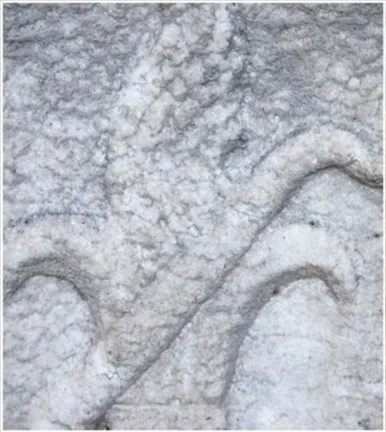
Image of a torch and key motif found on a column at the Temple of Hekate in Lagina. Photo from Anatolian Archaeology, photographer unknown

This post is part of a series regarding Hekate’s epithets, and the full list may be found here. This is a work in progress.


“Kleidoukhos” (sometimes spelled “Kleidouchos”) is one of Hekate’s more well-known epithets, and it translates to “Keeper of keys”. In ancient times, the role of “Kleidophoros” (Key-bearer) of the temple was an important one; the key that the priestess (or priest) carried signaled the authority that person had over the temple and sanctuaries, and the duties they were responsible for as guardian of this sacred space. Besides the obvious need to protect valuable artifacts (such as cult statues) and money within the sanctuary, keys have a metaphorical / symbolic meaning beyond the mundane demands of security.

The Orphic Hymn to Hekate, dated to about the 3rd century BCE to 2nd century CE, first mentions Hekate as Kleidophoros. I am sharing the more well known translation by Thomas Taylor below, as there are many translations out there:

“Hekate Einodia, Trioditis [Trivia], lovely dame, of earthly, watery, and celestial frame, sepulchral, in a saffron veil arrayed, pleased with dark ghosts that wander through the shade; Perseis (daughter of Perses), solitary goddess, hail! The world’s key-bearer, never doomed to fail; in stags rejoicing, huntress, nightly seen, and drawn by bulls, unconquerable queen; Leader, Nymphe, nurse, on mountains wandering, hear the suppliants who with holy rites thy power revere, and to the herdsman with a favouring mind draw near.”

The world’s key-bearer“. That statement is a mighty one, and conveys the enormous regard and responsibility bestowed upon Hekate in the ancient world. Hesiod’s Theogony is perhaps the oldest written record (dates to approximately 700 BCE) mentioning Hekate, and describes how Zeus honored Hekate above others by giving Her dominion over the three realms – the heavens, earth, and sea:

“Hecate whom Zeus the son of Cronos honoured above all. He gave her splendid gifts, to have a share of the earth and the unfruitful sea. She received honour also in starry heaven, and is honoured exceedingly by the deathless gods.” – Hesiod, Theogony

Keys are symbolic, and represent access. Access to knowledge, spaces, relationships, crossing boundaries, etc. As a liminal goddess of boundaries, Hekate – in Her role as Propylaia – holds these keys and grants access to those who are ready for Her mysteries. Hekate grants access from liminal, in-between spaces to more defined spaces with doorways and keys acting as metaphorical symbols of these liminal qualities. There are numerous ancient reliefs and sculptures that depict keys in relation to Hekate, such as the image at the top from a column found at Her temple in Lagina.

The Greek Magical Papyri (also known as simply “The PGM”) has several spells that mention Hekate and keys as magical/symbolic objects, and here is one excerpt from PGM IV. 2241-2358, “Document to the waning moon” that mentions keys (there are a few different mentions in this particular spell):

“Then, too, I’ll speak the sign to you:
Bronze sandal of her who rules Tartaros,
Her fillet, Key, wand, iron wheel, black dog,
Her thrice-locked door, her burning hearth, her shadow,
Depth, fire, the governess of Tartaros”

In addition to keys, other symbols of Hekate appear in this PGM passage: bronze sandal, iron wheel (iynx, perhaps), and black dog.

Kleidos Agoge
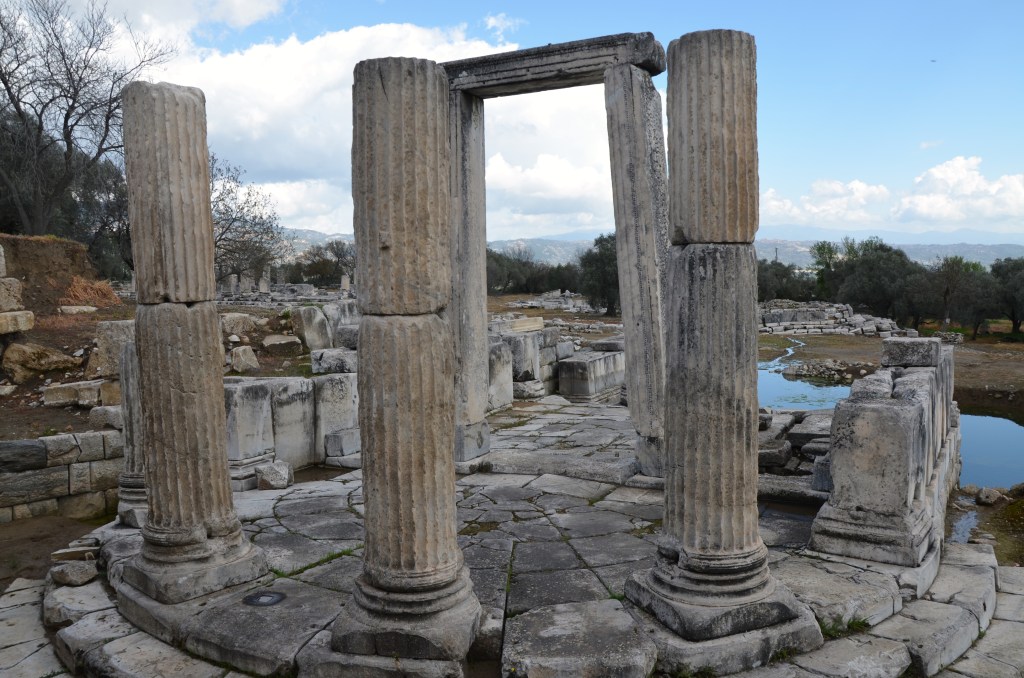
The Propylaea to Hekate’s temple at Lagina, photo from Wikimedia Commons

Stratonikeia was a very important city in what is now modern day Tรผrkiye, located in the western Anatolian region of Caria. Nearby, at Lagina, are remains of a great temple that was built to honor Hekate. This temple is currently the only known temple dedicated solely to Hekate that remains partially standing. It is also the only temple that functioned as a state-sponsored center of worship of Hekate.

One major aspect of rites honoring Hekate at Lagina was the “Kleidos Agoge” – the “Procession of the Key” (some references may call it the “Festival of the Key”). This festival took place every year and spanned a few days; games were played, music and hymns were offered to Hekate, and the Kleidos Agoge was the highlight of this multi-day annual celebration. A Kleidophoros, usually the young daughter of the temple priest, carried the temple key in a procession on the sacred road from the temple in Lagina to Stratonikeia. The key was brought to an altar dedicated to Hekate within an official council building in Stratonikeia, and visitors would then bring offerings and make sacrifices at this altar while the key was on display. The key was then returned to Lagina in another procession on the sacred road, and celebrations would then continue.


ยฉ Melissa M. / The Torch and Key


Sources:

Betz, Hans Dieter, editor.ย The Greek Magical Papyri in Translation, Including the Demotic Spells. Vol. 1, 2nd ed., University of Chicago Press, 1997.ย 

HERRING, AMANDA. โ€œReconstructing the Sacred Experience at the Sanctuary of Hekate at Lagina.โ€ Journal of the Society of Architectural Historians, vol. 79, no. 3, 2020, pp. 247โ€“63. JSTOR, https://www.jstor.org/stable/48740836. Accessed 16 May 2026.

The Covenant of Hekate, https://www.facebook.com/CovenantOfHekate/posts/epithetshekate-kleidouchos-the-bearer-of-the-keysthe-term-kleidouchos-means-the-/4581834658503710/

The Covenant of Hekate, https://www.hekatecovenant.com/post/the-cult-of-hecate
Hekate Angelos – Messenger, Liminal Mediator

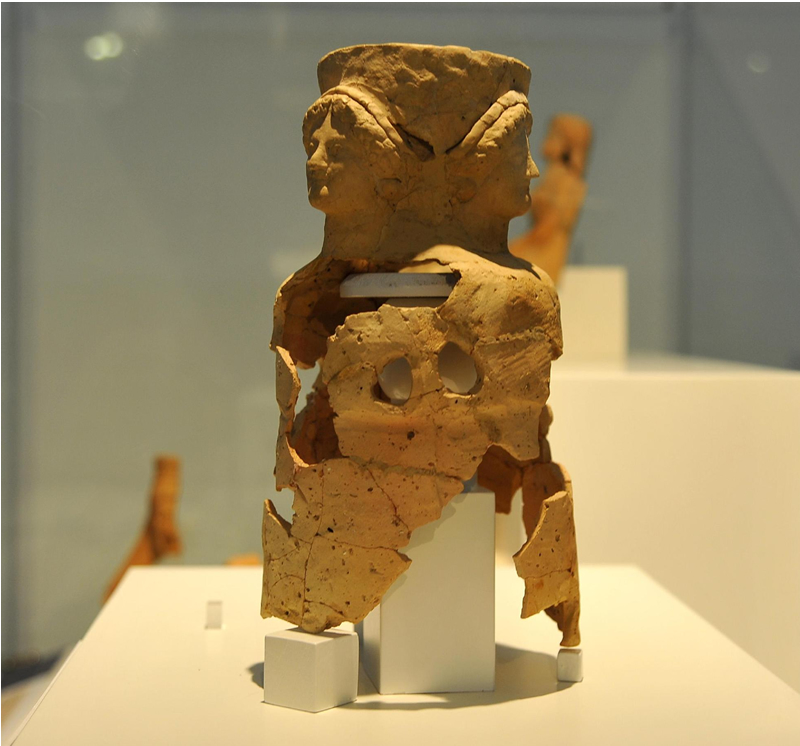
Remains of a statue of Hekate excavated from the site of the Temple of Demeter Malophoros in Selinunte, Sicily dated to approx 4th century BCE

“Angelos” is a title / epithet meaning “messenger”, or “angel”. The concepts of divine angels are mostly known due to being referenced throughout numerous Abrahamic bible passages and psalms, and within those biblical texts angels were sent from God to either deliver messages, or to act as an intermediary with assisting one or more persons.

One of Hekate’s known epithets is “Angelos”, an ancient title shared with Artemis. In Siracusa/Syracuse, a major ancient Greek colony on the southeast coast of Sicily, stood a temple dedicated to Artemis and Apollo that was center of cult worship for Artemis Angelos. In Greek mythology, Angelos was the daughter of Zeus and Hera who eventually became a chthonic goddess.ย Writer Sophron explains:

โ€œAngelos was raised byย nymphsย to whose care her father had entrusted her. One day she stole her mother Heraโ€™s anointments and gave them away toย Europe. To escape Heraโ€™s wrath, she had to hide first in the house of a woman in labor, and next among people who were carrying a dead man. Hera eventually ceased from prosecuting her, and Zeus ordered theย Cabeiroiย to cleanse Angelos. They performed the purification rite in the waters of theย Acherusiaย Lake inย theย Underworld. Consequently, she received the world of the dead as her realm of influence, and was assigned an epithetย katachthoniaย (โ€œshe of the underworldโ€)

Hekate as “Angelos”

Hekate’s own role as “Angelos” can be found in the Homeric Hymn to Demeter, which details the abduction of Persephone by Hades and Persephone’s return to Earth. First, we learn about Hekate bearing a message to Demeter after Persephone was abducted, which results in Hekate and Demeter visiting Helios to negotiate a search for Persephone. Later in the hymn, we learn of Hekate being assigned the role of guiding Persephone on her trips between the realms of the Earth and Underworld. Hekate is known as a liminal goddess, traversing the boundaries between realms and the title “Angelos” as messenger / mediator fits within Hekate’s role as “Propylaia” (guardian of thresholds) and “Propolos” (companion and guide).

The Flower of Fire

In the Chaldean Oracles, Hekate is described as the “Cosmic World Soul” that acts as an intermediary or messenger / transmitter between the “paternal intellect” (ideas), and the power in Hekate’s “cosmic womb” that in turn enlivened those ideas and transmitted them, thus ensouling the material / physical world. This concept is discussed in great detail in the book (her published dissertation) “Hekate Soteira” by scholar Sarah Iles Johnston and I highly recommend reading it (if you haven’t already).

Fragment 34 of the Chaldaean Oracles states:

โ€œFrom here springs forth the genesis of varied matter;

From here the sweeping lightning obscures its flower of fire

As it leaps into the hollows of the Cosmoi; for from here all things

Begin to stretch forth towards that place beneath the wondrous rays.โ€

The Sanctuary of Demeter Malophoros

Selinunte in Sicily was a major Greek colony and is the location of the great Sanctuary of Demeter Malophoros. The title “Malophoros” means “fruit bearer”, and in this temple the Eleusinian Rites were re-enacted. Various votive remains have been excavated from this site depicting Hekate, Demeter, and Persephone, and the temple area has been turned into a protected archaeological park that also contains temples to other gods, including Hera and Athena. Many of the sanctuary remains are housed in a museum in Palermo, Sicily.

One excavated archaeological artifact is the base of a statue with a votive inscription to Hekate engraved on it:

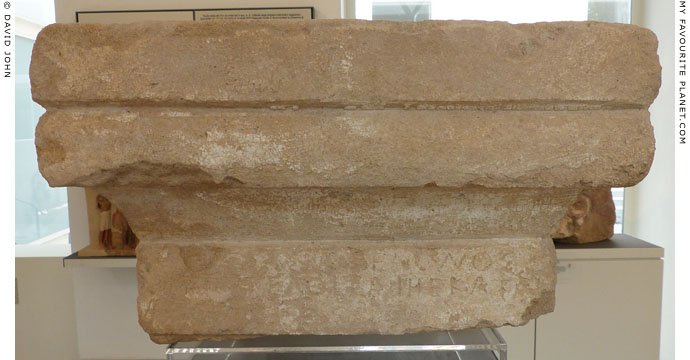
A statue base with a votive inscription dedicated to Hekate, on display at Antonino Salinas Regional Archaeological Museum, Palermo, Sicily. Dated approx 450 BCE

The inscription on the statue base pictured above reads:

“Alexias son of Xenon made [this] dedication
to the Angelos (Messenger) and to Hekate”

This statue base is dated to about 450 BCE and is on display at Antonino Salinas Regional Archaeological Museum in Palermo, Sicily. This statue base is believed to have been a part of the Propylon of Hekate at the Sanctuary of Demeter Malophoros. Propylons are “gateways” to temples, and are linked to Hekate’s role as “Propylaia” – “Guardian of Thresholds / Entryways”.

Angelike Orchฤ“sis

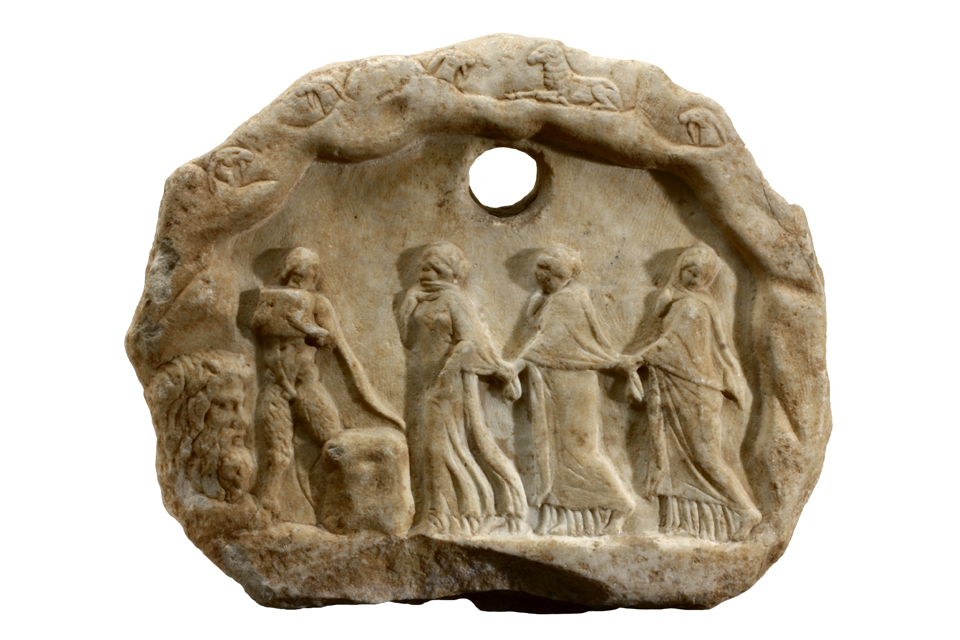
The Angelike Orchฤ“sis were celebratory dances performed by the ancient Greeks as part of important rituals, and Angelike Orchฤ“sis translates to “messenger’s dance”. Many dancing rituals took place during the Eleusinian rites and they all had a different purpose. The Angelike Orchฤ“sis, according to Greek writer Athenaeus of Naucratis (who lived sometime during the 2nd-3rd century CE), were Ionic dances that told the story of Hekate delivering a message to Demeter regarding the abduction of her daughter, Persephone.

Votive relief found at Eleusis depicting a dance scene, dated to about 4th c. BCE / National Archaeological Museum of Athens

Hesiod’s “Theogony”

The references to Hekate in Hesiod’s “Theogony” (written around 700 BCE) are believed to be the oldest literary source for Her. In addition to describing Hekate’s origins and honors given to Her by Zeus, Hesiod describes how Hekate mediates prayer and decides if the prayers should be answered favorably:

“For to this day, whenever any one of men on earth offers rich sacrifices and prays for favour according to custom, he calls upon Hecate. Great honour comes full easily to him whose prayers the goddess receives favourably, and she bestows wealth upon him; for the power surely is with her.”

Hesiod then goes on to describe how Hekate also mediates and bestows Her will over participants in games, horsemen, and fishermen:

“Good is she also when men contend at the games, for there too the goddess is with them and profits them: and he who by might and strength gets the victory wins the rich prize easily with joy, and brings glory to his parents. And she is good to stand by horsemen, whom she will: and to those whose business is in the grey discomfortable sea, and who pray to Hecate and the loud-crashing Earth-Shaker, easily the glorious goddess gives great catch, and easily she takes it away as soon as seen, if so she will.”


ยฉ Melissa M. / The Torch and Key


Sources: