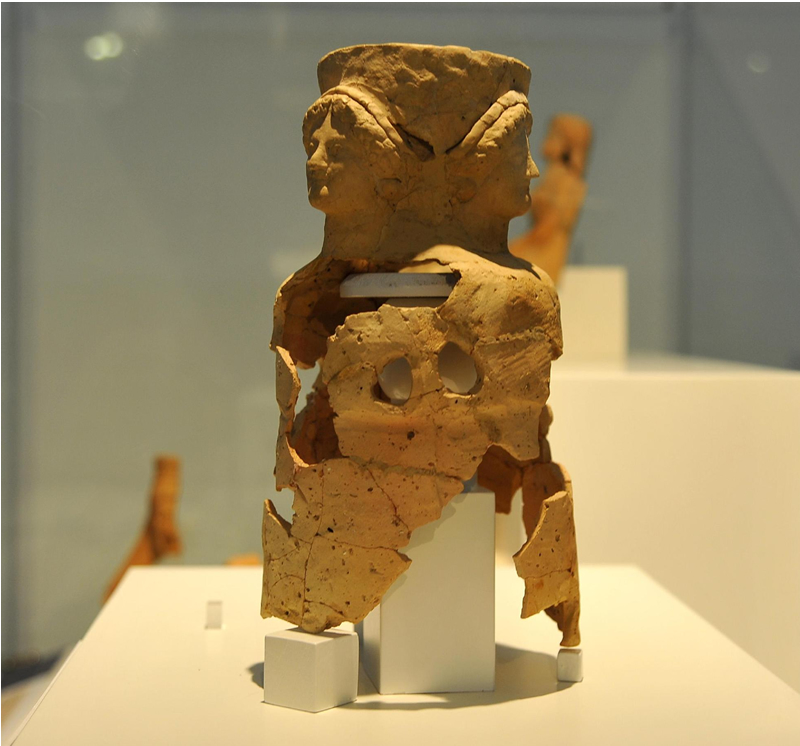
“Angelos” is a title / epithet meaning “messenger”, or “angel”. The concepts of divine angels are mostly known due to being referenced throughout numerous Abrahamic bible passages and psalms, and within those biblical texts angels were sent from God to either deliver messages, or to act as an intermediary with assisting one or more persons.
One of Hekate’s known epithets is “Angelos”, an ancient title shared with Artemis. In Siracusa/Syracuse, a major ancient Greek colony on the southeast coast of Sicily, stood a temple dedicated to Artemis and Apollo that was center of cult worship for Artemis Angelos. In Greek mythology, Angelos was the daughter of Zeus and Hera who eventually became a chthonic goddess. Writer Sophron explains:
“Angelos was raised by nymphs to whose care her father had entrusted her. One day she stole her mother Hera’s anointments and gave them away to Europe. To escape Hera’s wrath, she had to hide first in the house of a woman in labor, and next among people who were carrying a dead man. Hera eventually ceased from prosecuting her, and Zeus ordered the Cabeiroi to cleanse Angelos. They performed the purification rite in the waters of the Acherusia Lake in the Underworld. Consequently, she received the world of the dead as her realm of influence, and was assigned an epithet katachthonia (“she of the underworld”)
Hekate as “Angelos”
Hekate’s own role as “Angelos” can be found in the Homeric Hymn to Demeter, which details the abduction of Persephone by Hades and Persephone’s return to Earth. First, we learn about Hekate bearing a message to Demeter after Persephone was abducted, which results in Hekate and Demeter visiting Helios to negotiate a search for Persephone. Later in the hymn, we learn of Hekate being assigned the role of guiding Persephone on her trips between the realms of the Earth and Underworld. Hekate is known as a liminal goddess, traversing the boundaries between realms and the title “Angelos” as messenger / mediator fits within Hekate’s role as “Propylaia” (guardian of thresholds) and “Propolos” (companion and guide).
The Flower of Fire
In the Chaldean Oracles, Hekate is described as the “Cosmic World Soul” that acts as an intermediary or messenger / transmitter between the “paternal intellect” (ideas), and the power in Hekate’s “cosmic womb” that in turn enlivened those ideas and transmitted them, thus ensouling the material / physical world. This concept is discussed in great detail in the book (her published dissertation) “Hekate Soteira” by scholar Sarah Iles Johnston and I highly recommend reading it (if you haven’t already).
Fragment 34 of the Chaldaean Oracles states:
“From here springs forth the genesis of varied matter;
From here the sweeping lightning obscures its flower of fire
As it leaps into the hollows of the Cosmoi; for from here all things
Begin to stretch forth towards that place beneath the wondrous rays.”
The Sanctuary of Demeter Malophoros
Selinunte in Sicily was a major Greek colony and is the location of the great Sanctuary of Demeter Malophoros. The title “Malophoros” means “fruit bearer”, and in this temple the Eleusinian Rites were re-enacted. Various votive remains have been excavated from this site depicting Hekate, Demeter, and Persephone, and the temple area has been turned into a protected archaeological park that also contains temples to other gods, including Hera and Athena. Many of the sanctuary remains are housed in a museum in Palermo, Sicily.
One excavated archaeological artifact is the base of a statue with a votive inscription to Hekate engraved on it:
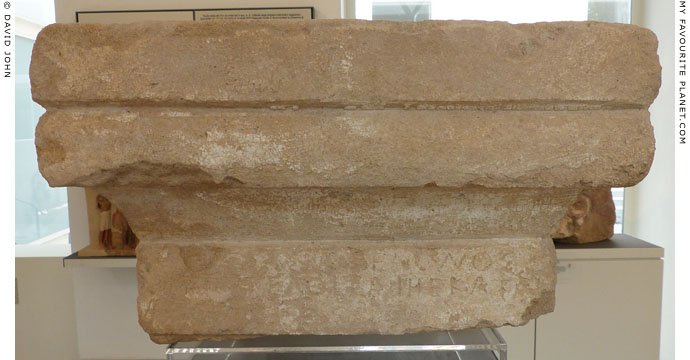
The inscription on the statue base pictured above reads:
“Alexias son of Xenon made [this] dedication
to the Angelos (Messenger) and to Hekate”
This statue base is dated to about 450 BCE and is on display at Antonino Salinas Regional Archaeological Museum in Palermo, Sicily. This statue base is believed to have been a part of the Propylon of Hekate at the Sanctuary of Demeter Malophoros. Propylons are “gateways” to temples, and are linked to Hekate’s role as “Propylaia” – “Guardian of Thresholds / Entryways”.
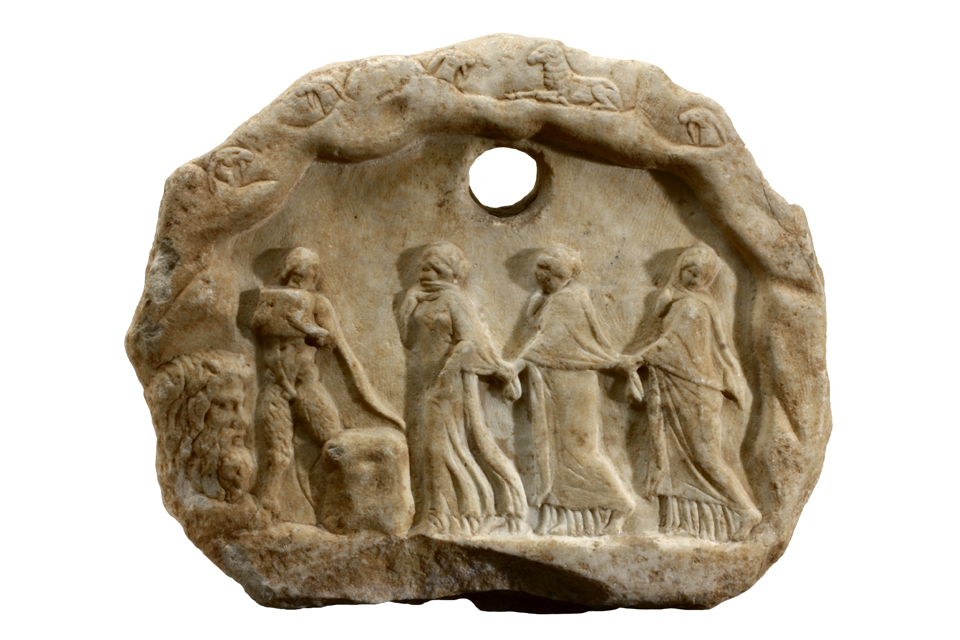
Angelike Orchēsis
The Angelike Orchēsis were celebratory dances performed by the ancient Greeks as part of important rituals, and Angelike Orchēsis translates to “messenger’s dance”. Many dancing rituals took place during the Eleusinian rites and they all had a different purpose. The Angelike Orchēsis, according to Greek writer Athenaeus of Naucratis (who lived sometime during the 2nd-3rd century CE), were Ionic dances that told the story of Hekate delivering a message to Demeter regarding the abduction of her daughter, Persephone.
Hesiod’s “Theogony”
The references to Hekate in Hesiod’s “Theogony” (written around 700 BCE) are believed to be the oldest literary source for Her. In addition to describing Hekate’s origins and honors given to Her by Zeus, Hesiod describes how Hekate mediates prayer and decides if the prayers should be answered favorably:
“For to this day, whenever any one of men on earth offers rich sacrifices and prays for favour according to custom, he calls upon Hecate. Great honour comes full easily to him whose prayers the goddess receives favourably, and she bestows wealth upon him; for the power surely is with her.”
Hesiod then goes on to describe how Hekate also mediates and bestows Her will over participants in games, horsemen, and fishermen:
“Good is she also when men contend at the games, for there too the goddess is with them and profits them: and he who by might and strength gets the victory wins the rich prize easily with joy, and brings glory to his parents. And she is good to stand by horsemen, whom she will: and to those whose business is in the grey discomfortable sea, and who pray to Hecate and the loud-crashing Earth-Shaker, easily the glorious goddess gives great catch, and easily she takes it away as soon as seen, if so she will.”
© Melissa M. / The Torch and Key
Sources:
- Hesiod, “Theogony”, https://www.theoi.com/Text/HesiodTheogony.html
- “Archaeology: Ancient Selinunte Comes to Light, Here is the Statue of the Mysterious Goddess”, https://palermo.repubblica.it/societa/2018/01/16/foto/archeologia_torna_alla_luce_l_antica_selinunte_ecco_la_statua_della_dea_misteriosa-186604418/1/#google_vignette
- Angelica (Dance), https://en.wikipedia.org/wiki/Angelica_(dance)
- “Chaldaean Oracles”, http://gnosis.org/library/grs-mead/grsm_chaldean.htm
- “Demeter and Persephone, Part 1”, http://www.my-favourite-planet.de/english/people/d1/demeter.html#selinous-malophoros
- National Archaeological Museum of Athens, https://www.namuseum.gr/en/monthly_artefact/beautiful-dances-the-odyssey-12-318/